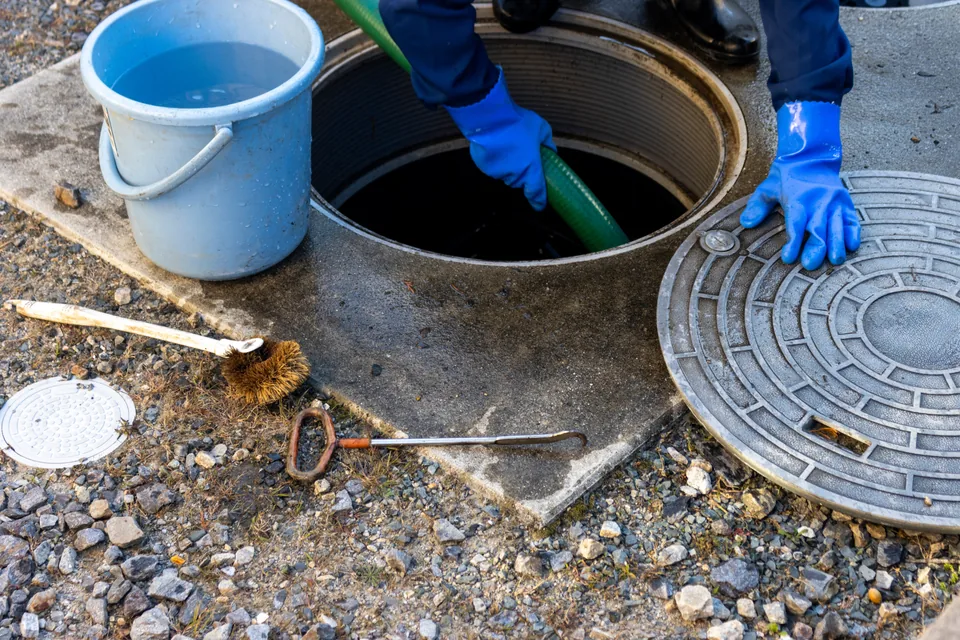
Montana has no state septic installer license and no state licensing board for this trade. That is
half the answer, and the other half is the half that decides where you go: the credential a Montana
septic installer actually holds is issued by your local board of health, under regulations state law
requires that board to adopt. Both halves are true at once, and a page that prints only one of them
sends you to the wrong counter — either to a state office that issues nothing to an installer, or to
nobody at all.
Who the duty reaches is decided by the board that made it, and every instrument read for this record
is bounded by that board’s own territory on the face of its text. The clearest of them is Lake
County’s, named here as one county’s own published requirement and not as Montana’s rule: “No person
may install, alter, repair, or replace a wastewater treatment system” without “a valid Lake County
Wastewater Treatment System Installer License”. What the state itself compels is narrower than that.
Section 50-2-116(1)(j), MCA makes every local board propose regulations for “the control and disposal
of sewage”, and neither that section nor the state rule restating it
says anything about credentialing the person who does the work. The mandate to regulate is the
state’s; the decision to credential you is the board’s. So whether a credential is required depends on
the jurisdiction the work is in, and the place to ask is the local board of health for that place.
The credential’s effect differs between jurisdictions, and no named example of it is a
statewide rule. Where a board has made the credential mandatory, the work is forbidden without it. Where
another has not, an installer without the certificate may still take on part of the work, and what the
certificate buys is a wider scope and a lighter inspection regime rather than permission to work at
all. The name moves with it: license, certification and registration of competency are all live
Montana words for this instrument, so there is no single Montana noun for it and this page does not
print one. Ask the board of health for the place the work is in, and ask before you bid rather than
after.
There is a statewide credential and it is not this one. Montana licenses construction contractors of
every kind through the state labor department, and on January 1, 2026 that program stopped being a
registration and became a license, moving out of the labor title into the professions title — which is
why material written earlier still calls it a registration. It is trade-blind on the face of the statute: it tests no competence in this trade, names no
classification, and sets no examination. No liability-insurance minimum and no bond amount is stated in
the chapter, and that was checked rather than assumed. It also does not reach every Montana septic contractor, and the exemptions
belong in the same breath as the rule. The chapter exempts an independent contractor who has no
employees, who may still elect to come in voluntarily; it exempts work of a casual, minor or
inconsequential nature below a stated contract price, with a proviso against splitting a job to get
under it; and it carries a long list of others, including one for an enrolled tribal member’s business
conducted wholly within the exterior boundaries of a reservation. What it does ask for, with the
application, is proof of compliance with the workers’ compensation laws.
Pumping and hauling is the structural opposite of installing here, and it is the one credential in this
state that is the same everywhere. It is a single statewide license from the state environmental
agency, and the prohibition, set out in full below, attaches to “the business of cleaning” those systems
rather than to a truck. The county is in
the picture and never as the licensor — the local health officer certifies each disposal site and
inspects a new vehicle before it goes into service, and those certifications go into the state
application file. If somebody calls that vehicle step a county pumping permit, they are describing an
instrument Montana does not issue.
Workers compensation is compulsory, and regional reasoning gets Montana wrong: some of the states next
door run monopolistic funds, and Montana’s does not — its fund competes alongside the private market,
beside self-insurance and a private policy, and an employer with an employee elects one of them. There
is no employee count below which the act stops applying. A working owner is outside it unless they elect coverage and an insurer allows the
election: a sole proprietor, a working partner, or a working member of a member-managed limited
liability company. But the rule aimed squarely at this trade is not in that list: a person
who regularly and customarily works at locations other than a fixed business location of their own must
elect personal coverage or hold an independent contractor exemption certificate from the department. A
septic contractor works on other people’s land by definition, so that is a binary and not a maybe — and
it is why a general contractor here asks for the certificate before the work starts. Where a sub has
not complied, the statute reaches upstream and makes that contractor liable for benefits to the sub’s
injured employees.
None of that is an insurance requirement, and the state attaches none to any of these credentials.
The credential question and the coverage question are different questions, and the sections below set out
each one with the authority it rests on, so you can check it rather than take our word for it.