
Coverage line
General Liability
The form that answers to other people for the work — and the line where sewage stops being an ordinary liability claim.
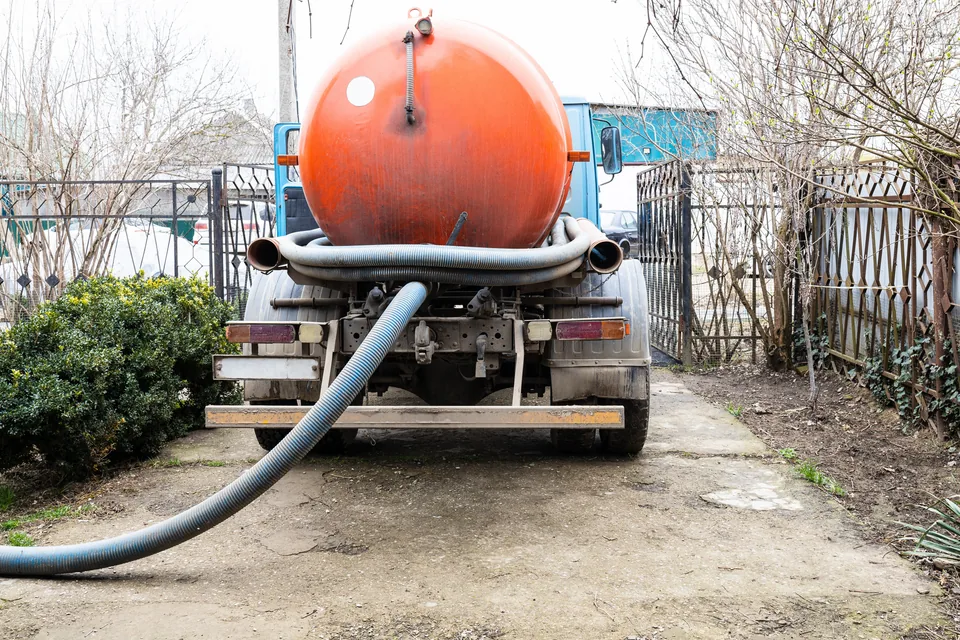

Septic work puts a contractor in an odd position with a liability form. Every trade buys general liability to answer other people for what its work does to them; in this trade, the material you are paid to move is the same material most liability wording was drafted to keep out. That is the seam this page is about — where the standard liability form generally stops, and where a separate pollution policy has to begin.
What the liability form is there for on a septic job
Take an ordinary day. You dig, you set a tank, you run line to the field, you backfill, and across town a truck is pulling a lid and pumping a tank down. Most of what can go wrong on that day is somebody else’s injury or somebody else’s property — the homeowner’s driveway, the irrigation line nobody marked, a well casing, a person standing where the spoil pile was about to go. That is the class of loss a general liability policy is generally bought to answer.
Two features of these forms matter more here than in most trades. The first is reach: liability wording generally attaches to operations conducted away from your own premises, at the customer’s property rather than at your yard, and it commonly keeps running after the crew has gone. The second is that the same forms carry exclusions drafted with material like yours squarely in view. The rest of this page follows a working day in the order it meets them.
A left-to-right flow read from the liability form’s side. It starts with ordinary third-party harm on a septic job, the injury or property damage from the work that is generally the form’s own ground. When the material escapes, the pollutant definition comes into play: any irritant or contaminant, with waste named outright, so septage need not be called sewage to sit inside it. The definition then meets the location prongs, the jobsite, transport and waste-site prongs that a day of digging, hauling and disposing tends to cross. Where attached, a total pollution exclusion endorsement generally removes virtually all of the pollution cover that would otherwise survive; whether a policy carries one is a question for quoting time. The gap the liability form leaves is answered by contractor’s pollution liability, a separate policy bought and read as a pair with this one at the edges. Whether any loss falls on either side depends on the exact wording and the facts. No figures are shown.
The exclusion that sits underneath the whole trade
Most liability forms carry a pollution exclusion, and it generally removes bodily injury and property damage arising out of the discharge or escape of pollutants. The difficulty for a septic contractor is upstream of that, in the definition. The standard liability form describes a pollutant as “any solid, liquid, gaseous or thermal irritant or contaminant”, and the list that usually follows runs through smoke, vapor, soot, fumes, acids, alkalis, chemicals and waste. Waste is named outright, and the term has been read to include material on its way to be reclaimed. Septage does not have to be called sewage to sit inside a definition written that broadly.
The exclusion is generally built as a set of location prongs rather than one flat bar. One typically reaches premises owned, occupied, rented or loaned to an insured. Another reaches sites used for the handling, storage, disposal, processing or treatment of waste — a fair description of a receiving site. A third usually reaches material being transported, handled, treated or disposed of as waste, by an insured or by any person or organization the insured answers for. And a jobsite prong commonly applies where the pollutants were brought to the site in connection with the operations, naming contractors and subcontractors working on the insured’s behalf. Dig, haul and dispose, and you have crossed three of those before lunch.
So is septage a pollutant? It has been argued more than once and the answers have not all matched, so the honest position is that it depends on the exact wording and the exact facts. Decomposing septage seeping into a well has been read as a contaminant, and therefore a pollutant, with the question judged at the point the material harms another’s interests rather than at the point it was first put to a beneficial use — and with that reasoning expressly limited to seepage into a water supply. Read it as a warning about how the argument runs, not a rule that settles your state.
One further point is easy to get backwards. The exclusion is often called absolute, and in its ordinary form it generally is not: some coverage survives for incidental pollution and for completed operations, and that survival expressly includes certain off-premises work by contractors. What removes the survivors is an endorsement. A total pollution exclusion endorsement generally eliminates virtually all coverage for pollution incidents — wording of that kind asks whether the loss “would not have occurred in whole or part but for” the pollutants, adds the words at any time, and so strips the location prongs out altogether. Whether your policy carries one is a question for quoting time.
Where a separate pollution policy picks it up
Contractor’s pollution liability is a separate policy, not an endorsement anyone should assume is already on the liability form. Its grant is generally drafted as the mirror image of the exclusion: rather than removing loss arising from a discharge, dispersal, release or escape, it agrees to pay the sums the insured becomes legally obligated to pay for claims of bodily injury, property damage or environmental damage. The trigger is usually pollution conditions resulting from covered operations, and covered operations are typically defined as the named insured’s activities at a jobsite — which is where septic work happens.
The definitional language generally tracks the liability form closely, except that here it grants rather than removes, and it usually names where the material ended up: into or upon land, any structure on land, the atmosphere, watercourses and groundwater. That is the drainfield, the yard, the ditch and the well, in roughly the order a failure finds them. One threshold does most of the work in an argument: this kind of form commonly requires the condition to be “unexpected and unintended from the standpoint of the Insured”, which is a different question from whether the job was done badly.
And it is not either-or. A liability policy and a contractor’s pollution policy can both respond to the same events, and reading an exclusion is generally treated as a different exercise from reading a coverage grant. The practical consequence is that the two are bought as a pair, read as a pair, and checked at the edges where one is meant to hand off to the other. That handoff is the subject of the pollution liability page.
A hub-and-spoke diagram. At the center are the claims a septic job brings to the liability form. Injury to a visitor near an open excavation is the kind of loss the form generally answers. Damage to other people’s lines, driveways and well casings is generally answered too. The system that fails after backfill is a completed-operations question, and which policy year responds depends on the wording. Damage to the tank or baffle being worked on is often excluded as the particular part of the property under operations. A builder named as an additional insured is covered only as far as the endorsement reaches, which the certificate does not show. Harm arising from the use of the truck is generally excluded here and belongs to the auto form. No figures are shown.
The system that fails a season after backfill
The install that fails long after the last truck left is the loss this trade fears most, and it is a completed-operations question before it is anything else. Work is generally treated as completed once it has been finished as the contract called for, or once it has been put to its intended use, and most forms describe a hazard reaching injury and damage occurring away from premises you own or rent. Work not yet completed, or abandoned, usually falls outside that hazard. Where all the work to be done at the job site is done, the wording commonly treats it as complete even if somebody still has to come back with a lid.
The causes of a delayed failure are usually laid in the ground at construction. Federal guidance on on-site sewage systems treats damage to the soil during construction as a failure route in its own right, one that typically ends in reconstruction or an added field. It describes correctly sized systems failing anyway because of poor distribution traceable to improper construction, and soil smeared and compacted during construction, with a real loss of infiltration. None of that shows up at inspection. It shows up in a wet spring, with your name on the permit.
Age produces its own version of the argument. A biomat forms naturally in the bottom of a drainfield’s trenches or beds, and it thickens over time, generally reducing how much effluent the field can take, ending in ponding, in untreated wastewater surfacing, or in a backup into the septic tank and then the house. A failure arriving after many years of useful service more often traces to overloading or missed maintenance than to the install — solids allowed to migrate out of the tank will clog a field — and siting, soils, slope and the water table drive the hydraulic failures. Each of those is a defense for the contractor who put the system in, and each is also an argument, which is why the completed-operations side and the pollution side tend to be argued in the same letter.
Damage to the system you were hired to work on
This is the exclusion septic contractors meet most often and expect least. Most liability forms exclude damage to “that particular part of real property” on which you, or any contractor or subcontractor working directly or indirectly on your behalf, is performing operations — where the damage arises out of those operations. A second prong generally reaches property that “must be restored, repaired or replaced because” your work was incorrectly performed on it. Your work is usually defined as work or operations performed by you or on your behalf, which is broad enough to pull in the excavator you hired for the afternoon.
Apply that to the day. The tank you are setting, the trench you are standing in, the distribution box you are re-leveling, the riser you are extending: while you are working on them, they are generally the particular part, and the form is not usually there to buy you a new one. Pull an effluent filter, break a baffle doing it, and you are inside the same idea. Extension guidance is direct — pumping through baffle ports can damage the baffles and yield incomplete removal, and baffles crumble with age or are accidentally damaged during pumping, which is why the condition of the baffles is worth checking whenever the tank is pumped and worth writing on the ticket.
Two relieving features are worth asking about by name. The second prong commonly carves out damage falling inside the products-completed operations hazard, so the finished system that fails next year does not necessarily sit where the tank under your boots sits today. And a separate your-work exclusion generally carries a subcontractor exception, which is why it matters, in writing, who turned the dirt. Alongside both sits care, custody or control, which typically removes damage to property in the insured’s care. Whether that reaches only property physically in your hands, or extends to property you merely owe a duty toward, is not read the same way everywhere, and the exposure it leaves is usually answered by other, more specific forms.
The truck in transit is a different form
Most liability forms exclude bodily injury and property damage arising out of the ownership, maintenance, use or entrustment to others of any auto, and the wording generally states that use includes operation and loading or unloading. That exclusion usually still applies where the claim is pleaded as negligent supervision, hiring, employment, training or monitoring rather than as driving. Definitions do real work here too: auto is commonly defined to exclude mobile equipment, mobile equipment generally covers vehicles maintained primarily for purposes other than carrying cargo, and self-propelled vehicles with permanently attached pumps are often treated as autos regardless — as are land vehicles subject to a financial responsibility law.
Where a loaded vacuum truck lands among those depends on the vehicle, the wording and the facts, and this page deliberately does not decide it. Where the septage sits while it is on a public road, and which form answers when a coupling lets go at either end of the trip, belongs on the commercial auto page. What matters here is that a liability form is generally not the place to look for it.
The certificate that has to be right before the work starts
An additional insured is generally somebody added as an insured under your policy at your request, and the usual driver is a contractual agreement requiring you to do it rather than goodwill. Project owners and customers are the typical requesting parties, and the status is commonly treated as a way of backing up a promise of indemnification — it can still respond where the indemnity agreement proves unenforceable. On septic work that is the general contractor on a subdivision, the developer who owns the lot, or the public body that issued the permit.
Read the endorsement rather than the certificate, because the endorsement is what limits it. One common wording extends cover only with respect to liability “arising out of your ongoing operations” performed for that insured, which by its own terms stops when the operations stop. Another limits it to harm caused, in whole or in part, by your negligent acts or omissions. Schedules frequently name nobody and read blanket where required by contract, which sounds generous and moves the whole question into whatever the contract says.
Completed operations is where this most often goes wrong for a trade whose work stays in the ground. Some wordings switch completed-operations cover for the additional insured off entirely unless the written agreement requires it, and where it is required they may extend it only for the period the agreement specifies. A contract making no provision for coverage beyond its own term can leave a builder holding a certificate that answers for nothing by the time a field surfaces. Permits have their own shape: a separate endorsement adds a state, municipality or political subdivision as an additional insured for operations for which that body has issued a permit.
What actually decides it on your job
Nothing on this page resolves a claim, and none of it is meant to. Every paragraph above describes the shape of standard wording — where the exclusions generally sit, what they usually reach, and what a separate pollution policy is written to answer. The form you hold may be broader in one place and narrower in another, the forms in use differ between carriers, and the endorsements attached to your policy can move any of these lines. Your own policy language controls.
What we can do is read your forms against your work rather than against a class code. Tell us what you install and what you pump, whether you haul septage and where it goes, whether you hold service contracts on systems somebody else put in the ground, and who is asking to be named on your certificates. Those answers decide which of the questions on this page are live for you, and they are far easier to settle at quoting time than in a letter after a drainfield surfaces.
Related coverage for septic business owners
- Pollution Liability
- Workers Compensation
- Commercial Auto
- Contractors Equipment
- Commercial Property
- Professional Liability
The work we write
- Septic Installation Insurance
- Septic Pumping & Cleaning Insurance
- Septic Repair & Maintenance Insurance
- All services
From the blog
- General Liability Insurance for Septic Tank Contractors: What It Covers and What It Misses
- Septic Contract Insurance: Requirements for Septic Jobs and Contracts in California
- Septic Contractors Insurance: Licensing, Liability, and Coverage Gaps to Avoid in Connecticut
- Septic Installer and Pumper Insurance: A Complete Coverage Guide for California
- Additional Insured vs Certificate Holder on a Septic Job
- Hold Harmless Agreements for Contractors on Septic Jobs
- Septic Installer Bond vs Insurance: What Each One Answers
Primary sources
- eCFR — General definitions — the federal sewage-sludge definitions section: what counts as domestic septage, and what does not
- EPA — How Septic Systems Work — tank, effluent and drainfield, in the agency’s own words
- EPA — Resolving Septic System Malfunctions — the failure signs and the usual causes
General Liability questions we get asked
If sewage is treated as a pollutant, what is my general liability policy still for?
Most of what goes wrong on a septic job is not a pollution question at all. A liability form is generally bought to answer other people for bodily injury and property damage arising out of your operations — the cut water line, the collapsed driveway, the well casing, the visitor who walks into an open excavation. The pollution exclusion usually bites on one family of losses, and it is a family this trade meets often, which is why a separate pollution policy is normally part of the conversation. It does not empty the liability form; it tells you where its edge is.
Who answers when we break a lid or a baffle during a pump-out?
That is usually a damage-to-property question rather than a pollution one, and it can be the harder of the two. Most liability forms exclude damage to the particular part of real property being worked on where the damage arises out of those operations, and extension guidance is blunt that pumping through baffle ports can damage baffles and that aged baffles crumble or are damaged accidentally during pumping. Whether a form reads the tank you are pumping as that particular part depends on the wording and the facts, which is why the condition of the baffles is worth checking and noting at every pump-out.
The drainfield surfaced the spring after I installed it — which policy year answers?
That is generally a completed-operations question, and it is why the answer is rarely the policy you were holding on the day you backfilled. Work is usually treated as completed once it is finished as the contract called for or has been put to its intended use, and most forms describe a hazard that reaches injury and damage occurring away from premises you own. Federal guidance also describes soil damage and improper construction as failure routes that surface long after the crew has gone. Which year responds, and on what trigger, depends on the exact wording you hold.
A builder wants to be named as an additional insured. What am I agreeing to?
Less, usually, than the certificate suggests. Additional insured status is generally added at your request because a contract requires it, and it is commonly treated as a backstop for an indemnity promise rather than a second policy. The endorsement is what sets the limits: one common wording reaches only liability arising out of your ongoing operations for that party, and another reaches only harm caused in whole or in part by your negligent acts or omissions. Read the endorsement, not the certificate, and read it before the crew mobilizes.
Does an additional insured stay covered after the job is finished?
Not automatically, and for a trade whose work stays in the ground that is the part that matters. Some wordings switch completed-operations cover for the additional insured off entirely unless a written agreement requires it, and where it is required they may extend it only for the period the agreement specifies. A contract that makes no provision for coverage beyond its own term can therefore leave a builder unprotected on a system that surfaces years later. Whether yours does depends on the endorsement and on what the contract actually says.
Do I need pollution liability and general liability, or does one replace the other?
They are generally bought as a pair and read as a pair. The liability form usually carries the exclusion; the pollution policy is the separate purchase written to answer it, and its grant typically responds to pollution conditions resulting from covered operations at a jobsite. Neither is a substitute for the other, and both can respond to the same events — reading an exclusion and reading a coverage grant are treated as different exercises. What matters is whether the two fit together at the edges, which is a wording question best asked at quoting time.
Talk it through with someone who reads the forms
Tell us what you install, what you pump and who is on the crew, and we will read the forms against the work.