
Coverage line
Workers Compensation
Crew injury in an open excavation and at the tank — what this line generally answers, and what your state’s act decides for you.
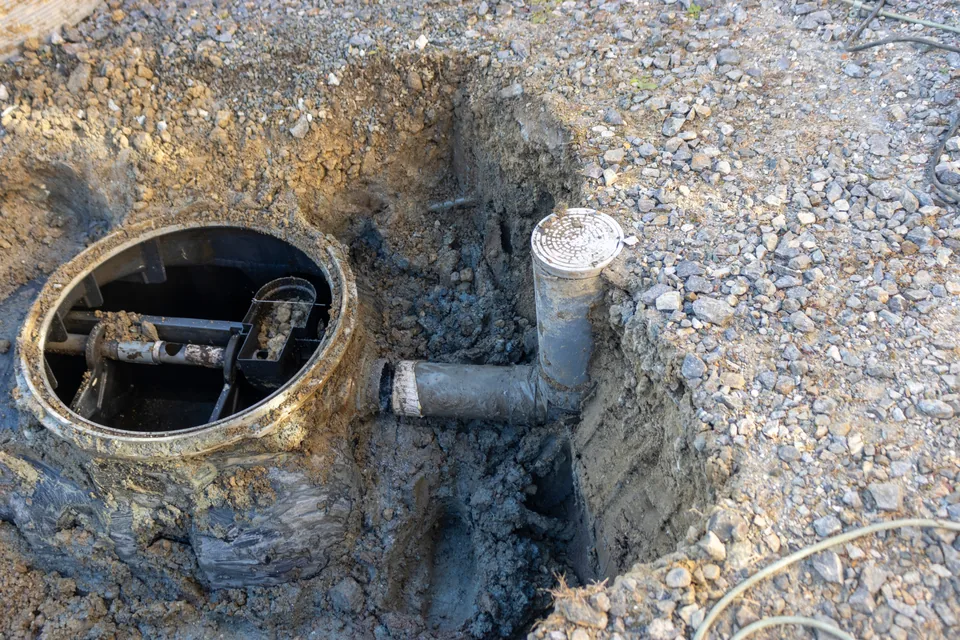

Workers compensation answers injury to your own crew, and in most states the law requires it to be in place before anyone starts work. It generally pays medical care and wage replacement on a schedule the state act sets rather than on a limit you negotiate, and in return most acts make those benefits the employee’s remedy against you instead of a lawsuit. On a septic job that exposure sits in two places — an open excavation, and a space nobody should be entering.
What this line answers when a septic crew gets hurt
The subject is the employee, not the customer and not the property. Where it applies, the coverage generally responds to injury arising out of the work, and the benefit structure is written into the state act rather than into the policy — one state labor department says state law sets the benefit amounts and the agency audits what gets paid.
Who counts is broader than most owners expect. One state fund describes its requirement as reaching full-time, part-time, seasonal and occasional workers alike, and requires employers to insure all employees before those employees begin working. A helper hired for one install week is not outside an act because the work was short; it depends on the exact wording and the exact facts.
In exchange, most acts close the civil door. One state’s declaration of purpose promises sure and certain relief for workers injured in their work, provided “regardless of questions of fault”; another says a contributing employer’s workers look solely to the fund, its only stated exception an employer who acted deliberately to cause the harm. That protection is generally conditioned on actually carrying the coverage.
A hub-and-spoke diagram. At the center are the crew injuries a septic job produces. A cave-in in an open trench is where the day goes wrong first, and a protective system is generally required. Striking a buried utility line is avoided only by locating it before ground is opened. Entering a tank or riser means entering a confined space that the federal manual says must not be entered. Hydrogen sulfide can knock a worker down after the smell has faded, because the warning disappears. A coworker attempting a rescue inside the space can become the second casualty, which is why rescue is generally planned from outside. And an owner hurt on the job who never elected coverage generally has none from this line. No figures are shown.
The open excavation is where the day goes wrong first
A trench, in the construction standard’s language, is a narrow excavation in which “the depth is greater than the width” — most of what a septic crew opens for a tank or a lateral. OSHA says cave-ins are more likely than other excavation-related incidents to kill a worker. Each employee in an excavation must be protected from cave-ins by a protective system, with narrow exceptions for stable rock and for shallow work a competent person has examined. Slope, shore, shield is the agency’s own shorthand.
The duties continue all day. A competent person inspects daily, before each shift, and after every rainstorm, and on any indication of a cave-in the exposed employees are removed from the hazardous area. A stairway, ladder or ramp serves as egress. Spoil and equipment are kept back from the edge, nobody works in accumulated water without adequate protective precautions, and no employee stands underneath loads handled by digging equipment. Support and shield designs can require a registered professional engineer.
The line nobody expected is the one that hurts. Underground installations — sewer, telephone, fuel, electric and water lines among them — have to be located before ground is opened, their exact position determined by safe and acceptable means as the digging approaches, and once exposed protected, supported or removed as necessary.
Which confined-space rule reaches the work you actually do
The general-industry confined-space standard says on its face that it does not apply to construction, which has its own subpart. Both share the definition — a space large enough that an employee can bodily enter it, with “limited or restricted means for entry” or exit, and “not designed for continuous employee occupancy”. A tank, a riser, a manhole, a wet well and a lift station all sit inside it.
A confined space is not automatically a permit space, and collapsing the two is the common mistake. The triggers are specific: a hazardous atmosphere, a material with the potential for engulfing an entrant, a shape that could leave a worker “trapped or asphyxiated by inwardly converging walls”, or any other recognized serious hazard. A competent person identifies the confined spaces at a worksite before work begins there, and reclassification follows only a competent person’s determination.
The federal onsite-systems manual is blunter about the tank: it states that the septic tank is a confined space that must not be entered, because of toxic gases or insufficient oxygen, and attaches that warning to inspection and maintenance rather than installation alone. OSHA has also told a questioner that a vacuum truck’s baghouse would be considered a confined space, and the tank compartment too where the entry point is restrictive — though a door secured open can remove that restriction. State plans may add requirements beyond the federal rule.
Sewer gas, and the methane claim that does not hold up
Hydrogen sulfide is the gas that matters on this trade. OSHA describes it as colorless, extremely flammable and highly toxic, with common names that include sewer gas, swamp gas, stink damp and sour damp. It occurs naturally in sewers, and because it is heavier than air it collects in pits, manholes, tunnels, wells and underground vaults. Its presence, the agency says, makes work in confined spaces potentially very dangerous, and it names sanitation workers maintaining municipal sewers and septic tanks among those exposed.
The dangerous part is that the warning disappears. Exposure causes loss of smell through olfactory fatigue, and at higher strengths the odor turns sweet rather than offensive — so a crew that has stopped smelling it has not moved into clean air. Knockdown is rapid unconsciousness, and the falls that follow injure workers on their own. Telling a new hire he will smell trouble coming teaches him something false.
The claim you hear on jobsites is that a septic tank is full of explosive methane. The federal manual points the other way: tank temperatures generally sit below the optimum for methane-producing bacteria, and the gas it attaches to the tank and its effluent is hydrogen sulfide. The flammable-gas duties are real, but they are written about sewers and excavations, and transplanting them onto a residential tank is an error.
Testing, the attendant, and the second casualty
Entry procedure is where this exposure is actually controlled. Air is tested before workers enter, for oxygen levels, flammables, toxics and stratification, before changes are made to the space’s natural ventilation and before entry is authorized. Excavations are tested where an oxygen deficiency or a hazardous atmosphere could reasonably be expected.
Some of it cannot be shut off. The rule names a sewer as a continuous system that cannot be isolated, so entry conditions get continuous monitoring instead, alongside an early-warning system for engulfment hazards. At least one attendant stays outside the permit space, and the employer plans both for summoning rescue and for preventing unauthorized personnel from attempting one — a duty that expressly contemplates a failed non-entry rescue.
The standard generally requires rescue from outside the space unless the retrieval gear would itself make entry more dangerous, and each authorized entrant uses a chest or full body harness with a retrieval line attached outside. The pattern behind those duties explains them: OSHA records a worker who died going into a sewer vault after a tool, whose coworker also died attempting to reach him, and a lift station where a worker entered to attempt a rescue and was overcome in turn, at a site where a permit entry system had not been established.
Owners, officers, and the election nobody wrote down
Owner and officer status is where a septic business most often learns late what it bought, and nothing about it is automatic. One state division states that owners are not automatically covered under its act, that adding coverage takes a written request using an agency affidavit, that coverage is tied to the position and not the person, and that ending it takes a written cancellation request.
Another state makes coverage elective for owners in named business categories, with the election running from receipt of the application until the owner asks to cancel it, while the same notice still says employers with employees must carry the coverage. That agency puts the consequence plainly: an owner who chooses not to cover himself and is then injured at work generally has no coverage for it, and other insurance may not answer a work-related disability.
Where an officer exemption exists it is usually tested on substance rather than paperwork. One state exempts some corporate officers from otherwise mandatory coverage but warns that “substance is more important than form”, requires a bona fide officer holding issued shares, and limits how many officers of a non-public corporation may be exempt. Officers who do not meet the criteria must still be covered as workers.
A two-column comparison. The first column holds what workers compensation generally answers. Injury to your own crew arising out of the work is its subject, with benefits set by the state act rather than by a limit. Seasonal and short-term helpers are often inside an act too, depending on its wording and the facts. Owners and officers are covered only where an election was actually made, since that status is generally not automatic. The second column holds what it hands off. Effluent ending up where it should not be is a general liability and pollution liability question. The vacuum truck on the road, and septage in transit, belong to commercial auto. And a homeowner or another contractor’s worker hurt on the job is a liability question, with the line between them generally turning on employment status. No figures are shown.
What this line does not answer, and where those questions live
When effluent ends up where it should not be, that is not a workers compensation question. Where the general liability form’s pollution exclusion stops and contractor’s pollution liability begins is settled on our general liability and pollution liability pages, and this one does not re-argue it.
The vacuum truck on the road is a different question as well: driving exposure, and what happens while septage is in transit, belongs to commercial auto. A homeowner or another contractor’s employee hurt on your job is a liability question rather than this one, and the line between them generally turns on employment status — decided by the state act and by the facts.
Why the act that governs a crew depends on where it works
The national picture is not one rule. A few states run exclusive state funds; one such agency says employers there buy the coverage from the fund rather than from private insurance companies, because its law does not allow private insurers to underwrite it. In the remaining states, employers generally have options to buy in the private market or to qualify as self-insured.
At the other end, some states do not require most private employers to carry it at all, and there the state’s own guidance is careful about what opting out costs: the employer loses the legal protection against most employee lawsuits, files an annual notice with the regulator, posts notices and tells new employees in writing. Which of those describes your business is a state question, and our state pages carry that layer. What controls your own situation is the act where the work happens and the wording of the policy you actually hold.
Nothing here is a coverage opinion on your septic business. Bring us the payroll, the job descriptions, the states you work in and the entry procedure your crew actually uses at a tank, and we will read your workers compensation program against the way the work really runs.
Related coverage for septic business owners
- General Liability
- Pollution Liability
- Commercial Auto
- Contractors Equipment
- Commercial Property
- Professional Liability
The work we write
- Septic Installation Insurance
- Septic Pumping & Cleaning Insurance
- Septic Repair & Maintenance Insurance
- All services
From the blog
- Septic Contractor Insurance Coverage Requirements in Michigan
- Septic System Installer and Service Contractor Insurance: What You Need to Operate in Arizona
- Waiver of Subrogation for Workers Comp on Septic Jobs
Primary sources
- OSHA — Hydrogen Sulfide — What sewer gas does to a crew, and why odor stops being a warning.
- OSHA — Confined Spaces — Entry, attendant and rescue duties, and the construction seam.
- OSHA — Trenching and Excavation — Cave-in protection, the competent person, and inspection duties.
Workers Compensation questions we get asked
Do I need workers comp if the only people on the truck are me and my brother?
It depends on the state act and on how the business is organized, and owners are not automatically inside an act in either direction. Some states treat coverage as elective for owners in named business categories, with the election running from receipt of the application until the owner asks to cancel it; another division says owners are not automatically covered and that adding coverage takes a written request on an agency affidavit, with the coverage tied to the position rather than to the person. Where the agencies agree is the warning: an owner who declines generally has no coverage if he is injured at work, and other insurance may not answer a work-related disability. If either of you has an employee, the requirement usually changes again.
I hire subs for the excavation — do I still need my own workers comp?
Your own employees and your subs are two separate questions. State guidance notes that contractors may require their subcontractors and independent contractors to carry their own coverage, which is why a certificate request usually arrives attached to the contract. Whether an uninsured sub’s crew ends up treated as yours depends on the state act and on the exact facts of the working relationship, so it is worth settling before the machine is on the ground rather than at audit afterward.
Can I buy workers comp from any company I want?
Not everywhere. A few states run exclusive state funds, and one of those agencies says plainly that its law does not allow private insurers to underwrite the coverage there — employers buy from the fund rather than from private insurance companies. In the remaining states employers generally have private-market and qualified self-insurance options. And where a state requires the coverage, buying it from a company not licensed in that state generally does not count under its law.
If my employee is hurt in a tank, can he still sue me?
In most states the statutory benefits are the trade for the civil claim against the employer. One state act declares its purpose as sure and certain relief for workers injured in their work, provided regardless of questions of fault; another says a contributing employer’s workers look solely to the fund for compensation, with its only stated exception an employer who acted deliberately to cause the harm. That protection is generally tied to actually carrying the coverage — in a state that lets an employer go without it, the state’s own guidance says the employer loses the legal protection against most employee lawsuits.
What does OSHA’s confined-space rule have to do with a workers comp claim?
It shapes the claim before it happens. The construction rules require a competent person to identify confined spaces before work begins at a worksite, air testing before entry, at least one attendant outside the space, and a rescue plan that expressly contemplates a failed non-entry rescue. OSHA’s own summaries show why: a worker died going into a sewer vault after a tool and his coworker died attempting to reach him, and at one lift station a worker entered to attempt a rescue and was overcome in turn, at a site where a permit entry system had not been established. One entry can become several claims, and the entry procedure is usually the first thing an underwriter asks a septic business about.
Does workers comp pay when sewage gets into a customer’s basement?
That is a different question and a different page. Workers compensation generally answers injury to your own employees. Damage to a customer’s property — and whether sewage sits inside the way standard liability wording describes a pollutant — is settled on our general liability and pollution liability pages, which is where that claim belongs. Keep this line for the crew.
Talk it through with someone who reads the forms
Tell us what you install, what you pump and who is on the crew, and we will read the forms against the work.