
Coverage line
Commercial Auto
The trucks, the load they carry, and the point where an auto question turns into a pollution question.
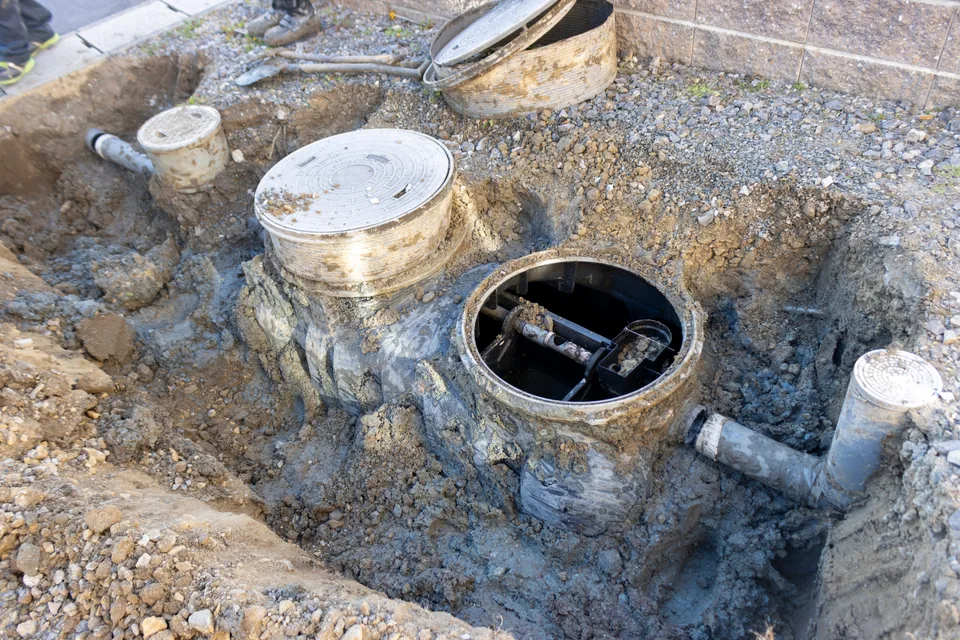

Commercial auto is the line bought to answer for the harm a septic business’s trucks do to other people and their property while those vehicles are owned, maintained or driven. It is generally not the line that answers for the septage riding in the tank, and on most wording it is not the line that settles who pays when that load reaches the ground. What follows walks the trucks through a working day and marks each boundary along the way.
What the auto form answers once a pump truck leaves the yard
Auto liability wording is built around the vehicle rather than around the job it was sent to do. Most forms grant cover for accidents resulting from the “ownership, maintenance or use” of a covered auto, which is what a claim is measured against. It is a broader trigger than a collision and a narrower one than the work itself.
The limits behave in a way owners often assume wrongly. A state supreme court (2024) read a commercial auto policy as not adding the limits for one auto to the limits for another, and read a trailer connected to its power unit as one auto rather than as two. Putting a second truck on the schedule changes what is insured; it does not multiply what one accident can reach.
A two-column comparison. The first column holds what the auto form is generally about. Harm the truck does to other people, from accidents resulting from ownership, maintenance or use of a covered auto, is its subject. A trailer hitched to its power unit was read by a state supreme court as a single auto, so adding a vehicle does not multiply what an accident can reach. Hired and non-owned autos are picked up where the policy schedules those categories. The second column holds what it generally leaves elsewhere. The septage load itself is property in the insured’s care, custody or control, which the liability wording generally removes. A load lost in transit is generally the subject of a separate inland marine cargo form. And a crew member’s own pickup may fall outside a hired-auto definition that takes out autos borrowed from employees. Your own schedule and wording decide it. No figures are shown.
The septage in the tank is not the liability form’s subject
Most auto liability wording removes damage to property the insured owns, to property the insured transports, and to property in the insured’s “care, custody or control”. A state appeals court (2014) applied that exclusion on physical possession alone, without reaching who owned the material. The structural point for a pumper is that the liability form answers for what the truck does to other people, not for the load the truck is carrying.
The load has its own product. Cargo is generally the subject of a separate inland marine form, one that responds to property lost in transit — a different contract with a different trigger. Whether a septic business needs one is a separate decision, and underneath both sits a question about whose property the septage actually is once it is in the truck.
Scheduled, hired and non-owned are three categories, not one policy quality
A commercial auto policy can pick up scheduled autos, hired autos and non-owned autos together, and the definitions of the last two do real work. Hired autos are generally those you lease, hire, rent or borrow. Non-owned autos are generally those you do not own, lease, hire, rent or borrow, and then only where they are “used in connection with your business”.
The seam that bites is the crew’s own vehicles. One hired-auto definition read by a state appeals court (2012) expressly took out autos borrowed from the named insured’s own employees, and that court denied cover on exactly that footing; a different form, read by a state appeals court (2025), defined non-owned autos to include autos owned by members of a limited liability company. Whether an employee’s truck answers depends on which category your form puts it in. Scheduling one vehicle does not make a policy thin, and listing several does not make it complete — it is a schedule question.
Two federal weight lines that do two different jobs
Federal weight classes sort trucks by gross vehicle weight rating, and the rating is the manufacturer’s stated loaded weight of a single vehicle rather than whatever the scale says that morning; for a combination it sums the power unit and the towed unit. Owners are usually told one class for a truck and then assume it governs everything. It does not.
There are two federal lines here and they do different jobs. The lower one is where a vehicle becomes a commercial motor vehicle for federal purposes, under a definition reaching a self-propelled or towed vehicle used on a highway to carry property. The higher one is where the commercial driver license groups begin: a combination group and a heavy straight vehicle group both start there, with the combination group also requiring the towed unit to be rated above a separate threshold of its own. Crossing the lower line does not by itself put a driver into a license group, and treating the two as one is the likeliest mistake here.
The tank endorsement turns on neither of them. It turns on the tank — an individual rated capacity above a stated figure, or an aggregate rated capacity at or above a larger one. Capacity, not vehicle weight: a lighter truck with a large mounted tank can land inside it while a heavier truck with no tank does not, and an empty storage container sitting temporarily on a flatbed is “not considered a tank vehicle” at all. The federal class table is linked below so the figures stay with the authority that publishes them.
When federal motor carrier rules reach a septic route
The federal safety rules reach vehicles transporting property in interstate commerce, which means movement between a place in a state and a place outside that state; intrastate commerce is defined as everything that definition does not describe. So federal rules apply when the work crosses a state line, while wholly in-state work follows that state’s own adoption — a state-by-state question this page does not settle.
There is one exception, and it is the thing most often got wrong: the driver licensing rules are not interstate-only, and are written to reach intrastate operation as well. A truck that never leaves the county can sit inside the federal licensing scheme while the rest of the safety rules pass it by. The financial-responsibility rules are narrower again, reaching for-hire carriers hauling property interstate and reaching intrastate carriage only where hazardous materials, substances or wastes are involved. A state must keep its intrastate rules identical or within the allowed variances, and may not exempt by type of transportation.
The federal attachment, and the question that decides whether it reaches you
Where those rules apply, no motor carrier may operate until it has the prescribed minimum financial responsibility in effect, and proof takes one of three shapes: an endorsement issued by an insurer, a bond issued by a surety, or authority to self-insure. The attachment is described here only by what it does. It promises payment of any final judgment against the insured for public liability arising from negligence, whether or not the particular vehicle is described in the policy, and wherever the negligence happened, on an authorized route or elsewhere. It has to be issued in the exact name of the motor carrier, kept at the principal place of business, produced on reasonable request, and it runs until terminated on written notice.
How far that promise reaches is not settled. A state supreme court (2007) read the wording as containing no terms limiting it to a particular use or territory, so that it answered for a haul that never crossed a line; the same opinion (2007) records decisions elsewhere holding it does not apply to wholly intrastate hauls. That is a live split rather than a rule.
Whether any of it reaches a septic business at all is an open question. Federal financial responsibility attaches to for-hire carriage, defined as the business of transporting, for compensation, “the goods or property of another”. A pumper is plainly paid and plainly moves what comes out of the tank, but whether removed septage stays the customer’s property or becomes the hauler’s is not answered anywhere we could verify. Put it to your agent and to your state regulator in writing rather than assuming it either way.
A left-to-right flow read from the auto form’s side, following the load. It begins with loading, before the septage is moved onto the truck, a stage the auto pollution exclusion reaches back to. The load then rides in the tank on the road, being transported, handled or otherwise in transit, another stage the exclusion names. Unless an upset or overturn happens away from your premises, where a narrow carve-back can restore cover depending on the wording. After final delivery off the truck, a further stage reaches forward past the drop. Where the question grows past what an auto form was built for, it belongs to contractor’s pollution liability. Which stage the load was in, and whether a broadening endorsement is attached, sit between the accident and the answer. No figures are shown.
Where a spill in transit stops being an auto question
Auto forms carry pollution wording of their own: a grant, a definition of a pollutant and an exclusion. On the wording read by a state business court (2020), the auto definition of a pollutant tracked the general liability definition, while the auto grant paid a covered pollution cost only where the same accident also caused bodily injury or property damage the policy answered for.
The auto exclusion is staged by where the load is sitting. One stage catches pollutants “being transported or towed by” the covered auto, handled, otherwise in the course of transit, or stored, treated or processed on it. Another reaches back to before they were moved onto the auto, another forward to after they were finally delivered off it. A narrow carve-back can restore cover for an upset or overturn away from premises owned by or rented to the insured, where the pollutants were not in or upon a covered auto and the discharge was caused directly by that upset — and a state appeals court (2014) placed an overturn between departure and final destination inside the transit stage. Fuels, lubricants and fluids needed for the auto’s own functioning are carved out separately.
Endorsements move the line again; one was described in a coverage letter quoted by a state business court (2020) as all but eliminating the exclusion outside a contractual carve-out. None of this states an outcome: which stage the load was in, whether it had left the tank, and whether a broadening endorsement is attached all sit between the accident and the answer. Where that question grows past what an auto form was built for, it belongs to contractor’s pollution liability.
Your own wording, and the facts of the trip, decide it
Nothing on this page is your policy. The forms described above are standard wording families, and the decisions summarized are courts reading particular contracts on particular facts. Your own policy — its declarations, its covered-auto designations and the endorsements attached to them — is what decides a real claim, together with what happened on the day.
The practical work is smaller than the reading suggests. List the trucks and trailers honestly. Decide deliberately whether hired and non-owned belong on the schedule. Ask which drivers sit in which license group, and whether a mounted tank puts an endorsement on top of that. Then get a written answer on whether hauling a customer’s septage makes you a for-hire carrier in your state.
We read forms rather than brochures. Tell us what is on the schedule and what the trucks actually do in a week — who drives, how far, and where the tank goes — and we will go through it line by line.
Related coverage for septic business owners
- General Liability
- Pollution Liability
- Workers Compensation
- Contractors Equipment
- Commercial Property
- Professional Liability
The work we write
- Septic Installation Insurance
- Septic Pumping & Cleaning Insurance
- Septic Repair & Maintenance Insurance
- All services
From the blog
Primary sources
- Alternative Fuels Data Center — Vehicle Weight Classes and Categories — US Department of Energy, credited to the Federal Highway Administration
Commercial Auto questions we get asked
Does my commercial auto policy cover the septage in the tank?
Generally the load is not what an auto liability form is written for. Most auto liability wording removes damage to property the insured owns, transports, or holds in its care, custody or control, and a state appeals court (2014) applied that exclusion on physical possession alone. The liability side answers for the harm a truck does to others; the load itself is normally the subject of a separate inland marine cargo form. What your own policy does depends on the exact wording and the exact facts.
My vacuum truck went over on a soft shoulder and the tank emptied. Is that an auto claim or a pollution claim?
This page cannot call that for you, and an honest answer starts with the stages rather than the outcome. Auto pollution wording is generally staged by where the load was sitting — in transit on the auto, before it was moved onto it, or after it was finally delivered off it — with a narrow carve-back for an upset or overturn away from your own premises where the pollutants were not in or upon a covered auto. A state appeals court (2014) placed an overturn between departure and final destination inside the transit stage. Whether a broadening endorsement is attached changes it again.
Does a heavier truck automatically mean my driver needs a CDL?
Not on its own, and this is the confusion worth clearing first. The federal line at which a vehicle becomes a commercial motor vehicle and the line the commercial driver license groups turn on are two different thresholds doing two different jobs, and the licensing line is the higher of the two. The tank endorsement turns on neither, because it turns on rated tank capacity: a lighter truck with a large mounted tank can land in it while a heavier truck with no tank does not. The published federal class table and your own state are where the figures come from.
The federal rules only matter if I cross a state line, right?
Mostly, with one exception that catches owners out. The federal safety rules reach vehicles transporting property in interstate commerce, and wholly in-state work follows that state’s own adoption instead. The driver licensing rules are the exception: they are written to reach intrastate operation as well. Financial responsibility is narrower again, reaching for-hire carriers hauling property interstate, and reaching intrastate carriage only where hazardous materials, substances or wastes are involved.
When I haul a customer’s septage, am I a for-hire carrier?
That is the open question on this subject, and nothing retrieved for this page answers it. Under the federal definition, for-hire carriage means carrying another party’s goods or property for pay. Whether removed septage stays the customer’s property or becomes the hauler’s once it is in the tank is not settled in any source we could verify, and the answer decides whether the federal financial-responsibility rule reaches a septic business at all. Put it to your agent and to your state regulator in writing rather than assuming it either way.
One of my guys ran to the supply house in his own truck. Is that on my policy?
It depends which category your form puts it in, and the definitions differ from form to form. Hired autos are generally those you lease, hire, rent or borrow, and one such definition read by a state appeals court (2012) expressly took out autos borrowed from the named insured’s own employees; that court denied cover on exactly that footing. A different form, read by a state appeals court (2025), defined non-owned autos to include autos owned by members of a limited liability company. Read the definitions before assuming.
I only run one truck. Does that make my policy simpler or thinner?
It makes it a schedule question rather than a quality question. A policy can schedule a single vehicle and still pick up hired and non-owned categories, or not pick them up at all. A state supreme court (2024) read commercial auto limits as not adding across the autos on one policy, and read a trailer connected to its power unit as one auto rather than as two. Putting more vehicles on the schedule changes what is on the policy, not how far a single limit reaches.
Talk it through with someone who reads the forms
Tell us what you install, what you pump and who is on the crew, and we will read the forms against the work.