
Coverage line
Commercial Property
The shop, the contents and the improvements you paid for — and why most of the yard itself sits outside what the wording calls covered property.
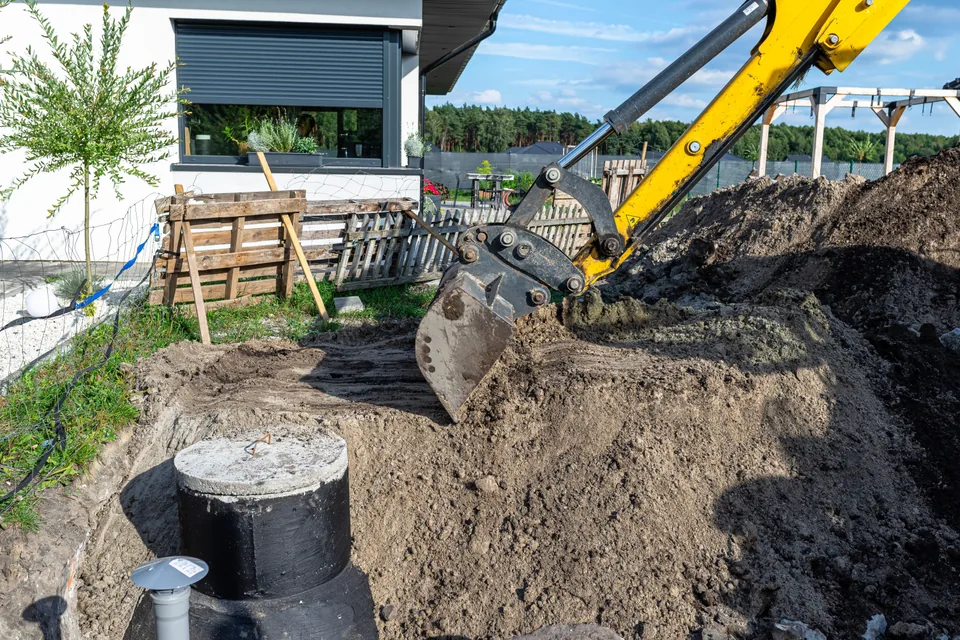

Commercial property insurance answers damage to the fixed things a septic business owns at its own address — the shop building, the stock inside it, and the shop equipment that stays put. It is narrower than most owners expect, because standard commercial property wording generally pays for direct physical loss of or damage to property it has defined as covered, and a septic yard is full of things that definition leaves out. Land, the cost of moving land, buried pipe, the drive and the retaining wall are all named as property the form does not cover, and the machines and trucks belong to other lines.
What the form treats as the shop building
Standard commercial property wording generally works from three types of covered property: the building, the owner’s own business personal property, and personal property of others. Building generally means the building or structure described in the declarations — usually the shop, sometimes an office or a covered bay at the same address. A state supreme court (1997) treated both the stated location of insured property and the value of the property covered as material to the risk an insurer takes on.
The category reaches past the walls. Most such wording pulls in “permanently installed” machinery and equipment, and personal property the owner uses to maintain or service the building or its premises — a bolted-down hoist, the heating plant, the yard lighting. Those generally travel with the building rather than the contents, which usually carry separate limits. It typically also reaches additions under construction, alterations and repairs, and the materials and supplies near the premises used for them. Property being installed at a customer’s address is a different question and belongs to contractors equipment.
Stock, tools and other people’s property in the shop
Business personal property generally carries the working inventory — risers, lids, effluent filters, fittings, pipe, hand tools, the bench and the shelving. The wording names none of those individually; it names categories: furniture and fixtures, machinery and equipment, stock, and a catch-all for all other personal property the owner owns and uses in the business. Mapping the trade’s objects onto those categories is what a limit gets set from.
Stock is defined, generally reaching “merchandise held in storage or for sale” together with raw materials. Most wording also locates the property — in or on the described building, or in the open nearby — so a pallet of tanks out in the yard is generally treated differently from the same pallet inside. Two further listed items matter here: labor or materials furnished by the owner on personal property of others, and leased personal property the owner is contractually responsible to insure.
Personal property of others in the owner’s care, custody or control is generally the third type, and payment for it generally runs only for the account of that owner, not to the contractor holding it.
The yard is mostly not covered property
This is where an expensive assumption usually starts. Standard wording carries an explicit list of what is not covered property, and a septic yard is largely built out of items on it. Land, including the land the property sits on, together with water, growing crops and lawns, is generally outside. So is “excavations, grading, backfilling or filling” — not the dirt alone, but the cost of moving it.
The list keeps going through the things a working yard is made of. “Underground pipes, flues or drains” are generally named as property the form does not cover, and that is the easiest mistake to make on a septic page: the line running from the shop out to the yard’s own tank is generally not covered property, however central it is. “Roadways, walks, patios or other paved surfaces” are generally out as well, along with bridges and retaining walls that are not part of a building. Personal property while airborne or waterborne is generally out, and property covered more specifically under another form generally drops out of this one except for any excess.
There are ways back in, narrow on purpose. Most wording carries an extension for outdoor fences and radio and television antennas, but it generally answers only a short named-peril list rather than the full range of causes of loss. Another generally reaches covered property temporarily at a location the owner does not own, lease or operate. Debris removal is generally an additional coverage, and generally it pays to remove debris of covered property — which puts the negative space above back in play after a loss.
A stack of six layers read from the top down. At the top is physical damage to the shop building from a covered cause of loss. Below it is damage to stock, tools and shop equipment carried as business personal property. Then damage to other people’s property in your care, where payment generally runs for that owner’s account. Then a tenant’s improvements and betterments, made at your own expense and not legally removable. Then debris removal and the first-party pollutant clean-up at the described premises, both tied to a covered cause of loss. At the base is business income and extra expense during a suspension caused by physical loss at the premises, which is not a revenue guarantee. Each layer depends on the wording and the facts. No figures are shown.
Water, backup and ground that moves
Causes of loss come from a separate form class. The basic and broad versions are named-perils forms: they answer the perils they list. The special version is an all-risks form in the sense the industry uses that phrase — it starts from risks of direct physical loss and works backward through a list of exclusions. That is the name of a form class, not a promise to a reader.
Water is the exclusion that bites first. Most special wording excludes flood, surface water, waves, tides and the overflow of any body of water. It generally excludes water backing up or overflowing from a sewer, drain or sump. And it generally excludes water under the ground surface pressing on, or seeping through, foundations, walls, floors and paved surfaces. An endorsement adding sewer, drain or sump backup back into the form does exist; whether it is available on a given account is a question for the quote.
Most such forms also carry their own first-party pollutant clean-up and removal additional coverage, generally reaching the expense of extracting pollutants from land or water at the described premises where a covered cause of loss is behind it — while debris removal generally will not pay to extract pollutants from land. That is a different thing from the liability question. Where a general liability form’s pollution exclusion stops and contractor’s pollution liability begins is argued on general liability and pollution liability, not here.
Wear, decay and the people you let near the yard
Two more exclusion families bite in a shop: wear and tear is generally excluded, and so are rust, corrosion, fungus, decay, deterioration and hidden or latent defect. Hardware that lives in septage-laden air corrodes, and corrosion is generally treated as the cost of owning the thing rather than as an insured loss.
The other family is dishonesty. Most wording excludes dishonest or criminal acts by the owner, the owner’s partners, members, officers, managers or employees, and generally reaches anyone the property is entrusted to for any purpose. Read plainly, theft by employees, including leased employees, is generally not covered, while destruction of property by an employee generally can be.
A leased yard and the improvements you paid for
Plenty of septic businesses rent the yard. Most wording gives the tenant a use interest as tenant in improvements and betterments and generally treats it as a listed contents item rather than as building. Improvements are generally fixtures, alterations, installations or additions made a part of a building the owner occupies but does not own.
Two conditions generally gate it: the improvements were acquired or made at the owner’s own expense, and they cannot legally be removed. A poured pad or a wash bay usually qualifies; shelving that unbolts and leaves with you usually does not. Forms differ on whether improvements are treated under the building category or the contents category. Who buys building coverage on a rented yard is a lease question, and the lease decides it.
When the shop stops, the work stops with it
Business income coverage is generally written to pay the actual loss of business income sustained during a necessary suspension of operations, and both terms are defined. Suspension generally means “the slowdown or cessation of your business activities”. Operations generally means the business activities occurring at the described premises. It is not a revenue guarantee.
The trigger is physical. The suspension must generally be caused by direct physical loss of or damage to property at premises described in the declarations, and that loss must generally result from a covered cause of loss. A yard that cannot dispatch because the shop burned is inside the shape the grant describes; a yard that cannot dispatch with no physical damage behind it generally is not.
The period of restoration has two ends, both mechanical. It generally begins a stated interval after the time of the physical loss for business income, and immediately after that loss for extra expense. It generally ends on the earlier of two dates: the day repair, rebuilding or replacement at the described premises ought to be done at reasonable speed and similar quality, and the day business resumes at a new permanent location. The clock generally runs on how fast the property should be restored, not on how long it actually takes. Extra expense is generally money spent during that same period, above normal operating expenses.
A hub-and-spoke diagram. At the center is commercial property at the described address, which generally pays for direct physical loss to property it has defined as covered. One spoke is the shop building with its permanently installed machinery, which the form generally treats as building. One spoke is stock, tools and the property of others in the shop, carried as business personal property. One spoke is land, excavation, underground pipe and paving, which the form names as not covered property. One spoke is licensed vehicles, including the vacuum truck and the pump truck, which belong to commercial auto wherever they sit. One spoke is self-propelled machines operated principally away from the premises, which belong to contractors equipment even when parked in the shop. The last spoke is the pollution question on the liability side, argued on the general liability and pollution liability pages. No figures are shown.
What is parked, what is on tracks, and where this page stops
The counter-intuitive part of a property policy on a contractor’s yard is that parking something in it does not make it covered property. Vehicles licensed for use on public roads are generally named as not covered property wherever they sit, and automobiles held for sale are generally excluded separately. Trailers generally reach the form only through a non-owned detached trailer extension, which generally carries conditions and generally pays nothing while that trailer is attached to a motor vehicle. The vacuum truck and the pump truck belong to commercial auto.
Machines are the same story. Most wording excludes vehicles and self-propelled machines operated principally away from the described premises. A state supreme court (1997) applied that wording to a contractor’s loader sitting inside his own insured shop being rebuilt for service, read the exception for machines an insured manufactures, processes or warehouses as describing common steps in bringing a product to market rather than repair, and held that the plain language of the contract barred the claim. An excavator does not become covered property by being in the shop. That belongs to contractors equipment.
Everything above describes the shape most standard commercial property wording takes, not any particular policy, and nothing here says a loss is or is not covered. Forms differ between carriers, endorsements move the edges, and the owner’s own policy language read against the actual facts is what controls.
If you would rather have this checked than assumed, send the declarations page and a plain list of what actually sits at the yard — what is in the shop, what is stacked outside, what is parked, and what you built into a yard you rent.
Related coverage for septic business owners
- General Liability
- Pollution Liability
- Workers Compensation
- Commercial Auto
- Contractors Equipment
- Professional Liability
The work we write
Commercial Property questions we get asked
Is the buried line running from my shop out to my own tank covered?
Generally not. Standard commercial property wording names underground pipes, flues and drains as property the form does not cover, and it names land and the cost of excavating, grading and backfilling the same way. That holds however central the line is to the operation. What a particular policy does with it still depends on the exact wording and the exact facts, so read the declarations and the endorsements rather than assuming either answer.
My yard is gravel and I just had it regraded. What happens if it washes out?
Two separate things generally point the same way. The property itself — land, the drive, the cost of grading and backfilling — is generally on the not-covered-property list, and the special causes-of-loss wording generally excludes flood, surface water and the overflow of any body of water on top of that. Site work in a yard is usually a drainage question rather than a property-insurance one, and your own policy language controls.
I have tanks and risers sitting in the yard waiting to go in. Are those stock?
Probably, in the sense the form uses the word. Stock is generally a defined term reaching merchandise held in storage or for sale together with raw materials, and it is one of the listed kinds of business personal property. Most wording also cares where the property sits — in or on the described building, or in the open nearby — so material in the open is generally treated differently from the same material inside the shop.
A customer’s pump is on my bench for repair. Whose insurance answers if the shop burns?
Personal property of others in your care, custody or control is generally the third type of covered property under standard wording, so the form is usually built to reach it. One detail surprises owners: payment for loss of property of others generally runs only for the account of that owner rather than to the contractor holding it. Whether it responds at all depends on the exact wording and the exact facts.
I rent my yard. What about the wash bay and the office I built into it?
Most wording gives a tenant a use interest as tenant in improvements and betterments and generally treats it as a listed contents item. Two conditions generally gate it: you acquired or made the improvements at your own expense, and you cannot legally remove them. Forms differ on whether improvements sit under the building category or the contents category. Who insures the building itself is a lease question, and the lease is the document that decides it.
If the shop burns, does anything keep paying me while it is rebuilt?
That is what business income coverage is generally written to do. It pays the actual loss of business income sustained during a necessary suspension of operations, where the suspension is generally caused by direct physical loss of or damage to property at the described premises from a covered cause of loss. The period of restoration generally ends on the earlier of the date the property should be repaired with reasonable speed and similar quality, or the date business resumes at a new permanent location.
Sewage backed up into my shop from the street. Is that a property claim?
Standard special-form wording generally excludes water backing up or spilling out of a sewer, drain or sump, and separately excludes water under the ground surface pressing on or seeping through foundations, walls, floors and paved surfaces. An endorsement that adds sewer, drain or sump backup back does exist. Whether it is on your policy, and on what terms, is a question for your declarations and your agent rather than for a web page.
Talk it through with someone who reads the forms
Tell us what you install, what you pump and who is on the crew, and we will read the forms against the work.