Skip to content

Georgia

Septic Contractor Insurance in Georgia

Georgia certifies septic contractors rather than licensing them — and the certification is really two certifications, one held by the person and one held by the company.

Get a quote Call 317-942-0549

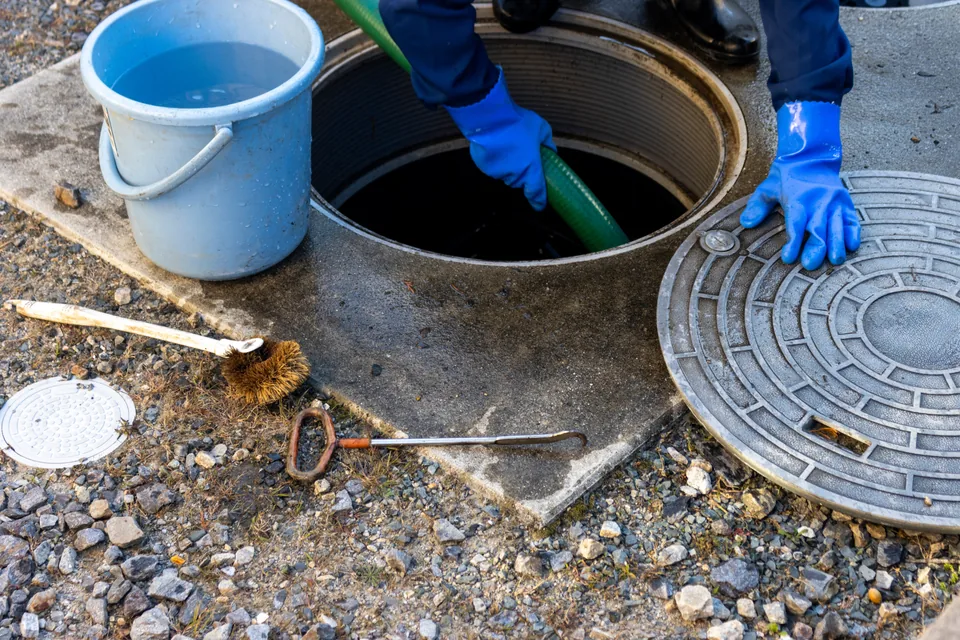
A gloved technician feeding a green hose into an open septic tank access — septic contractor insurance in Georgia

Georgia certifies septic installers itself. The certifying body is the Georgia Department of Public Health: it certifies the septic tank installer statewide, on a written examination, and certification is the word the state uses in its rule, in its Manual and on its own pages — the only thing that chapter calls licensed is an engineer. The operative sentence names the soil classifier beside the septic tank contractor, the inspection and maintenance personnel and the sewage pumper, and says they “must be certified by the Department.” It carries no exemption on its face — no threshold, no class of work carved out — so the duty reaches every individual performing those services.

And the credential is two credentials. The certified individual has to own, or work for, a septic tank company that holds its own separate certification, so a one-person Georgia outfit holds the person’s certification and the company’s: two renewals, and two ways to lapse. The Manual excuses two groups from that ownership-or-employment requirement — someone employed by a local municipality or governmental entity doing this work under its own jurisdiction, and a homeowner installing a conventional system “at their primary residence.” Read those for exactly what they say. They excuse the attachment to a company. They do not excuse the certification, and they do not excuse the permit, the inspection or the rules.

Permission to build a particular system is a different instrument, and it does not come from the state. The construction permit comes from the county board of health for the site, and the job is not finished when the tank is in the ground: nobody may backfill or use the system until that same board has made a final inspection and issued its written approval. The counter where you sit the certification examination is local as well, which is a large part of why this credential gets mistaken for a county one. It is not — the certification is statewide, and the approval for that hole in the ground is your county’s.

One Georgia finding belongs on an insurance page more than on any other kind. The state’s on-site sewage rules do attach a proof-of-coverage condition to a credential, and it is not the installer’s and not the pumper’s — it is the soil evaluation and the engineered design. The soil classifier, engineer or geologist attaches a current liability certificate and then has to keep it current, because Georgia makes that a continuing condition rather than a one-off filing. The Department’s own words are “Insurance must be current and on file” — and the Manual provides that losing it immediately revokes the approval to perform soil evaluations. Nothing of the kind is asked of the person who digs the hole, which makes what a septic business carries a commercial decision rather than a filing it makes to stay certified.

It is worth reading that alongside one more provision. Georgia lets the Department revoke or deny a certification on a list of grounds, and some of those grounds are commercial events rather than technical failures — among them a civil judgment arising out of on-site sewage work. A loss and a certification proceeding can therefore be the same event, and the second one reaches every job the company has open. The sections below set out each finding beside the authority it rests on, with a link to the source, so none of it has to be taken on our word.

What Georgia requires of a septic business

Installing

Georgia certifies septic installers at the state level. The Georgia Department of Public Health certifies the septic tank installer under its On-Site Sewage Management Systems rules, statewide, on a written examination -- and the certified individual must also be an owner of, or employed by, a separately certified septic tank company. The word Georgia uses is CERTIFICATION, not license.

Authority Ga. Comp. R. & Regs. 511-3-1-.16(1); 511-3-1-.16(1)(a); 511-3-1-.16(1)(c); 511-3-1-.16(2); 511-3-1-.03(2); 511-3-1-.03(3); 511-3-1-.03(4); 511-3-1-.03(7); 511-3-1-.19; and the Department’s Manual for On-Site Sewage Management Systems, Section N, paragraphs 1, 2, 3, 4, 5 and 6. The rule’s own authority line, printed at the foot of every section of the chapter, reads: "Authority: O.C.G.A. Secs. 12-8-1, 31-2A-6, 31-2A-11." — read the source

Pumping and hauling

Georgia’s septage answer is TWO instruments stacked, and a page that names one has named half of it. The pumper holds a STATE CERTIFICATION from the health department under the same rule and the same sentence as the installer; the pumping OPERATION holds a SEPTAGE REMOVAL PERMIT issued by the COUNTY BOARD OF HEALTH, filed in the county where the business has its base of operations, and renewed annually. The environmental agency issues the hauler nothing.

Authority Ga. Comp. R. & Regs. 511-3-1-.11(1); 511-3-1-.11(2); 511-3-1-.11(3); 511-3-1-.11(4); 511-3-1-.11(5); 511-3-1-.16(1); 511-3-1-.17(5); the Department’s Manual for On-Site Sewage Management Systems, Section I, paragraphs 1, 2, 3 and 4, and Section N, paragraphs 2, 4 and 5; and, for the separate portable sanitation credential, Ga. Comp. R. & Regs. 511-3-6-.03(2), 511-3-6-.05(1), 511-3-6-.05(2), 511-3-6-.05(3) and 511-3-6-.06. The chapter’s own authority line reads: "Authority: O.C.G.A. Secs. 12-8-1, 31-2A-6, 31-2A-11." and the portable sanitation chapter’s reads: "Authority: O.C.G.A. Sections 31-2A-6, 31-12-8, 31-27-9, 12-8-1." — read the source

Inspecting and evaluating

Georgia DOES certify septic inspectors -- and the certification is not the one a reader assumes. The Department’s two inspector grades are defined as EMPLOYEES OF A LOCAL BOARD OF HEALTH, so they are the regulator’s own field staff, not a private third-party inspector class. The certification a private Georgia firm holds for looking at somebody else’s existing system is the MAINTENANCE CONTRACTOR certification, which the Manual defines to include routine inspection and evaluation.

Authority Ga. Comp. R. & Regs. 511-3-1-.16(1); 511-3-1-.03(3)(a); 511-3-1-.03(4); 511-3-1-.17(2); 511-3-1-.17(4); 511-3-1-.17(6); and the Department’s Manual for On-Site Sewage Management Systems, Section N, paragraphs 1, 2, 4 and 5, and Section K, paragraphs 1 and 2. — read the source

Workers compensation

Georgia workers compensation is compulsory for an employer that regularly employs three or more persons, counting part-time as well as full-time workers, and the Board states the duty in those terms: "Every employer, individual, firm, association, or corporation, regularly employing three or more persons, part-time or full time, shall provide workers' compensation insurance coverage." -- so a Georgia septic outfit crosses into the Act by HEADCOUNT rather than by trade, and once it is inside, the Board gives it exactly two routes: "Every employer subject to the workers' compensation law must insure payment of benefits to injured workers by securing a policy of insurance or by qualifying and being approved as a self-insurer."

Authority The Act is Title 34, Chapter 9 of the Official Code of Georgia; the Board’s own supervisor’s manual states it in those terms -- "The Act is contained in the Official Code of Georgia, Title 34, Chapter 9." -- and cites O.C.G.A. section 34-9-2 for the employees the Act excepts, O.C.G.A. section 34-9-1(2) for the definition of employee and O.C.G.A. section 34-9-1(3) for the definition of employer. — read the source

What Georgia requires of a septic business — installing, hauling, inspecting and workers’ comp from private insurers — and what each requirement leaves to the insurance program.

A panel for Georgia in rows. Each row sets one thing the state requires beside the exposure that requirement leaves open and the coverage line that answers it. Installing: Septic installers are certified at the state level. It leaves open a failed install or drainfield, damage to the customer’s property, which General Liability and Pollution Liability answer. Pumping and hauling: A septage hauling permit is on the books. It leaves open a spill or release in transit, the truck at fault, which Commercial Auto and Pollution Liability answer. Inspecting and evaluating: A state inspector or evaluator certification is on the books. It leaves open a missed defect in an inspection or design, which Professional Liability answers. Workers compensation: Compulsory for covered employers; private insurers write it. It leaves open an injured employee in the trench or on the truck, which Workers Compensation answers. Notes: A license, permit or bond is not a policy — a bond secures the public body that requires it, not the customer. The conclusion reads: The credential is not the coverage — the program is. No figures are shown.

Where we write in Georgia

Atlanta · Fulton County

Work sited at the sewer boundary sits on lots a district passed over once and may reach later, which puts a contractor’s completed systems on ground whose regulatory status can change under them -- and a failure on the wrong side of the line is not a repair job at all, because the rule sends that customer to the sewer instead.

Savannah · Chatham County

A repair-versus-connect decision that rests on a regulator’s soil judgment means a contractor can quote, mobilize and be refused -- and a customer who was told the repair was possible has a complaint that looks like a professional-advice claim rather than a workmanship one.

Augusta · Richmond County

On a site where other trades follow the septic contractor, the approval he earned can be voided by somebody else’s landscaping or grading -- so the exposure is created by a party he does not control, on a system he built correctly, and the argument about who caused it happens after the ground is closed.

Macon · Bibb County

A commercial job needs a differently certified installer AND a licensed engineer’s signature, so an operator who quotes one without holding the other is bidding work he cannot lawfully perform -- and a scope-of-certification gap is exactly the fact that turns an ordinary loss into a coverage argument.

Dalton · Whitfield County

Pretreatment kit is a products-and-completed-operations exposure with a performance specification attached -- the system either brings the stream below the stated limit or it does not, which is a measurable failure rather than an arguable one.

Blue Ridge · Fannin County

Work that depends on a soil classifier’s study and an engineer’s site plan puts a contractor in a chain of professional opinions he did not form, and a system that fails on slow ground will be argued about across all three of them.

Valdosta · Lowndes County

Storing septage turns a mobile operation into a permitted fixed site with a tank, a containment pad and a manifest trail -- a pollution and premises exposure at the operator’s own yard, which is separable from anything that happens at a customer’s tank.

Athens · Clarke County

Evaluation work performed to a published state procedure, for a buyer or a landlord who will rely on it, is professional-opinion exposure sitting inside a contracting operation -- the kind of work a general liability form was not drafted for and the kind a page should name rather than imply.

Georgia questions we get asked

Does Georgia license septic installers?

Georgia certifies them. The certifying body is the Georgia Department of Public Health, and it certifies the septic tank installer statewide on a written examination, and certification is the word the state uses in its rule, in its Manual and on its own pages — the only thing that chapter calls licensed is an engineer. The duty is written with no exemption on its face, and it reaches every individual performing these services.

Does my company need its own certification as well as mine?

Yes, and a one-person outfit holds both. The certified individual has to own, or work for, a septic tank company that holds its own separate certification, and the Department’s own certification guidance is that a sole operator can start a company and be its only certified installer or pumper. Two certifications means two renewals and two ways to lapse.

Is the certification the same thing as the permit for the job?

No, and that pair is the one most often written backwards. The certification is the state’s and it travels with you. Permission to build a particular system is a construction permit from the county board of health for the site, and the job is not finished until that same board has made a final inspection and issued its written approval.

Does Georgia require a septic contractor to carry insurance?

Georgia’s on-site sewage rules attach no insurance condition to the installer certification or to the pumper certification. They do attach one to the soil evaluation and to the engineered design: the soil classifier, engineer or geologist files a current liability certificate and has to keep it current. County ordinances and local business-licensing conditions are a separate question we have not answered for you here.

Who can evaluate an existing system in Georgia?

Georgia certifies inspectors, but both grades are, by definition, employees of a local board of health — they are the regulator’s own field staff. A private contractor who evaluates somebody else’s existing system is doing maintenance contractor work under the state’s maintenance contractor certification. And the entry is conditional rather than compulsory: Georgia sets no recurring evaluation interval and no point-of-sale trigger.

Do I need workers compensation for a small crew in Georgia?

Georgia’s duty attaches by headcount rather than by trade — an employer regularly employing three or more people, part-time as well as full-time, has to secure a policy or qualify as a self-insurer. Officers and members who have waived coverage on themselves still count toward that number. And a contractor who sublets to an uninsured subcontractor can meet that exposure again on their own audit, as premium.

This page reports Georgia law as our own state research file records it. It is general information rather than legal advice, and it is not an opinion on what any policy covers — the wording you hold controls that, and carriers do not all write it the same way.

Talk it through with someone who reads the forms

Tell us what you install, what you pump and who is on the crew, and we will read the forms against the work.

Get a quote