Skip to content

Idaho

Septic Contractor Insurance in Idaho

Idaho names the septic installer in its rule and splits the permit into two classes — and the counter that issues it is your public health district, not a state office.

Get a quote Call 317-942-0549

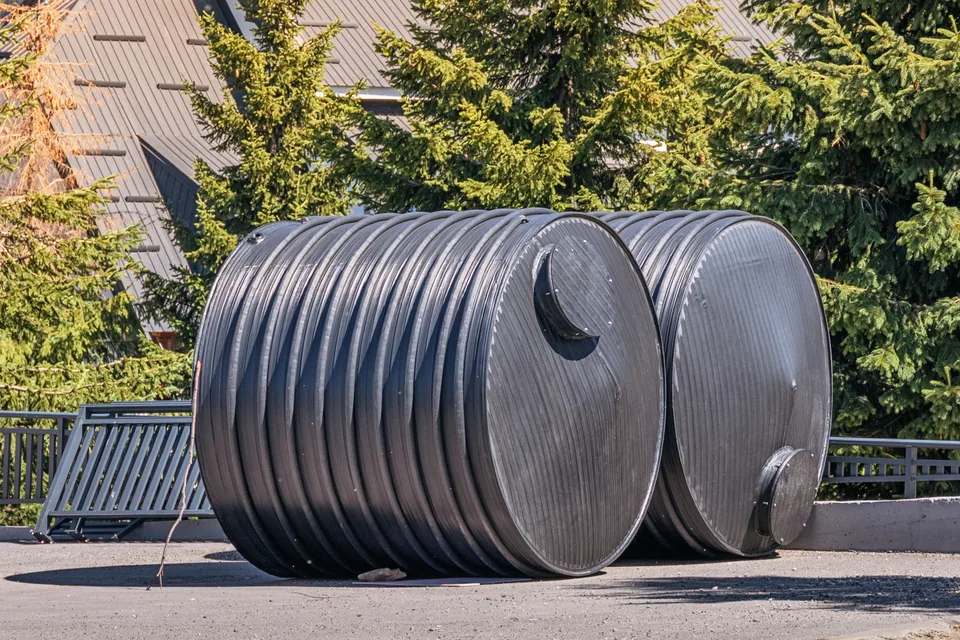
Two large ribbed plastic septic tanks lying on their sides on pavement — septic contractor insurance in Idaho

Idaho licenses the septic installer, by that name, and splits the credential in two. The mandate is a state administrative rule, IDAPA 58.01.03, written in one sentence that puts every installer and service provider under a registration permit from the Director. Which of the two you need is decided by what you build. “A basic system installer’s permit is required to install all individual systems not listed under Subsection 006.01.b.” The second class reaches the engineered and mechanical work — “A complex system installer’s permit is required to install evapotranspiration systems, ETPSs, lagoon systems, LSASs, pressure distribution systems, PWTP systems, intermittent sand filters, sand mounds, or other alternative systems specified in the TGM.” That split is a revenue fact before it is a compliance one: a contractor who holds only the basic permit is not lawfully able to install the alternative systems a hard site forces, and a hard site is not something you get to decline after the soil report comes back. Both classes are earned the same way. IDAPA 58.01.03.006.02 provides that “The initial issuance of the installer’s or service provider’s permit will be based on completing an examination, with a passing score of seventy percent (70%) or more”, the permit expires at the start of each year, and a refresher course approved by the department comes round every three years.

The state writes that rule and does not take the application, and a contractor who goes looking for a state counter will not find one. Idaho’s environmental agency states the arrangement in its own words: “Idaho’s seven public health districts administer these rules under a memorandum of understanding (MOU) with DEQ.” Those districts “conduct site evaluations, issue septic system permits, inspect installations, and assist with property-specific questions about permitting, existing systems, and permit records.” So the credential is a state credential issued by your public health district — the district health department with jurisdiction over the county where the work is performed. A district is an office rather than a place: each one is built out of named counties, it covers between four and eight of them, and the way you find yours is by the county the job sits in. It is also its own body and not an arm of the state, which Section 39-414(12), Idaho Code, says in terms when it provides that “a public health district is not a subdivision of the state” — while the rule that creates the credential names the issuer as the Director, a term Section 39-103(7), Idaho Code, defines as “the director of the department of environmental quality or the director’s designee.” What all of that adds up to for a working contractor is short. One permit, taken out at the district that serves your county, is good across Idaho: “All installers within the State of Idaho must obtain either a basic or complex installer’s registration permit.” You do not need one in each district, and the counties whose work you take do not multiply it.

The duty does not reach every installer, and the rule’s own exemption subsection names two cases it leaves out. Its exemption subsection opens “An installer’s permit is not required for:” and then names two cases. The first is a class of contractor: a licensed public works contractor building a central or municipal system, experienced in that type of system and working under the direction of a professional engineer licensed in Idaho. The second is a class of person and of system, and every word of it is a limit — “Owners installing their own standard or basic alternative system as described in the TGM.” It is the owner. It is their own system. And it stops at the standard and basic alternative classes, so it does not reach the complex list at all. It is not an exemption a contractor can stand in, and an owner who hires help has stepped outside it. The permitting agency puts the same shape in plain words on its own septic page: “In Idaho, all septic systems must be installed by a licensed basic or complex installer (unless a homeowner establishes a standard/basic system on their property with no hired help).” Two named operators sit outside the installer permit. Every other installer must secure the registration permit.

The permit is conditioned on a bond, and the bond is a surety bond rather than liability cover — the one distinction on this page that is most easily blurred and most expensive to get backwards. IDAPA 58.01.03.006.05.b sizes it by class: the bond must “Be in the sum of ten thousand dollars ($10,000) for a basic installer’s or service provider’s permit, or thirty thousand dollars ($30,000) for a complex installer’s permit;”. What it guarantees is the permit holder’s faithful performance, and the rule then hands the damaged customer a direct route to it: “Any person who suffers damage from negligent or wrongful acts of the installer or service provider or by the installer’s or service provider’s failure to competently perform any of the work agreed to be done under the terms of the registration permit will, in addition to other legal remedies, have a right of action on the bond”. Read what that actually does. A surety bond is a third-party guarantee that the principal makes good; where it pays, it pays your customer and then looks to you for the money. It is not insurance for the contractor, and it leaves your own liability exposure exactly where it was — which is why a contractor who has satisfied the bond condition has answered the state and answered nothing else.

A second Idaho credential sits beside the first, and it is not a septic credential at all. Idaho registers contractors generally, under the Idaho Contractor Registration Act at Title 54, Chapter 52, Idaho Code, and that statute is where the blunt word appears: “On and after January 1, 2006, it shall be unlawful for any person to engage in the business of, or hold himself out as, a contractor within this state without being registered as required in this chapter.” It is trade-blind — it reaches contractors rather than septic contractors — and it is administered by the Idaho Contractors Board rather than by any health district. Its conditions are the ones this trade is usually asked about. Section 54-5210(1)(e), Idaho Code, requires the application to carry proof that the applicant has in effect “a general liability policy, including products and completed operations insurance covering the applicant’s construction operations in the sum of not less than three hundred thousand dollars ($300,000) single limit.”, and Section 54-5210(1)(d) requires proof of workers’ compensation coverage or a written statement of why that coverage is not required. Notice which words the legislature chose. Products and completed operations is the limb that answers for a finished system long after the crew has gone, and a septic system is precisely the kind of work that keeps producing that exposure. Now the fence, which matters more here than the figure does. Those are conditions of contractor registration. They are not conditions of the installer’s registration permit — that one is secured by a surety bond, which is not insurance at all — and nothing here should be read as saying an Idaho septic contractor must hold both: Section 54-5205(1), Idaho Code, opens with a wide carve-out for a person “licensed, registered, or otherwise regulated by the state of Idaho” practicing what they are regulated for, and whether that carve-out reaches an installer holding a registration permit is a live question the chapter does not answer in terms. State each credential on its own terms, and ask the body that issues it.

Two further permits live in the same rule chapter, and a contractor who does the work should know which one they are holding. Pumping is its own instrument: the rule requires whoever operates septic tank pumping equipment to hold a permit from the Director and to renew it annually, and its words are set out below. It is one permit for the business and not a permit per truck, and the fleet is marked rather than separately licensed: “For each permit issued, a number is assigned to the owner or operator of the tank truck or trucks that must be displayed at all times on the door of the vehicle or vehicles in a legible manner.” Inspection in Idaho takes three sentences together, because the first alone would leave a reader believing nothing is inspected. Idaho certifies no septic inspector and requires no inspection when a property is sold. It does require a certified service provider — a service provider permit alongside the two installer classes — for the annual operation, maintenance and monitoring of an extended treatment package system, under a rule quoted below. And the inspection every new system does get is the regulator’s rather than a private one, and the rule that puts that final installation inspection on the critical path is quoted below. For a contractor that final installation inspection is a scheduling risk as much as a legal step, because a trench that has to stay open until the inspector arrives is an exposure for every hour it waits.

Workers’ compensation is the one requirement on this page that is not a credential, and Idaho begins it at no particular size of crew. Section 72-301(1), Idaho Code, puts that duty on every employer, in words set out below, and gives two ways to meet it — insuring with an insurer the state authorizes to write it, or self-insuring on the approval of the state’s industrial commission with security deposited with the state treasurer. There is no minimum number of employees in it. What Idaho has instead is a list of exempt employments, which opens “None of the provisions of this law shall apply to the following employments unless coverage thereof is elected as provided in section 72-213” and then names eleven, among them the sole proprietor, the working partner, the working member of a limited liability company and the corporate officer who meets both the ownership and the director tests. That is an election in and not an election out: an owner or working partner is outside the system until they choose otherwise, and nothing lets an employer put a covered worker outside it. Section 72-319(1) sets the price of getting it wrong — “Any employer required to secure the payment of compensation under this law who fails to secure the payment thereof shall be guilty of a misdemeanor.” — and adds individual liability for a responsible officer, a daily civil penalty, and an injunction that can stop the business while the default continues.

The two places Idaho does speak about money behind the work — a surety bond on the installer permit, and the liability insurance conditions of contractor registration — belong to different instruments, and neither is insurance for the contractor’s own liability exposure. The sections below set out each credential with the authority it rests on, so you can check it rather than take our word for it.

What Idaho requires of a septic business

Installing

Idaho licenses the septic installer, by that name, in two classes, on an examination and a surety bond — and the counter is the public health district, not a state office. The rule is IDAPA 58.01.03.006.01: “Every installer and service provider must secure from the Director a registration permit.” A basic permit covers ordinary systems; a complex permit is required for the alternative systems named in the rule. A separate service provider permit exists for operating and monitoring complex systems, and it is recorded on the inspection axis because it attaches to evaluating a system in service rather than to building one.

Authority IDAPA 58.01.03, Individual/Subsurface Sewage Disposal Rules and Rules for Cleaning of Septic Tanks, promulgated by the Idaho Department of Environmental Quality under Title 39, Chapter 1 and Title 39, Chapter 36, Idaho Code — read the source

Pumping and hauling

Idaho permits the SEPTAGE PUMPER as an operator, annually, under the same rule chapter that licenses the installer — and then puts a number on every truck. IDAPA 58.01.03.050.04.a requires that “All persons operating septic tank pumping equipment must:” “Obtain a permit from the Director to operate such equipment;”, renew it annually, and “Apply for permit renewal before March 1 of each year.”

Authority IDAPA 58.01.03, Section 050, Septic Tank Cleaning, promulgated by the Idaho Department of Environmental Quality under Title 39, Chapter 1 and Title 39, Chapter 36, Idaho Code — read the source

Inspecting and evaluating

Idaho credentials nobody to inspect a septic system at a property sale, and it credentials one person to evaluate a system in service: the CERTIFIED SERVICE PROVIDER. For an extended treatment package system the annual operation, maintenance and monitoring must be done by that person and by no other — IDAPA 58.01.03.009.03.d. Every other inspection in the chapter is done by the regulator.

read the source

Workers compensation

Idaho requires every employer to secure the payment of workers’ compensation, and it does so without an employee-count threshold: Section 72-301(1), Idaho Code, opens “Every employer shall secure the payment of compensation under this law in one (1) of the following ways:” and then gives two — insuring with an insurer authorized by the state insurance regulator to transact that insurance, or becoming self-insured with the approval of the state’s workers’ compensation commission and security deposited with the state treasurer. Drawn from Idaho’s own statute and from no shared paraphrase.

Authority Title 72, Idaho Code — Worker’s Compensation and Related Laws; Industrial Commission — read the source

What Idaho requires of a septic business — installing, hauling, inspecting and workers’ comp from private insurers or a state fund — and what each requirement leaves to the insurance program.

A panel for Idaho in rows. Each row sets one thing the state requires beside the exposure that requirement leaves open and the coverage line that answers it. Installing: Installers are licensed by name, in two classes, through the health district. It leaves open a failed install or drainfield, damage to the customer’s property, which General Liability and Pollution Liability answer. Pumping and hauling: A septage hauling permit is required. It leaves open a spill or release in transit, the truck at fault, which Commercial Auto and Pollution Liability answer. Inspecting and evaluating: A state inspector or evaluator certification is required. It leaves open a missed defect in an inspection or design, which Professional Liability answers. Workers compensation: Compulsory for covered employers; private insurers and a state fund write it. It leaves open an injured employee in the trench or on the truck, which Workers Compensation answers. Notes: A license, permit or bond is not a policy — a bond secures the public body that requires it, not the customer. The conclusion reads: The credential is not the coverage — the program is. No figures are shown.

Where we write in Idaho

Hayden · Kootenai County

A Panhandle septic contractor works lake and river ground with shallow limiting layers, which is exactly where a design leaves the standard class and enters the complex classes the rule lists. The class of registration permit a contractor holds decides whether they can take that work at all, so the credential itself is a revenue-scope fact before it is a compliance fact.

Lewiston · Nez Perce County

A book of business that straddles a state line carries two credential regimes and two certificate wordings on one policy. This record asserts nothing about the neighboring state’s rules; the sibling record must be read before any page says what the other side asks.

Caldwell · Canyon County

This is subdivision country, and a subdivision is where the septic job stops being a homeowner job: the same district notes that “Additional permits may also be required through the applicable city or county where construction is taking place.” A contractor inside a build sequence faces a general contractor’s additional-insured and certificate demands rather than a homeowner’s handshake.

Boise · Ada County

The large-system route runs through this city rather than through the district: the agency states that a large soil absorption system design “must be prepared by a professional engineer licensed in Idaho and must undergo a plan and specification review by DEQ”, and that a licensed complex installer is required for the installation. A contractor moving from houses to a resort, a school or a subdivision changes design authority, installer class and reviewing agency in one step.

Twin Falls · Twin Falls County

A contractor here is routinely hours from the counter that must attend the final inspection, and the rule puts that inspection on the critical path: “No system may receive wastewater until the Director conducts a final installation inspection and completes as-built drawings and specifications depicting the actual installation.” 011.03 requires 48 hours’ notice where the inspection needs preparation. Scheduling risk is a real cost of business in a district this size, and an open trench is an exposure while it waits.

Pocatello · Bannock County

Southeastern Idaho carries a mix of small municipal systems and rural soil-based ones, so a contractor here moves between work that needs only the basic registration permit and work that touches central or municipal systems — where 006.08.a hands the job to a licensed public works contractor working under a professional engineer instead. Knowing which side of that line a job falls on is a bidding decision.

Idaho Falls · Bonneville County

This is the district with the most seasonal and recreational property in the state, and a seasonal system is where the extended treatment package systems appear — which drags in the third credential: the annual operation, maintenance and monitoring must be “completed by June 30 of each year by a certified service provider in accordance with Section 006”. A contractor who installs those systems and does not hold the service provider permit is handing the recurring revenue to somebody who does.

Idaho questions we get asked

Does Idaho license septic installers?

Yes, and in two classes. The mandate is a state administrative rule, written in one sentence that puts every installer and service provider under a registration permit from the Director. A basic installer’s permit covers the ordinary systems. A complex installer’s permit is the one that reaches evapotranspiration, lagoon, pressure distribution and sand mound work, and the other alternative systems the rule names. Both classes rest on an examination and a surety bond, and both permits expire every year. A contractor holding only the basic permit cannot lawfully install the complex list, which makes the class you hold a question about what work you can take.

Who issues the permit — the state, my county, or the health district?

Your public health district. The state environmental agency writes the rule and states the arrangement in its own words: “Idaho’s seven public health districts administer these rules under a memorandum of understanding (MOU) with DEQ.” Seven districts cover Idaho, each one built out of named counties, so the county the work is in tells you which counter is yours. Once you hold the permit it is not district-bound — “All installers within the State of Idaho must obtain either a basic or complex installer’s registration permit.” One permit, obtained at your district, used anywhere in the state. What differs between districts is the fee, the application and how the refresher is delivered, not the credential.

Is anyone exempt from the installer permit?

Two cases, both named in the rule’s own exemption subsection. It opens “An installer’s permit is not required for:” and then reaches a licensed public works contractor building a central or municipal system, experienced in that type of system and working under the direction of a professional engineer licensed in Idaho — and “Owners installing their own standard or basic alternative system as described in the TGM.” Read the second one closely, because it is narrower than it sounds. It is the owner, it is their own system, and it stops at the standard and basic alternative classes. It is not an exemption a contractor can stand in and it does not reach the complex systems. Everybody else who takes this work for hire needs the permit.

Is the bond the same thing as liability insurance?

No: the permit is conditioned on a surety bond, and a bond is not liability cover. The permit is conditioned on a surety bond, which IDAPA 58.01.03.006.05.b sizes by class — “Be in the sum of ten thousand dollars ($10,000) for a basic installer’s or service provider’s permit, or thirty thousand dollars ($30,000) for a complex installer’s permit;” — and what it guarantees is the permit holder’s faithful performance. A customer who is damaged gets a direct route to it and can “have a right of action on the bond”. A bond is a third-party guarantee that the principal repays, so it pays your customer and then looks to you for the money back. It is a guarantee, not cover for your own liability, and it does nothing about what a finished system can cost you years after the crew leaves.

Does Idaho require a septic inspection when a house is sold?

No. Idaho certifies no septic inspector and mandates no inspection at a property sale. What the rule does attach to a transfer is a notice duty rather than an inspection. The seller of a property with an extended treatment package system has a notice duty — “Before transferring ownership of a property with an ETPS, the system owner must notify all transferees of the ETPS operation, maintenance, and monitoring requirements.” And a public health district will evaluate an existing system on request, which is what a lender or a buyer commonly asks for. The credential Idaho does require on this axis is the certified service provider, for the annual work on that one class of system rather than on an ordinary tank and field.

How many employees before I need workers compensation in Idaho?

There is no such number: the duty reaches every employer, with no minimum number of employees. The statute begins “Every employer shall secure the payment of compensation” and gives two ways, which are insuring with an authorized insurer or self-insuring on the commission’s approval with security deposited with the state treasurer. What Idaho uses instead of a headcount is a list of exempt employments: a sole proprietor, a working partner, a working member of a limited liability company and a corporate officer who meets the ownership and director tests sit outside the system unless they elect in. The election runs one way only — nothing lets an employer opt a covered worker out — and failing to secure the payment is a misdemeanor.

This page reports Idaho law as our own state research file records it. It is general information rather than legal advice, and it is not an opinion on what any policy covers — the wording you hold controls that, and carriers do not all write it the same way.

Talk it through with someone who reads the forms

Tell us what you install, what you pump and who is on the crew, and we will read the forms against the work.

Get a quote