Skip to content

Colorado

Septic Contractor Insurance in Colorado

Colorado writes the septic installer credential into state law — and then leaves each local board of health to decide whether to require it.

Get a quote Call 317-942-0549

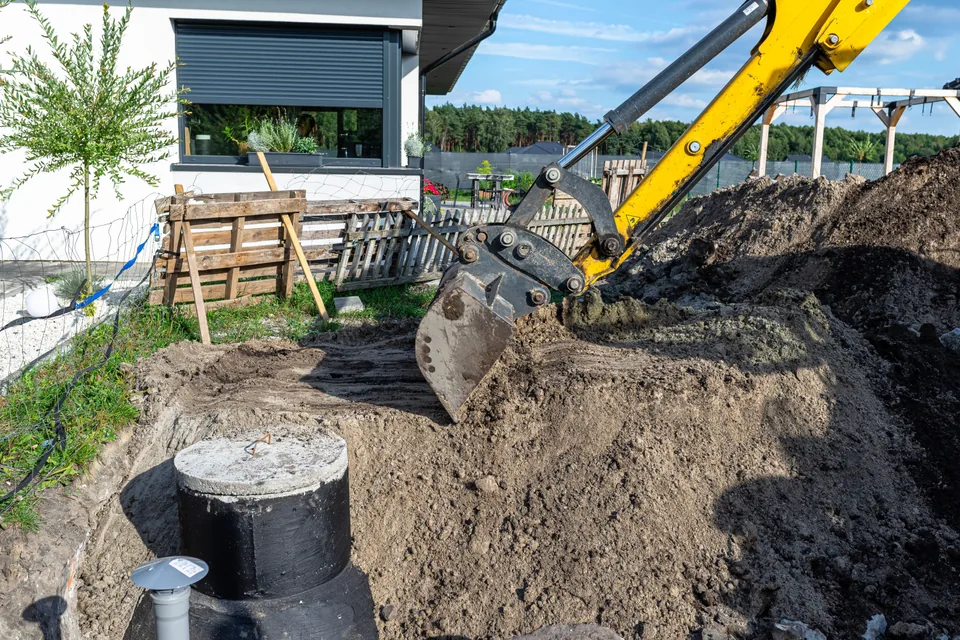
A backhoe arm backfilling soil around a buried septic tank riser near a house — septic contractor insurance in Colorado

Colorado issues no state septic installer license. There is no state licensing board for this trade to find, and that is a finding rather than a gap in the search: read as whole documents, Colorado’s occupational-licensing title never uses the word septic at all, and the word installer does not occur once in the public health title that governs this work. What Colorado does instead is write the credential into state law and hand each local board of health the choice of whether to issue it. C.R.S. 25-10-109 (1) provides that “The local board of health may adopt rules that provide for the licensing of systems contractors.” So the license a Colorado septic installer actually holds is a systems contractor license, issued by your local board of health — and the counter is the board of health with jurisdiction over the site, acting through its local public health agency, never a state office.

Whether that license binds you depends on which jurisdiction the work is in, and this is the half of Colorado that gets flattened in both directions. Where a local board of health has used the power the statute gives it, the prohibition is real and it is in state law: under C.R.S. 25-10-113 (1)(d) it is a civil infraction where a person “Conducts a business as a systems contractor without having obtained the license provided for in section 25-10-109 (1) in areas in which the local board of health has adopted licensing regulations pursuant to that section”. Where a board has adopted no licensing rules, there is no license to hold and that infraction has nothing to bite on. So the duty reaches the contractor working in a county whose board has adopted licensing rules, and does not reach the contractor working where no board has — and a contractor whose service radius crosses that line has not let a credential lapse; the compliance question simply changes from one side of it to the other. This page does not say how many Colorado boards of health have adopted licensing rules, because that count needs a counted, cited sweep that was not done, and on this evidence it may not be written in either direction: ask the board of health for the county the job is in.

One distinction does all the work here, and it is the one most easily lost. Colorado compels every local board of health in the state to develop and adopt detailed rules for on-site wastewater treatment systems within its area of jurisdiction, at C.R.S. 25-10-104 (2), and C.R.S. 25-10-105 (1) makes those rules govern location, design, construction, performance, alteration, installation and use. That mandate is over the SYSTEM. Licensing the PERSON who builds it sits one section away, at C.R.S. 25-10-109 (1), and is permissive. The same split runs through the permit a job needs: C.R.S. 25-10-112 (1) bars a city, county or city and county from issuing a building permit for an unsewered structure “until the local public health agency has issued a permit for an on-site wastewater treatment system”, and bars the occupancy permit until that agency has made its final inspection and approved the installation. That permit authorizes the work on one lot. It is not the systems contractor license and does not stand in for one, and reading the compelled rulemaking or the per-lot permit as reaching the licensing of the person is the trap in this state.

That a local board of health has actually adopted licensing rules is affirmed from one county’s own regulations, retrieved and read, and the showing stops at that one county. El Paso County Public Health publishes the El Paso County Board of Health’s own on-site wastewater regulations, and in the version that took effect in July the prohibition is flat: “No person shall install or repair, or aid in the installation or repair of, an onsite wastewater treatment system unless they hold a valid systems contractor license issued by EPCPH, with the exception of the property owner conducting his own installation, modification, or repair in accordance with section 8.4.F.1.h.” Two things in that same section matter to a contractor who is growing. The license attaches to the licensed business, not to every pair of hands on the site — “Employees of a valid licensed system contractor shall not be required to be licensed.” And the competency behind it travels inside Colorado even though the license does not, because an applicant may qualify by “Submitting proof of a passing score on the part A exam taken in another Colorado county within the current approved regulation dates.” That is exam reciprocity, not license reciprocity. Read all of that as what it is: one local board of health’s own adopted regulations, cited to that board. It is not Colorado’s rule, and nothing in it describes any other Colorado county.

The near miss is worth naming, because a contractor who goes looking for a statewide trade credential will find one and it is the wrong one. Colorado runs no statewide contractor license or registration that reaches a septic installer as such, and the one statewide construction-trade credential that could plausibly have covered this work excludes it by name — twice. The definition of plumbing at C.R.S. 12-155-103 (8)(b)(III) puts outside itself the “Performance, location, construction, alteration, installation, and use of on-site wastewater treatment systems pursuant to article 10 of title 25 that are located within a property line.”, and C.R.S. 12-155-118 (6)(b)(III) repeats the identical exclusion in the same article’s exemptions section. So a Colorado septic installer does not need a plumbing license for this work — and the absence of a statewide credential is not an oversight by the legislature. It is a decision the legislature wrote down in two places.

Neither the designer nor the soil evaluator is reached by this credential, and both judgments still land on the contractor. Colorado has no designer credential at any level. A professional engineer is required for named conditions rather than for every system — higher level treatment systems “must be designed by a professional engineer”, and the same requirement attaches to floodway installations, type R soils, wastewater ponds and rock plant filters. And the person who reads the soil is a competency rather than a licensee: the state rule calls that person a competent technician and provides that “The Division must approve training for visual and tactile evaluation of soil”, while local public health agencies may approve training for percolation testing. The state approves the training; nobody issues the technician a credential. So the soil reading and the installation can come from one firm, even one person, and when a system later fails on an unrecorded water table the claim is argued as professional judgment rather than workmanship.

One duty in Colorado does not depend on any counter at all, and it is the pumper’s. Where a local board of health has licensed systems cleaners under C.R.S. 25-10-109 (2), the work is prohibited without that license. But the disposal duty binds everywhere regardless: C.R.S. 25-10-112 (5) provides that “All persons shall dispose of septage removed from systems in the process of maintenance or cleaning at an approved site and in an approved manner under this article.” It follows the person rather than the license, so it reaches a hauler working in a jurisdiction that licenses nobody — and in the mountain counties the approved site can be a long haul from the job, which moves the largest part of that exposure from the excavation onto the road.

Almost none of this is an insurance requirement. Colorado’s systems contractor license carries no insurance or bond condition, because C.R.S. 25-10-109 conditions it on the local board’s own rules, a fee and a term, and that makes the two questions genuinely separate here: the licensing counter does not ask what you carry, and what you carry is settled by the contracts you sign and the work you take on rather than by the board of health. The sections below set out each question with the authority it rests on, so you can check it rather than take our word for it.

What Colorado requires of a septic business

Installing

Colorado issues NO state septic installer license, and the state’s one statewide construction-trade license EXPRESSLY EXCLUDES this work. What Colorado does instead is create the installer credential in state law and then leave the decision to issue it with the local board of health: C.R.S. 25-10-109 (1) says the local board of health MAY adopt rules providing for the licensing of systems contractors, and C.R.S. 25-10-113 (1)(d) makes unlicensed practice a civil infraction only in areas where that board has adopted them. So the duty is real, it is named in state law, and whether it binds a given installer depends on which jurisdiction the work is in. This record types that shape POSITIVE at the local layer and affirms a live local credential from retained bytes rather than resting on the statute’s permission alone.

Authority C.R.S. 25-10-109 (1); C.R.S. 25-10-113 (1)(d); C.R.S. 25-10-104 (1) and (2); C.R.S. 25-10-105 (1); C.R.S. 25-10-106 (1); C.R.S. 25-10-112 (1); C.R.S. 25-1-506 (1); C.R.S. 25-1-508 (1); 5 CCR 1002-43 sections 43.3(142), 43.4.A.1.a, 43.4.K.1, 43.4.Q.1.d; C.R.S. 12-155-103 (8)(b)(III) and 12-155-118 (6)(b)(III) (the statewide trade credential that EXCLUDES this work); El Paso County Board of Health Chapter 8 sections 8.3(136), 8.4.F.1.a, 8.4.F.1.b — read the source

Pumping and hauling

Colorado requires NO state permit, license or registration of the person who pumps, transports or disposes of septage. The credential is the systems cleaner license, and it comes from the SAME local board of health that licenses the installer, under the adjacent subsection of the same statute - C.R.S. 25-10-109 (2) - and on the same permissive terms. The only duty Colorado lays on that person statewide is a disposal duty, not a credential: C.R.S. 25-10-112 (5). Colorado also runs no state septage land-application program for this waste stream, because the biosolids regime that would otherwise hold it excludes it by definition at C.R.S. 25-8-103 (1.4).

Authority C.R.S. 25-10-109 (2); C.R.S. 25-10-113 (1)(e), (1)(f) and (1)(g); C.R.S. 25-10-112 (5); C.R.S. 25-10-106 (1)(m) and (1)(n); C.R.S. 25-8-103 (1.4); 5 CCR 1002-43 sections 43.3(17), 43.3(119), 43.3(141), 43.4.K.1, 43.4.O.6; El Paso County Board of Health Chapter 8 sections 8.3(135), 8.4.F.2.a, 8.4.F.2.b, 8.4.F.2.d — read the source

Inspecting and evaluating

Colorado credentials nobody to inspect an existing system, and it does not require the inspection either - it makes both a local option and then, where the option is taken, tells the local board of health whose certification to accept. 5 CCR 1002-43 section 43.4.L.1 is explicit that a board "is not required to develop a transfer of title inspection program", and section 43.4.L.3 requires that inspectors in a program that does exist be certified by a named private national association or by an equivalent program the state department and the local agency approve. So the ROLE is not mandated and the QUALIFICATION is not a state license.

Whether an existing system must be inspected before a Colorado sale is left to each local board of health, and at least one county has recently dropped that requirement. Where a board runs a transfer of title program, only an inspector certified by the private association the state rule names, or by an equivalent program the state and the local agency both approve, may do the work, and an inspector of a higher level treatment system also needs training specific to that system or the maker’s certification.

Authority 5 CCR 1002-43 sections 43.4.L.1, 43.4.L.2, 43.4.L.3, 43.4.L.4, 43.4.K.1, 43.16; C.R.S. 25-10-109 (1); C.R.S. 25-10-106 (1)(i); El Paso County Board of Health Chapter 8 sections 8.3(14), 8.4.D.1.a, 8.4.D.1.b, 8.4.F.4 — read the source

Workers compensation

Colorado requires every employer with one or more persons in service under any contract of hire to secure workers compensation for all employees by one of four routes the Workers' Compensation Act names - the state-created fund, a stock or mutual corporation authorized to transact workers compensation insurance in this state, a self-insurance permit from the executive director, or a self-insurance certificate of authority from the commissioner of insurance - and the fund the act creates competes for that business alongside the private market rather than replacing it.

Authority C.R.S. 8-40-203 (1)(b); C.R.S. 8-40-302 (2), (3), (4), (5)(a) and (5)(b); C.R.S. 8-41-202 (1), (3) and (4); C.R.S. 8-44-101 (1) and (2); C.R.S. 8-43-408 (1) and (2); C.R.S. 8-45-101 (1) and (5)(f); C.R.S. 8-47-101 (1) and (2) — read the source

What Colorado requires of a septic business — installing, hauling, inspecting and workers’ comp from private insurers or a state fund — and what each requirement leaves to the insurance program.

A panel for Colorado in rows. Each row sets one thing the state requires beside the exposure that requirement leaves open and the coverage line that answers it. Installing: No state installer license; the statewide construction-trade license excludes this work. It leaves open a failed install or drainfield, damage to the customer’s property, which General Liability and Pollution Liability answer. Pumping and hauling: A septage hauling permit is required. It leaves open a spill or release in transit, the truck at fault, which Commercial Auto and Pollution Liability answer. Inspecting and evaluating: No statewide inspector or evaluator certification; it varies locally. It leaves open a missed defect in an inspection or design, which Professional Liability answers. Workers compensation: Compulsory for covered employers; private insurers and a state fund write it. It leaves open an injured employee in the trench or on the truck, which Workers Compensation answers. Notes: A license, permit or bond is not a policy — a bond secures the public body that requires it, not the customer. The conclusion reads: The credential is not the coverage — the program is. No figures are shown.

Where we write in Colorado

Colorado Springs · El Paso County

The license attaches to the licensed contractor and not to the crew - section 8.4.F.1.a says employees of a valid licensed system contractor are not required to be licensed - so the entity that holds the license and the entity named on a certificate of insurance are two facts that can drift apart on an account written for a growing company that adds a second crew.

Castle Rock · Douglas County

Work driven by new construction rather than by failure means the contractor is one trade inside a general contractor’s sequence and sits on the path to a certificate of occupancy - which is where additional-insured wording, contractual liability and delay allegations arrive on a septic account.

Elizabeth · Elbert County

A contractor whose service radius crosses from a licensing jurisdiction into a non-licensing one is not carrying a lapsed credential; they are carrying a different compliance question on each side of the line, and the underwriting file that records only a license number records only half of it.

Evergreen · Jefferson County

A proprietary certification that must be current at the time of installation is a lapse exposure with a completed-operations tail: the component stays in the ground for decades, and the question of whether the installer was certified for it on the day is asked years later.

Berthoud · Larimer County

Where the state licenses the installer’s judgment but not the soil evaluator’s, the evaluation and the installation can sit with the same firm and sometimes the same person - and a system that fails on a water table nobody logged is argued as a professional judgment, not as workmanship.

Woodland Park · Teller County

A compressed season concentrates a year’s revenue and a year’s excavation exposure into a few months, and an emergency repair on frozen ground is the job most likely to be done under time pressure with the permit chasing the work.

Durango · La Plata County

Two review paths on one crew’s schedule means two sets of paperwork conditions inside one policy year, and the larger lodging or restaurant system carries a commercial loss of use argument the residential job does not.

Salida · Chaffee County

Long hauls with a loaded tank move the largest part of the exposure from the excavation onto the road, and the disposal duty follows the person rather than the license - it binds in jurisdictions that license nobody.

Colorado questions we get asked

Does Colorado license septic installers?

Not at the state level. Colorado issues no state septic installer license and there is no state licensing board for this trade to find. What state law does instead is create the credential and hand the decision down: C.R.S. 25-10-109 (1) provides that “The local board of health may adopt rules that provide for the licensing of systems contractors.” So the license a Colorado septic installer actually holds is a systems contractor license, issued by your local board of health. Both halves of that sentence matter — the state counter does not exist, and the credential does.

So do I need a license, or not?

That depends on the jurisdiction the work is in, and it is the one question about Colorado that has no single statewide answer. Where a local board of health has used the power C.R.S. 25-10-109 (1) gives it, the work is prohibited without the license: under C.R.S. 25-10-113 (1)(d) it is a civil infraction where a person “Conducts a business as a systems contractor without having obtained the license provided for in section 25-10-109 (1) in areas in which the local board of health has adopted licensing regulations pursuant to that section”. Where a board has adopted no licensing rules, there is no license to hold and that infraction does not bite. Ask the board of health for the county the job is in, not the state, and ask again when the service radius crosses a county line.

What is the credential actually called in Colorado?

A systems contractor license — and the word installer is not the state’s word for it. The state rule defines a systems contractor as “a person engaged in and who holds themselves out as a specialist in the installation, renovation, and repair of On-site Wastewater Treatment Systems”. The companion credential for pumping is the systems cleaner license, issued by that same local board of health under C.R.S. 25-10-109 (2), the next subsection. The state rule lets a local board license two more besides — “The local board of health may adopt regulations which provide for the licensing of systems contractors, systems cleaners, systems maintenance providers, and transfer of title inspectors.” A Colorado counter that is fully open may be running four programs, not one.

Does Colorado require a septic inspection when a property sells?

No. Colorado issues no credential to anyone who inspects an existing system and does not require the inspection either — the state rule leaves that to each board and says in terms that a board “is not required to develop” such a program. Where a board has chosen to run one, the qualification is not optional: “Transfer of Title inspectors must be certified by the National Association of Wastewater Technicians or an equivalent program approved by CDPHE and the local public health agency.” That is a private trade association’s certification the state rule points at, not a state certification and not a state endorsement — the state issues nothing to an inspector. And this is live rather than settled: the county named further down removed its property-sale inspection requirement in the regulations that took effect in July.

Does the systems contractor license require insurance or a bond?

The credential itself does not, and that was checked rather than assumed. C.R.S. 25-10-109 conditions the license on nothing but the local board’s own rules, a fee not exceeding actual costs, and a term of not less than one year. In the county this page names below, the word insurance occurs twice in the whole of its regulations, and both occurrences are the National Flood Insurance Program in the floodplain provisions; bond and surety do not occur at all. Read that for exactly what it is: a fact about the licensing counter, and not a fact about what a general contractor’s subcontract, a property owner or a lender will ask a septic contractor to carry.

Do I need workers compensation in Colorado?

Yes, and there is no headcount to hide behind. C.R.S. 8-40-203 (1)(b) sets the threshold at one employee: an employer with even one person in service under a contract of hire must secure compensation for all employees. The elections run both ways and they are different provisions. Sole proprietors and working general partners elect in under C.R.S. 8-40-302 (5)(b), and may do so whether or not they employ anyone else. Corporate officers and LLC members elect out under C.R.S. 8-41-202 (1) and (4), with the ten percent ownership test attached, so a corporate officer or member holding less than ten percent cannot opt out.

This page reports Colorado law as our own state research file records it. It is general information rather than legal advice, and it is not an opinion on what any policy covers — the wording you hold controls that, and carriers do not all write it the same way.

Talk it through with someone who reads the forms

Tell us what you install, what you pump and who is on the crew, and we will read the forms against the work.

Get a quote