Skip to content

Nebraska

Septic Contractor Insurance in Nebraska

Nebraska certifies the person and registers the system — one state certificate, divided by trade into installer, pumper, inspector and soil evaluator categories, issued by the state.

Get a quote Call 317-942-0549

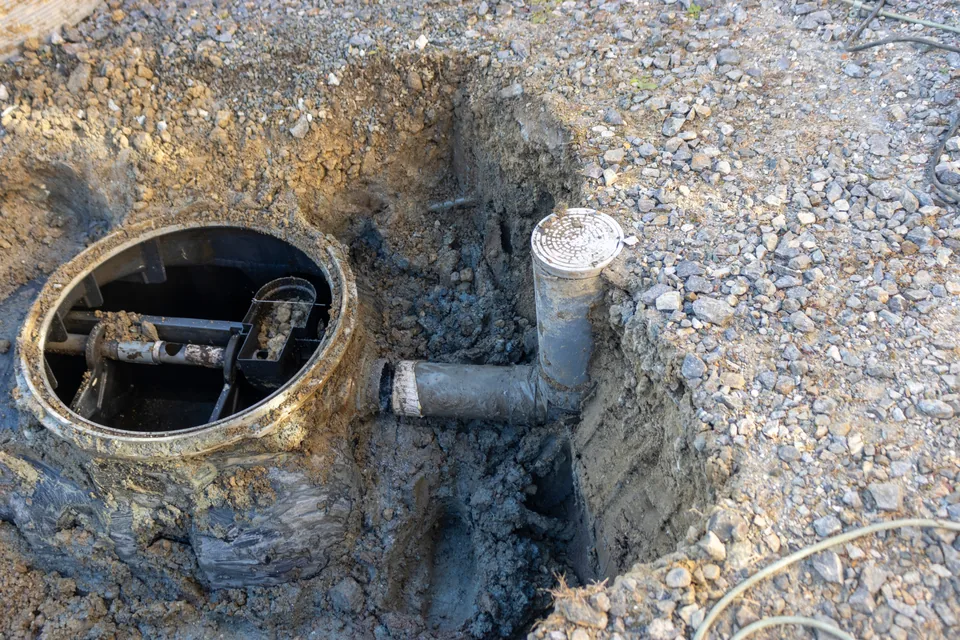
An uncovered septic tank opening beside its outlet pipe and cleanout riser — septic contractor insurance in Nebraska

Nebraska’s credential for this trade is a certificate, and the word the state uses is the one thing a page must not swap. The act that governs the work is titled the “Private Onsite Wastewater Treatment System Contractors Certification and System Registration Act”, and that title already names two different instruments attaching to two different things: certification attaches to the person, and registration attaches to the system. Nebraska issues no septic installer license, and the word does not appear in this chain. The statute does use the word license once in the operative sentence, and it is about somebody else — a professional engineer licensed in Nebraska is an alternative to the certificate, not a description of it.

Section 81-15,248(1) is written as a prohibition rather than a grant. A private onsite wastewater treatment system “shall not be sited, laid out, constructed, closed, reconstructed, altered, modified, repaired, inspected, or pumped” unless that work is done or overseen by one of the people the statute lists, and the first of them is “a certified professional”. Section 81-15,240 ties that phrase to “the tasks for which the certification has been issued”, which is what makes the categories load-bearing. Title 124, Chapter 9, section 002 fixes six of them — Master Installer, Journeyman Installer, Soil Evaluator, Inspector, Master Pumper and Journeyman Pumper — and requires “a valid certificate by examination”. So what a crew may do depends on which categories it holds. A Journeyman Installer may work only while employed by a Master Installer, a professional engineer or a registered environmental health specialist who is responsible for the work, or by a business that has one as owner, officer or employee, and section 004 adds that the responsible person must be physically present at the site and supervising.

How far the certification duty reaches is set by one named class of site. The statute reads flat on its face; the rule that administers it does not. Title 124, Chapter 9, section 001 restates the duty and then closes with its own exemption: the certification requirement “does not apply to a private onsite wastewater treatment system at an electric generation facility site owned by a district organized under Nebraska Revised Statutes, Chapter 70, article 6.” Neb. Rev. Stat. § 81-15,252 carries the same exception for the act as a whole. That is the entire carve-out, and it is narrow: a system at an electric generation facility site owned by such a district, and nothing else. A commercial septic contractor is not a public power district’s electric generation facility site. Two things that look like exemptions are not. The professional engineer and the registered environmental health specialist in § 81-15,248(1) are alternative qualifications — the work must still be carried out or supervised by one of the listed people — and the words «carried out or supervised by» are a supervision limb, not a crew carve-out.

The second duty attaches to the system rather than to the person. Neb. Rev. Stat. § 81-15,248(2) provides that the completed system “shall be registered with the department by the certified professional, professional engineer, or registered environmental health specialist” within forty-five days of completion. Title 124, Chapter 10 is headed Registration of Onsite Wastewater Treatment Systems, which is where that duty lives in the rules.

The certificate comes from the state environmental agency, and Nebraska’s own statute names it: Neb. Rev. Stat. § 81-15,242 reads “Department means the Department of Water, Energy, and Environment.” The regulation that runs the certification program is headed with the agency’s former name on its own cover page, because it predates the renaming; the divergence is a date, not a conflict, and the statute governs. The rules are adopted by the Environmental Quality Council, and the director issues, renews, suspends and revokes the certificate under Neb. Rev. Stat. § 81-15,249. No county, city, district or board of health issues it anywhere in Nebraska. What the director may delegate to a governmental subdivision by contract, under Neb. Rev. Stat. § 81-15,248(3), is inspection and registration, never certification of the professional.

A second registration is easy to confuse with the first, and it lands on the business rather than the system. The Contractor Registration Act, administered by the Nebraska Department of Labor, provides at Neb. Rev. Stat. § 48-2104(1) that “Before performing any construction work in Nebraska, a contractor shall be registered with the department.” It is trade-blind, and the legislature says so in its own voice at § 48-2102: “It is not the intent of the Legislature to endorse the quality or performance of services provided by any individual contractor.” It is not a septic credential and tests no competence. It does carry the most page-relevant insurance condition on this page: Neb. Rev. Stat. § 48-2105(7) conditions the registration application on proof of workers compensation coverage, a certificate of self-insurance approval from the Nebraska Workers’ Compensation Court, or a signed statement that the contractor is not required to carry it. A person who performs work on his or her own property is outside that act, and so is a person earning less than a stated annual amount for construction services.

Pumping is not a separate regime in Nebraska. Master Pumper and Journeyman Pumper are two more categories of the same state certificate, and Title 124, Chapter 9, section 003.01D provides that “A Master Pumper or Journeyman Pumper is authorized to engage in the pumping or repair of onsite wastewater systems”. Section 005 adds that nobody may pump unless a Master Pumper, Journeyman Pumper, professional engineer or registered environmental health specialist responsible for the work is physically present and supervising. No separate septage hauler registration, transporter permit or vehicle permit was found in the onsite act or in Title 124; that is a finding about the onsite act, and it asserts nothing about Nebraska’s solid-waste or transportation titles.

The disposal end is run by rule rather than by a second credential, and Title 124, Chapter 11 reads as exposure. Section 009.01 limits land application of domestic septage to non-public contact sites “such as agricultural land, forests, and reclamation land”. Section 009.02 provides that “Land application of domestic septage without the landowner’s written permission is prohibited.” Section 009.05C puts an affirmative duty on the pumper, engineer or specialist applying the septage to inform the land owner of all harvesting, grazing and site access restrictions — a duty to warn a third party, discharged in the field by a crew. Section 009.08 adds a seasonal constraint in the regulation’s own words — “Domestic septage is not to be land applied” where the ground is frozen, saturated or under snow — subject to a narrow emergency exception whose conditions the rule states.

Inspection runs through the same certificate at the state layer. Title 124, Chapter 9, section 003.01C provides that “An Inspector is authorized to engage in the inspecting or soil evaluation of onsite wastewater systems.”, and section 006 keeps the physical presence requirement for inspection too. A Master Installer may also inspect, so the state deliberately does not confine inspection to the Inspector category. What varies is what a jurisdiction adds on top, because Title 124, Chapter 2, section 014 provides that “Nothing in this Title will prevent more stringent local requirements from being adopted.” The named example is the Lincoln-Lancaster County Health Department, which states that it “inspects all newly constructed or altered onsite wastewater systems” and that residences on a private well or onsite system “must be inspected prior to the sale, transfer or conveyance of the property.” That is one local health department’s own published program, cited to that department and never generalized to any other Nebraska jurisdiction. The department calls its instrument a permit, and neither its word nor the word licensed belongs on the state credential, which is a certificate.

A reader looking for the counter should not assume it is a county office. Neb. Rev. Stat. § 71-1626(5) provides that “Local public health department means a county, district, or city-county health department.”, and most Nebraska counties are served by a multi-county district department that is not a county government. The Lincoln-Lancaster department is a city-county department. So «your county health department» will be wrong for most of the state, and the certificate itself never comes from any of them.

Workers compensation in Nebraska attaches from the first employee, with no headcount floor. The exceptions are by occupation rather than by headcount, and none of them reaches a commercial septic contractor. The routes the statute lists at § 48-145(1) include a lessor arrangement and an intergovernmental risk management pool, and neither is this operator’s. A commercial septic contractor has two: buy a policy from an insurer authorized in Nebraska, or obtain the compensation court’s approval to self-insure. The residual market is named in Nebraska’s own words: “The Nebraska Workers Compensation Insurance Plan (NWCIP) provides workers’ compensation and employers’ liability coverage to employers who are unable to secure coverage through the voluntary market.” An employer who fails to comply “shall be required to respond in damages to an employee for personal injuries”, under § 48-145(3), outside the exclusive-remedy bargain that § 48-111 otherwise secures.

The certificate request before the first cut has a statutory reason in Nebraska. Neb. Rev. Stat. § 48-116 makes a person who operates a scheme, artifice or device to execute work without being responsible to the workers jointly and severally liable with the immediate employer, and then turns that off for an owner or principal contractor acting in good faith who required the contractor or subcontractor to procure a policy from an insurance company licensed to write it in this state. So the general contractor’s own protection is conditioned on having asked for the sub’s policy.

Nothing in the Nebraska chain above is a bond. The insurance conditions that land on a Nebraska septic contractor are workers compensation conditions, and they reach the same operator twice on the same day: once as a duty of the compensation act, and once as a precondition of the contractor registration it needs before performing construction work at all. The sections below set out each of these answers with the authority it rests on, so you can check it yourself rather than take our word for it.

What Nebraska requires of a septic business

Installing

Nebraska runs a SINGLE STATEWIDE credential for this trade and it reaches the installer, the pumper and the inspector through one act and one agency. Neb. Rev. Stat. § 81-15,248(1) forbids an onsite wastewater system to be sited, built, repaired, inspected or pumped unless the work is carried out or supervised by a certified professional, a professional engineer licensed in Nebraska, or a registered environmental health specialist. The credential is examined, it is divided into named categories by trade, and it is issued by a state agency — so Nebraska is a POSITIVE at the state layer with no local issuer anywhere in the chain.

Authority Neb. Rev. Stat. § 81-15,236; § 81-15,237(1), (2) and (3); § 81-15,240; § 81-15,241; § 81-15,242; § 81-15,243; § 81-15,244; § 81-15,247(1), (2), (4), (5), (7) and (8); § 81-15,248(1), (2), (3) and (4); § 81-15,249; § 81-15,252; § 81-15,253; Nebraska Administrative Code Title 124, Chapter 9, sections 001 through 006; Title 124, Chapter 2, section 014; Title 124, Chapter 10, sections 001 and 003. The statewide contractor registration: Neb. Rev. Stat. § 48-2101; § 48-2102; § 48-2103(2) and (3); § 48-2104(1); § 48-2105(7). — read the source

Pumping and hauling

Nebraska’s septage credential is NOT a separate hauler permit. Pumping is one of the six categories of the same state onsite certificate, and Neb. Rev. Stat. § 81-15,248(1) puts “pumped” in the same prohibition as “constructed”. The disposal end is regulated by rule rather than by a second credential: Title 124, Chapter 11 fixes how a tank is pumped, where domestic septage may go, and what a pumper must tell the landowner.

Authority Neb. Rev. Stat. § 81-15,237(2); § 81-15,247(8); § 81-15,248(1); § 81-15,251; § 81-15,252; § 81-15,253; Nebraska Administrative Code Title 124, Chapter 9, sections 001, 002.05, 002.06, 003.01D and 005; Title 124, Chapter 11, sections 001 through 010. — read the source

Inspecting and evaluating

Nebraska DOES certify inspectors at the state level, which makes it the opposite shape to most of this corpus: Inspector is one of the six categories of the state onsite certificate. The municipal flag is set anyway, and set deliberately, because a named Nebraska jurisdiction requires a SECOND, LOCAL permit for a different inspection — the pre-sale property transfer inspection — and an author who reads the state floor as the whole answer will tell a Lancaster County reader something false.

Authority Neb. Rev. Stat. § 81-15,248(1) and (3); § 81-15,247(1), (2) and (4); Nebraska Administrative Code Title 124, Chapter 9, sections 002.04, 003.01C, 006 and 008.03A; Title 124, Chapter 2, section 014; Lincoln Municipal Code chapter 24.38, as named by the issuing department’s own page. — read the source

Workers compensation

Nebraska’s act reaches an employer from its first employee rather than at a headcount threshold — it applies to “every resident employer in this state and nonresident employer performing work in this state who employs one or more employees in the regular trade, business, profession, or vocation of such employer” — and the employer secures the payment of compensation either by insuring “in some corporation, association, or organization authorized and licensed to transact the business of workers' compensation insurance in this state” or, “with approval of the Nebraska Workers' Compensation Court,” by self-insuring; the court’s own employer FAQ records that “Currently, there is no state fund licensed to provide workers' compensation coverage in Nebraska.”

Authority Neb. Rev. Stat. § 48-101; § 48-106(1), (2) and (9); § 48-111; § 48-116; § 48-145(1), (2), (3) and (4); § 48-146; § 48-2105(7). — read the source

What Nebraska requires of a septic business — installing, hauling, inspecting and workers’ comp from private insurers — and what each requirement leaves to the insurance program.

A panel for Nebraska in rows. Each row sets one thing the state requires beside the exposure that requirement leaves open and the coverage line that answers it. Installing: One statewide credential covers installer, pumper and inspector. It leaves open a failed install or drainfield, damage to the customer’s property, which General Liability and Pollution Liability answer. Pumping and hauling: A septage hauling permit is on the books. It leaves open a spill or release in transit, the truck at fault, which Commercial Auto and Pollution Liability answer. Inspecting and evaluating: A state inspector or evaluator certification is on the books, and local rules vary too. It leaves open a missed defect in an inspection or design, which Professional Liability answers. Workers compensation: Compulsory for covered employers; private insurers write it. It leaves open an injured employee in the trench or on the truck, which Workers Compensation answers. Notes: A license, permit or bond is not a policy — a bond secures the public body that requires it, not the customer. The conclusion reads: The credential is not the coverage — the program is. No figures are shown.

Where we write in Nebraska

Gretna · Sarpy County

New-construction work under a general contractor is where Neb. Rev. Stat. § 48-116 bites hardest: the principal contractor’s own protection is conditioned on having required the subcontractor’s workers compensation policy, so additional-insured, contractual-liability and certificate questions arrive on the account before the first cut.

Lincoln · Lancaster County

A pre-sale evaluation is a written professional opinion about somebody else’s installation, delivered years after the work and relied on by a buyer, and the permit that authorizes it comes from a different body than the certificate that authorizes the inspection of a new build. One inspection business can be carrying two credentials and two duties on one job.

Fremont · Dodge County

Where a pumping sideline disposes by land application, the rule puts an affirmative duty on the crew to inform the landowner of harvesting, grazing and access restrictions, and forbids application without the landowner’s written permission. A failure there is a third-party claim that looks nothing like a workmanship claim.

Norfolk · Madison County

A contractor working under both halves of the certificate is running two loss profiles under one policy, and the pumping half is authorized only while the responsible master-level holder is in place under Title 124, Chapter 9, section 003.01D.

Kearney · Buffalo County

Neb. Rev. Stat. § 81-15,248(2) puts the SYSTEM registration duty on the certified professional who built it, within forty-five days of completion. It is an administrative obligation that outlives the job, and a business that treats the backfill as the end of the file is accruing a compliance exposure it cannot see.

Ogallala · Keith County

Seasonal-to-permanent conversion is replacement work on constrained lots close to water, which puts more of the contract value in excavation near a surface-water feature — the setting where a completed-operations argument and a pollution argument arrive together.

Valentine · Cherry County

Long hauls move more of the exposure onto auto than onto operations, and the winter rule that domestic septage is not to be land applied on saturated, frozen or snow-covered ground constrains exactly the months when the travel is worst.

Scottsbluff · Scotts Bluff County

Title 124, Chapter 2, section 014 lets any Nebraska jurisdiction adopt more stringent requirements, and Neb. Rev. Stat. § 81-15,248(3) lets the state delegate inspection and registration to one. A business that builds to the state floor across a wide radius can be compliant at one county line and short of the local standard at the next, which reads as workmanship rather than as a code question.

Nebraska questions we get asked

Is there a Nebraska septic installer license?

No. Nebraska issues no septic installer license, and the word does not appear in the chain that governs this trade. The instrument is a certificate, issued by the state after an examination, in named categories. Nor does Nebraska register septic installers: what Nebraska registers is the completed system, and the separate trade-blind registration with the state labor department attaches to the business and tests no competence.

Can one Nebraska certificate cover installing and pumping both?

Yes — that is the structural fact that sets Nebraska apart. Installer, pumper, inspector and soil evaluator are categories of the same state certificate under the same act, administered by the same agency. A contractor who adds pumping in Nebraska is adding a category, not entering a second regulatory regime. What a crew may do depends on which categories it holds.

Which Nebraska sites fall outside the certification duty?

One named class of site. Title 124, Chapter 9, section 001 closes with an exemption for a system “at an electric generation facility site owned by a district organized under Nebraska Revised Statutes, Chapter 70, article 6.” The exemption is narrow and reaches nothing else. The professional engineer and the registered environmental health specialist named in Neb. Rev. Stat. § 81-15,248(1) are alternative qualifications, not exemptions.

What does Nebraska ask after the trench is closed?

Registration of the system. Neb. Rev. Stat. § 81-15,248(2) provides that the completed system “shall be registered with the department by the certified professional, professional engineer, or registered environmental health specialist” within forty-five days of completion. That is a second duty, separate from holding the certificate.

Do Nebraska property transfer inspections need more than the state certificate?

In at least one jurisdiction, yes. The Lincoln-Lancaster County Health Department states that pre-sale inspections are “conducted by private companies that hold an LLCHD issued Property Transfer Inspector permit.” That is one local health department’s own program, cited to that department and never generalized to any other Nebraska jurisdiction, and the permit is a different instrument from the state Inspector certificate.

Does a two-person Nebraska septic crew need workers compensation?

Yes. Nebraska has no small-employer exemption for this operator: Neb. Rev. Stat. § 48-106(1) reaches an employer who employs one or more employees in its regular trade or business, so the act applies from the first hire. The exceptions are by occupation rather than by headcount, and none of them reaches a commercial septic contractor. A commercial septic contractor has two ways to comply: buy a policy from an insurer authorized in Nebraska, or obtain the compensation court’s approval to self-insure.

This page reports Nebraska law as our own state research file records it. It is general information rather than legal advice, and it is not an opinion on what any policy covers — the wording you hold controls that, and carriers do not all write it the same way.

Talk it through with someone who reads the forms

Tell us what you install, what you pump and who is on the crew, and we will read the forms against the work.

Get a quote