Mississippi requires a state certification to install an individual on-site wastewater disposal
system, issued by the state. The prohibition sits in the statute rather than only in a rule, and
Miss. Code Ann. § 41-67-25(1) states it plainly: “A person may not operate as an installer of
individual on-site wastewater disposal systems unless that person is currently certified by the
department.” The department is the state health department, working through its Division of
On-Site Wastewater, and the same division certifies pumpers, professional evaluators and
manufacturers under the same chapter of the code. Four credentials, one issuer, and no county
installer credential among them. What the county tier does carry is the department’s own
counter: the statute sends a certified installer to “the appropriate county department of
health” to schedule the installation inspection, and provides for renewals to be “applied for at
the local department offices”. Those are the state department’s offices. An errand at a county
counter is still a state credential, and Mississippi also issues the job-level instrument itself
— the approval under § 41-67-7(1) is the department’s, not a county board’s.
Read that prohibition for who it reaches, because the subsection that creates the duty also
takes one class of person outside it, and it does so by definition rather than by permission:
“A person who installs an individual on-site wastewater disposal system on his own property for
his primary residence is not considered an installer for purposes of this subsection.” The
administrative code then narrows the carve-out further, confining it to conventional systems at
Rule 2.1.27(2) and holding the homeowner to every other requirement of the subpart regardless.
That is the whole of the exception. The statute takes the owner-occupier on his own primary
residence outside the definition of an installer, and nothing in that exception reaches a
contractor installing on somebody else’s property for pay. Nothing in the
chapter softens the duty for the operator who takes the job.
Two provisions that look like they widen that exception are deliberately not part of its scope. The first is the
acreage exemption, § 41-67-6(7): “Any lot or tract that is two (2) acres or larger shall be
exempt from the requirements of this chapter and regulations of the department relating to
approval of individual on-site wastewater disposal systems by the department”. Read the words it
is written against — approval — and then read what the installer certification is: a credential
attached to a person under § 41-67-25, not a requirement of approval. The exemption’s own
conditions point the same way, because one of them is an affidavit signed by the person who
installed the system. The second is the licensed professional engineer, who may design without
the evaluator certification under § 41-67-37(1). That limb excuses a different credential on the
design side and leaves the installer certification exactly where it was.
The part of this chapter that matters most to a contractor buying coverage is that the
certification is conditioned on proof of insurance, and that the condition is the legislature’s
rather than only the department’s. § 41-67-25(3) makes the certificate conditional on four
things and paragraph (d) is the coverage one: “Provides proof of having a valid general business
liability insurance policy in effect with liability limits of at least Fifty Thousand Dollars
($50,000.00) per occurrence and at least One Hundred Thousand Dollars ($100,000.00) in total
aggregate amount.”, Miss. Code Ann. § 41-67-25(3)(d). The rule repeats it in its own
capitalization, makes it a renewal condition as well at Rule 2.1.33(3), and fixes when the proof
is due relative to the examination at Rule 2.1.29(2): “Within 30 days of passing the
examination, the Certified Installer must submit insurance and fee.” Note what that condition
attaches to. It attaches to the credential rather than to the work: the certification is
conditional on the proof, the rule makes it a renewal condition too, and it is not the same
product on every credential in the chapter. And the limits are the statutory
minimum for holding the certification. They are not a recommendation, not a market rate, and nothing in the
statute suggests a septic contractor is adequately covered at that figure.
Three of the four credentials carry a financial-responsibility condition, and Mississippi does
not ask the same product of all three. The installer and the pumper carry the general business
liability condition in the legislature’s identical sentence, at § 41-67-25(3)(d) and
§ 41-67-39(2)(f). The certified professional evaluator carries a different one: § 41-67-37(3)(d)
asks that the applicant “Provides proof of having an errors and omissions policy or surety in
effect with liability limits of at least Fifty Thousand Dollars ($50,000.00) per occurrence and
at least One Hundred Thousand Dollars ($100,000.00) in total aggregate amount.” The
manufacturer’s registration at § 41-67-27 carries no financial-responsibility condition at all.
The limits are the same pair of figures in all three subsections, and that coincidence is
exactly what makes a single sentence about all three tempting and wrong. Three credentials, two
products, one set of limits. A surety is also not a policy, and the regulation itself draws that
line when it defines a surety as a three-party agreement answering for a principal’s default
rather than as coverage bought for the principal’s own account.
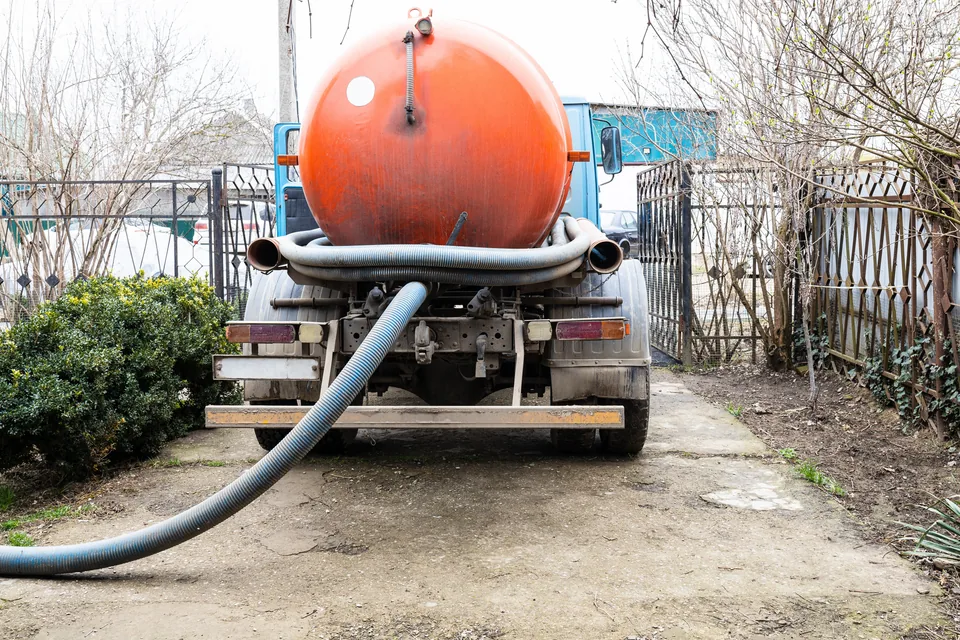
Pumping is a different credential from installing, not the same instrument read more widely. § 41-67-39(1): “A person
may not be engaged in the business of removing and disposing of the sludge and liquid waste
(septage) from individual on-site wastewater disposal systems in this state unless that person
has a valid certificate issued by the department.” Holding one does not authorize the other’s
work in either direction, and each has its own application, examination, renewal and penalty
provisions. The statute’s noun is certificate and the department’s program name is Certified
Pumper; the subpart also calls the same instrument a license, sometimes in adjacent sentences,
so ask for it by the statute’s word rather than by the rule’s looser one. Its scope is wider
than the statute’s own words as well. Rule 2.1.37 states the scope as the right to “clean, pump
and dispose of any sludge and liquid waste (septage) from any Individual On-Site Wastewater
Disposal Systems, Portable Toilet (Self-Contained), grease trap and/or holding tank.” Three
service lines an underwriter might treat as separate trades sit under one Mississippi
credential.
Three of the six conditions at § 41-67-39(2) are the ones a policy has to live beside. Paragraph
(f) is the general business liability sentence, word for word the installer’s. Paragraph (d)
asks the applicant to “Provides documentation of a disposal site approved by the Department of
Environmental Quality, Office of Pollution Control”, and Rule 2.1.38(3) makes that documentation
annual — the environmental agency approves the site and permits the receiving facility, while
the health department certifies the person, so the two bodies are not interchangeable and the
environmental one issues no pumper credential. And the certificate is tied to a named inventory
of vehicles: paragraph (c) and Rule 2.1.38(5) put the truck through an inspection, and
Rule 2.1.41(1) requires notice to the department within a stated period of “adding, replacing or
deleting the inventory of vehicles”. A fleet change is a regulatory event here, not only an
endorsement. Rule 2.1.41(2) then requires the pumper to “Keep a record on all systems cleaned,
pumped and disposed of by address, type of treatment unit, amount pumped, and receipt of
disposal at waste treatment facility permitted by the Mississippi Department of Environmental
Quality (MDEQ).” A disposal receipt trail is the evidence a pollution claim turns on, and the
rule requires it be kept.
On the evaluating side, Mississippi certifies professional evaluators at the state level and
conditions the certification on errors and omissions cover or a surety. § 41-67-37(1): “A person
may not operate as a certified professional evaluator in this state unless that person is
currently certified by the department or is a licensed professional engineer.” Read that as what
it is — a statement about the role, not about the errand. Soil and site evaluation for a new or
replacement system is the department’s own work by default, with the certified evaluator or the
engineer as the private alternative, so the credential is genuinely required for anyone doing
the work while nothing compels a property owner to hire a private evaluator at all.
Inspecting an existing system is a different question with a different answer, and Mississippi
runs no separate state inspector license for it. The compulsory inspection is triggered by a
water connection rather than by a sale: § 41-67-5(2) provides that “No public utility supplying
water shall make connection to any dwelling, house, mobile home or residence without the prior
written approval of the department certifying that the plan for the sewage treatment and
disposal system at the location of the property complies with this chapter.” Whether a
particular transfer triggers one is a fact about the connection rather than about the deed, and
calling it a point-of-sale inspection would be wrong about the trigger. The rule builds the
connection-event existing system inspection on top of that trigger and shares the work: division
environmentalists may perform them on single family residential dwellings and on commercial
developments and establishments, while certified installers the Board recognizes may perform
them on single family residential dwellings only. Where the existing system is an advanced
treatment unit the field narrows again — Rule 1.6.10(1): “ATS units must be inspected by a
Certified Installer who is also an authorized representative of the Certified Manufacturer of
the existing system being inspected.” The certification on its own is not enough there. The
manufacturer’s authorization is a second gate, and the statute carries the same structure for
installing advanced treatment systems at § 41-67-25(2).
The regulation then says something about coverage that is easy to over-read in either direction.
Rule 1.6.13(2): “Certified Installers are liable for the work performed and should carry
appropriate liability coverage for performing connection-event existing system inspections.” The
verb is should. That is not a condition of certification and it is not a proof-of-coverage
requirement — the conditions of certification are the statutory ones above — and a page that
upgraded the modal would be inventing a rule Mississippi did not adopt. What it is, is the
state’s own regulation, in the subchapter that lets an installer do this work, telling him the
liability is his and pointing him at coverage for it. Its companion sentence is not permissive
at all: Rule 1.6.14(4), quoted in full below, makes Certified Installers “solely responsible and
liable” for what they submit to the Division. And
Rule 1.6.14(3) empties the resulting certificate of comfort value, providing that it does not
constitute an approval, does not “Represent a determination of compliance.” and does not
“Certify the accuracy of the Certified Installer’s findings.” An installer who takes this work
is selling a judgment on a system someone else built, and the rule leaves that judgment with him.
Two exposures sit inside the chapter itself, and both are shaped like claims rather than like
paperwork. The first begins as a scheduling provision. § 41-67-6(5)(b) bars a certified installer
from covering the work until a department environmentalist has authorized it after inspection,
or, where the environmentalist does not arrive within the grace period the statute states, lets
the installer submit an affidavit of proper installation for final approval instead. That route
moves the certification of compliance off the regulator and onto the contractor’s own signature,
which is precisely where a workmanship dispute later goes looking for evidence. The second is a
private right of action the chapter names in terms: § 41-67-28(3)(a) gives a purchaser who
“suffers any ascertainable loss of money or property, real or personal” an action in the county
where the installer has its principal place of business, on grounds that include “Improper
installation of an individual on-site wastewater disposal system due to faulty workmanship”.
§ 41-67-28(3)(b) then forecloses the class device — “Nothing in this chapter shall be construed
to permit any class action or suit” — which reads like relief and is not: a soil misjudgment
repeated across a development comes back as many separate suits, not one.
§ 41-67-28(4) adds a punitive limb for off-property discharge, with attorney’s fees available to
the prevailing party and a pre-suit notice period stated in the statute. The credential is at
stake alongside the money: § 41-67-25(6)(a) provides that a certification “may be suspended or
revoked by the department after notice and hearing if the installer violates this chapter or any
rule or regulation adopted under this chapter.”
The last structural fact is the local layer, and an honest answer about it has two halves. The
statute preserves it: “Nothing in this chapter shall limit the authority of a municipality or
board of supervisors to adopt similar ordinances which may be, in whole or in part, more
restrictive than this chapter, and in those cases the more restrictive ordinances will govern.”
The rule preserves local licensing specifically at Rule 2.1.29(3), and the department publishes
a map of the entities it knows to require final approval of a system — a map whose own closing
line reads “This list may or may not be complete.” That is the half this page can stand behind.
The other half is that no Mississippi ordinance text was read for it, so nothing here says
whether any particular local body adds a credential of its own, in either direction; that is a
question to put to the body rather than to infer from the state chapter. What the county tier in
this chapter is not is a source of differing rules. § 41-67-3(5) and § 41-67-6(2) both provide
that “All regulations shall be applied uniformly in all areas of the state and shall take into
consideration and make provision for different types of soil in the state when performing soil
and site evaluations.” The regulation is the same across Mississippi; what differs under it is
the ground.
Very little of that is an insurance requirement. Where the two questions do touch, the statute
puts general business liability on the installer and the pumper, errors and omissions or a
surety on the evaluator, and no financial-responsibility condition on the manufacturer’s
registration. And Rule 1.6.13(2) tells an installer doing inspection work that the liability is
his.
The sections below set out each one beside the authority it rests on, so you can check it
rather than take our word for it.