Skip to content

Louisiana

Septic Contractor Insurance in Louisiana

Louisiana licenses the installer at the state level, not the parish — and the rule that creates the license conditions it on proof of general liability insurance.

Get a quote Call 317-942-0549

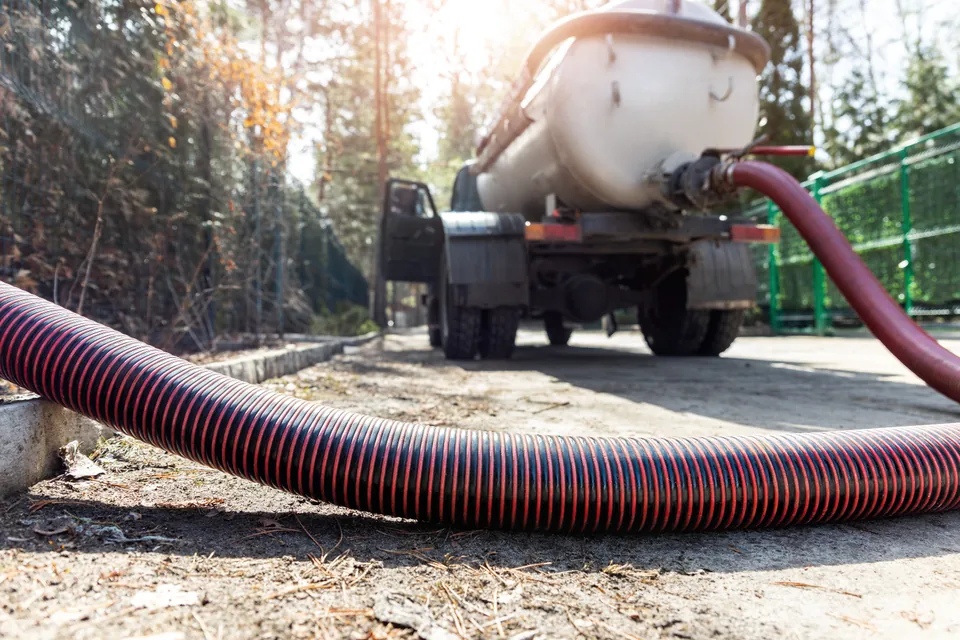
A vacuum tank truck on a gravel drive with its red suction hose on the ground — septic contractor insurance in Louisiana

Louisiana requires a state license to install or maintain an individual sewerage system, and the license is issued by the Louisiana Department of Health’s Office of Public Health rather than by the parish. The sanitary code says so directly — “A person who wishes to perform installations or maintenance of individual sewerage systems shall first obtain the appropriate type of individual sewerage installer license” — and the rule names the office that issues it and the reach of what it issues: “All licenses shall be issued by this office upon successful fulfillment of all application requirements and completion of any required examination(s), and shall be valid throughout the entire state”. The parish has a part in this, but as a counter and not as a licensor. The parish health unit is the Office of Public Health’s own office in that parish — the counter where an application is collected, on behalf of the state department. No parish in Louisiana issues this license.

The duty does not reach every person who installs a system, and the paragraph that creates it excepts one individual in its own words. The license is put on “A person who wishes to engage in the business of installing or providing maintenance of individual sewerage systems” — the business, which is the operator this page is written for. The same paragraph then excepts the owner in its own words: “Such a license shall not be required, however, for an individual wishing to install an individual sewerage system, other than an individual mechanical plant, for his own private, personal use”. Read that exception with both of its limits, because it has two — it reaches an individual, on his own property, for his own private use, and it stops at the individual mechanical plant. The rule closes that gap in the same breath it opens it: “Individual mechanical plants shall be installed and maintenance provided by licensed individual sewerage system installers and/or maintenance providers only”. A contractor holding a contract is on the far side of that line in every case; the carve-out belongs to the property owner, and even for him it runs out at the mechanical plant.

A second state instrument sits beside it and answers a different question. The permit attaches to the system on the lot: “A person shall not install, cause to be installed, alter subsequent to installation, or operate an individual sewerage system of any kind without first having obtained a permit from the state health officer”. It runs in two stages — a temporary permit authorizing the installation, then a final permit once the work is verified — and the installer is written into the verification step. “The installer shall notify the appropriate local Parish Health Unit prior to the installation of an individual sewerage system”, and the final approval turns on an on-site inspection by a representative of the state health officer, on a completed certification signed by the licensed installer, or on both. Both instruments come from the same officer. Neither instrument stands in for the other: the license attaches to the person, and the permit attaches to the system on the lot.

The part of Louisiana’s rule this brand exists to explain is a condition of licensure rather than advice. LAC 51:XIII.737.H: “Applicants for an installer’s, combination, or maintenance license shall submit, along with the license application, proof that they have secured, for at least the duration of the license, general liability insurance in an amount of no less than $100,000/$300,000”. Three features of that sentence are load-bearing and each is easy to lose. The proof is submitted with the application, so the coverage precedes the license rather than following it. It names one product — general liability — and the sanitary code attaches no workers compensation condition and no bond to this license at all. And the limit is written as a pair, which is how the rule states it and how a certificate has to read it. Take it for what it is: a floor the state checks before it issues anything, not a recommendation, not an adequate limit for this trade, and not a market norm.

What a Louisiana installer holds is often two licenses rather than one level of a single license. The rule writes them as separate instruments — “a basic license for installation and maintenance of facilities other than individual mechanical plants” and “a combination license which allows the installation and maintenance of individual mechanical plants as well” — and the second may be obtained only in conjunction with the first. A contractor who installs mechanical treatment plants therefore carries both, plus a manufacturer’s endorsement for each brand he maintains. All of it is examined, and the training does not stop at entry: “All persons seeking to apply for a new license or renewal must, at their own expense, attend and successfully complete a training course approved by the Sanitarian Services Section of the Office of Public Health, Department of Health and Hospitals, as a prerequisite for licensure”, and “All licensees must successfully repeat this training course every five years”. That quotation keeps the department name the rule still prints; the department publishes today as the Louisiana Department of Health. The installer family renews January 31.

Pumping is a separate trade in Louisiana’s eyes and it carries two state instruments of its own, from two departments, neither of which is the installer license. The sanitary code’s limb comes from the same officer: “A person shall not engage in the business or practice of hauling the contents of septic tanks, cesspools, vaults, or similar facilities without first obtaining a license from the state health officer”. It is not a permission to drive — where the load ends up is a precondition of holding it. “As a prerequisite to obtaining a license, evidence for such arrangements, including copies of any agreements with cooperating sewage treatment facilities, shall be submitted”, and the same paragraph states the ban that goes with it: “The disposal of the contents of septic tanks, cesspools, vaults, or similar facilities into ditches, canals, rivers, lakes, pits, or other surface water courses is prohibited”. The second instrument belongs to the environmental department and is easy to miss, because its title never says septage: “Sewage Sludge Hauler Registrations are required for the person responsible for the operations of sewage sludge transport activities.”, and “Transport activities include, but are not limited to, pick-up, hauling, and disposal of sewage sludge, domestic septage, portable toilet waste, biosolids, and/or sewage sludge mixed with grease waste.” The hauling license renews June 30, on a different cycle from the installer family, which is how a contractor who does both ends up with two renewal dates in one year.

No septic inspector and no septic evaluator holds a Louisiana credential under either name, and no septic inspection is required when a property changes hands. The state license that reaches an already-installed system is the maintenance provider’s, and it is examined and endorsed: “For a maintenance license, the applicant shall submit the license application and evidence of successful completion of an examination, an endorsement from the licensed manufacturer for the brands of plants he wishes to maintain, specifying that the applicant is qualified to maintain said plants, in compliance with the requirements of this Code”. Read its scope narrowly, because the word inspection is wider than the credential: the endorsement is brand-specific and the reporting duty sits in the mechanical-plant part of the code, so it is the mechanical treatment plant this reaches. A conventional tank and field has no credentialed inspector in Louisiana at all. Each visit generates paperwork for the state — the warranty inspection and service report “must be submitted to the state health officer after each warranty/maintenance inspection is completed by the maintenance provider, and will become part of the permanent record for each system” — against an owner duty with no end date on it: “The owner is responsible for perpetual maintenance of the sewerage system and components thereof”. And the one licensed inspector the state does have is excused from the system by his own standards, which open a list with “The home inspector is not required to:” and put “on-site waste disposal systems” in it. So the look at an installed system, when anyone takes one, falls back to the licensed installer or the maintenance provider.

A parish layer exists, and the state’s own rule turns on it. It can change what the state will approve: the code grants relaxed minimum lot criteria “For parishes in which the parish governing authority has enacted and enforces a formal sewage permitting system (requiring approval of individual sewage disposal systems by the state health officer prior to issuance of any parish permits)”. And in one parish the legislature has created an inspection body of its own, the Environmental Services Commission of St. Tammany Parish, authorized “to inspect any individual, public, profit, nonprofit, or not-for-profit sewerage or water system located in the unincorporated portion of St. Tammany Parish” — which is one parish, named by its own statute, and not a pattern to read across the other parishes. What no parish does is credential this trade. That commission employs inspectors; it certifies none, and nothing in the sanitary code’s part on sewage disposal creates a parish installer license.

Two further duties can attach to the same business without naming septic work anywhere. The State Licensing Board for Contractors reaches contractors by what a job is worth rather than by trade, and its classification list does not name this trade at all — so whether a board license is in play turns on project value, and that is a question to put to the board rather than to a page. Workers compensation is the other, and Louisiana is compulsory with no number of employees below which the duty switches off. The provision this trade actually meets runs opposite to the intuition: the Act excludes an independent contractor “unless a substantial part of the work time of an independent contractor is spent in manual labor by him in carrying out the terms of the contract, in which case the independent contractor is expressly covered by the provisions of this Chapter”. A septic sub who does the manual work on the job is inside the Act whatever the contract calls him. And for a contractor who does hold a board license in a residential, home improvement or mold remediation class, the coverage is a licensing condition as well — La. R.S. 37:2156.1(E) asks for the certificate at application and LAC 46:XXIX.105.B makes obtaining and maintaining it a continuing duty — so letting that policy lapse is a licensing event and not only an insurance one.

One line in all of that is an insurance requirement, and it is the general liability condition the state writes into the license itself. Everything else on this page is a credential duty that no policy discharges, or a coverage question that no license settles. The sections below set out each of them beside the authority it rests on, with a link to the source, so you can read the text for yourself.

What Louisiana requires of a septic business

Installing

Louisiana licenses the individual sewerage system installer at the state level, by name, on an examination and an approved training course, and conditions the license on proof of general liability insurance written into the rule itself. The license is issued by one state office and is valid statewide; the parish health unit is where an applicant picks the paperwork up, not a separate licensor. A separate, job-level permit for the lot is issued by the same state officer and is a different instrument from the license.

Authority LAC 51:XIII.705.A; LAC 51:XIII.735.B, .D, .E, .F and .G; LAC 51:XIII.737.A, .C, .D, .E and .H; LAC 51:XIII.701.A and .C; LAC 51:XIII.711.A and .B; LAC 51:XIII.725.M.1 and .M.2; statutory authority at La. R.S. 40:4(A)(6) and La. R.S. 40:5(A)(9) and (A)(20). Companion contractor-board credential at La. R.S. 37:2150.1(4), (10), (11) and (19), La. R.S. 37:2156.1(E), La. R.S. 37:2163(A)(1), and LAC 46:XXIX.105.B and .301.E and .F. — read the source

Pumping and hauling

Louisiana puts TWO separate state instruments on the same septage truck, issued by two different departments under two different titles of the administrative code. The sanitary code requires a sewage hauling license from the state health officer before a person may engage in the business of hauling the contents of septic tanks; the environmental department separately requires a sewage sludge transporter registration, and its own published guidance says in terms that the registration covers domestic septage. Neither is a parish instrument.

Authority LAC 51:XIII.901.A, .B, .C, .D, .E and .F; statutory authority claimed by the rule at La. R.S. 40:4(A)(6) and La. R.S. 40:5(A)(9) and (A)(20). Second limb: LAC 33:IX.7301.H.1 and .H.3, with the defined terms at LAC 33:IX.7301.B; statutory authority at La. R.S. 30:2074(B)(1)(c) and (B)(3)(e). — read the source

Inspecting and evaluating

Louisiana credentials no septic INSPECTOR and no septic EVALUATOR under either name, and it requires no inspection when a property changes hands. What it does credential is the MAINTENANCE PROVIDER: a state license, examined and insurance-conditioned like the installer’s, whose holder performs the periodic warranty and service inspections of an installed mechanical plant and reports each one to the state health officer. The only other licensed inspector in the state is the home inspector, and that board’s own standards excuse a home inspector from looking at the system at all.

Authority LAC 51:XIII.735.B.1 and B.2; LAC 51:XIII.737.C, .D, .E and .H; LAC 51:XIII.705.A; LAC 51:XIII.725.M.1 and .M.2; LAC 51:XIII.701.C. Negative limb: LAC 46:XL.317.D.2 and D.6.d, promulgated in accordance with La. R.S. 37:1475. Single-parish authority: La. R.S. 33:4064.1 and La. R.S. 33:4064.4(B)(1). — read the source

Workers compensation

Louisiana workers compensation is compulsory and it is written as a duty on the employer rather than as an election: an employer must secure compensation to his employees in one of the ways the statute lists, and the Act reaches every person performing services arising out of and incidental to his employment in the course of his own or his employer’s trade, business or occupation — so a Louisiana septic contractor with employees is inside the system by default, with no headcount below which the duty switches off.

Authority La. R.S. 23:1031(A); La. R.S. 23:1035(A), (B)(1) and (B)(2); La. R.S. 23:1021(7); La. R.S. 23:1168(A)(1) through (A)(4); La. R.S. 23:1169; La. R.S. 23:1291(A) and (B)(4). Cross-axis: La. R.S. 37:2156.1(E). — read the source

What Louisiana requires of a septic business — installing, hauling, inspecting and workers’ comp from private insurers — and what each requirement leaves to the insurance program.

A panel for Louisiana in rows. Each row sets one thing the state requires beside the exposure that requirement leaves open and the coverage line that answers it. Installing: State-licensed on examination, conditioned on general liability insurance. It leaves open a failed install or drainfield, damage to the customer’s property, which General Liability and Pollution Liability answer. Pumping and hauling: A septage hauling permit is required. It leaves open a spill or release in transit, the truck at fault, which Commercial Auto and Pollution Liability answer. Inspecting and evaluating: A state inspector or evaluator certification is required. It leaves open a missed defect in an inspection or design, which Professional Liability answers. Workers compensation: Compulsory for covered employers; private insurers write it. It leaves open an injured employee in the trench or on the truck, which Workers Compensation answers. Notes: A license, permit or bond is not a policy — a bond secures the public body that requires it, not the customer. The conclusion reads: The credential is not the coverage — the program is. No figures are shown.

Where we write in Louisiana

Denham Springs · Livingston Parish

Work generated by lot-by-lot residential growth means many small jobs, many separate state permits, and a schedule that lives or dies on the final inspection under LAC 51:XIII.701.C — which is a completed-operations and contractual-liability shape long before it is a property-damage one.

Covington · St. Tammany Parish

A second body with a statutory right of entry and a power to direct correction means a contractor’s workmanship can be reopened by someone who was not a party to the contract — which is where completed-operations wording and the length of the policy’s tail start to matter more than the limit.

Hammond · Tangipahoa Parish

A mechanical plant drags in the combination license, a manufacturer’s endorsement, a two-year service policy and a recurring service visit — so the contractor acquires a continuing maintenance relationship and a reporting duty to the state, and the exposure shifts from a one-off installation to an ongoing service obligation.

Houma · Terrebonne Parish

Camps and over-water structures mean work reached by boat, equipment on soft ground and a system class most contractors install rarely — an inland-marine and workmanship combination rather than a straightforward installation risk.

Alexandria · Rapides Parish

An oxidation pond is standing water left behind on a client’s lot. The contractor who dug it is the obvious defendant if someone gets into it, which puts attractive-nuisance and completed-operations exposure alongside the ordinary workmanship claim.

Lake Charles · Calcasieu Parish

A hauler here carries two state instruments, a disposal agreement with a third-party facility and a pollution exposure that a general liability form is least likely to answer without a deliberate grant — the auto, the tank and the discharge are three different coverage questions on one truck.

Louisiana questions we get asked

Does Louisiana license septic installers?

Yes, and the license comes from the state rather than from the parish. The sanitary code provides that “A person who wishes to perform installations or maintenance of individual sewerage systems shall first obtain the appropriate type of individual sewerage installer license”, and the issuing desk sits inside the Louisiana Department of Health’s Office of Public Health: “All licenses shall be issued by this office upon successful fulfillment of all application requirements and completion of any required examination(s), and shall be valid throughout the entire state”. The parish health unit is where an applicant collects the paperwork — it is the Office of Public Health’s own office in that parish, not a second licensor.

Can an owner install a system on his own property without the license?

In one case, and the exception has a hard edge. The duty is put on “A person who wishes to engage in the business of installing or providing maintenance of individual sewerage systems”, and the same paragraph excepts the owner: “Such a license shall not be required, however, for an individual wishing to install an individual sewerage system, other than an individual mechanical plant, for his own private, personal use”. Then it closes the gap it has just opened — “Individual mechanical plants shall be installed and maintenance provided by licensed individual sewerage system installers and/or maintenance providers only”. So the exception reaches one individual, on his own property, for his own use, and stops at the mechanical plant. A contractor working under a contract is outside it in every case.

Does Louisiana tell me what insurance to carry?

On the licensing side it does, and it does it in the rule text rather than in guidance. LAC 51:XIII.737.H: “Applicants for an installer’s, combination, or maintenance license shall submit, along with the license application, proof that they have secured, for at least the duration of the license, general liability insurance in an amount of no less than $100,000/$300,000”. Three things follow from that sentence. The proof goes in with the application, so the coverage comes before the license. It names one product — general liability — and attaches no workers compensation condition and no bond to this license. And the limit is written as a pair, which is how the rule states it and how a certificate has to read. It is a regulatory floor the state checks before it issues anything, and nothing more than that: not a recommendation, and not an adequate limit for this trade.

What does a pump truck need in Louisiana?

Two state instruments, from two departments, and the installer license is not one of them. The sanitary code’s limb comes from the same officer who licenses installers: “A person shall not engage in the business or practice of hauling the contents of septic tanks, cesspools, vaults, or similar facilities without first obtaining a license from the state health officer”. Getting it turns on where the load goes — “As a prerequisite to obtaining a license, evidence for such arrangements, including copies of any agreements with cooperating sewage treatment facilities, shall be submitted”. The second instrument is the environmental department’s, and its title never says septage: “Sewage Sludge Hauler Registrations are required for the person responsible for the operations of sewage sludge transport activities.”, and that department names domestic septage and portable toilet waste inside the class it registers.

Does Louisiana require a septic inspection when a house is sold?

No. No septic inspector and no septic evaluator holds a Louisiana credential under either name, and no inspection is required of an owner at a sale. The state license that reaches an installed system is the maintenance provider’s, which is examined and carries “an endorsement from the licensed manufacturer for the brands of plants he wishes to maintain”, so it follows the mechanical treatment plant rather than the conventional tank and field. And the one licensed inspector Louisiana does have is excused from the system by his own standards of practice, which open a list with “The home inspector is not required to:” and put “on-site waste disposal systems” in it. When someone does look at an installed system, it is usually the licensed installer or the maintenance provider.

Do I need workers compensation, and does anything else turn on it?

Louisiana is compulsory and sets no number of employees below which the duty switches off. The provision this trade meets most often is not a headcount at all — the Act excludes an independent contractor “unless a substantial part of the work time of an independent contractor is spent in manual labor by him in carrying out the terms of the contract, in which case the independent contractor is expressly covered by the provisions of this Chapter”. A septic sub who does the manual work on the job is inside the Act whatever the contract calls him. There is a second consequence for anyone holding a State Licensing Board for Contractors license in a residential, home improvement or mold remediation class: La. R.S. 37:2156.1(E) asks for the certificate at application and LAC 46:XXIX.105.B makes obtaining and maintaining the coverage a continuing duty, so a lapse is a licensing event as well as an insurance one.

This page reports Louisiana law as our own state research file records it. It is general information rather than legal advice, and it is not an opinion on what any policy covers — the wording you hold controls that, and carriers do not all write it the same way.

Talk it through with someone who reads the forms

Tell us what you install, what you pump and who is on the crew, and we will read the forms against the work.

Get a quote