Skip to content

Arkansas

Septic Contractor Insurance in Arkansas

The credential an Arkansas septic installer holds comes from the state health department and is examined — and the permit for the system on the lot belongs to the property owner, not to the contractor.

Get a quote Call 317-942-0549

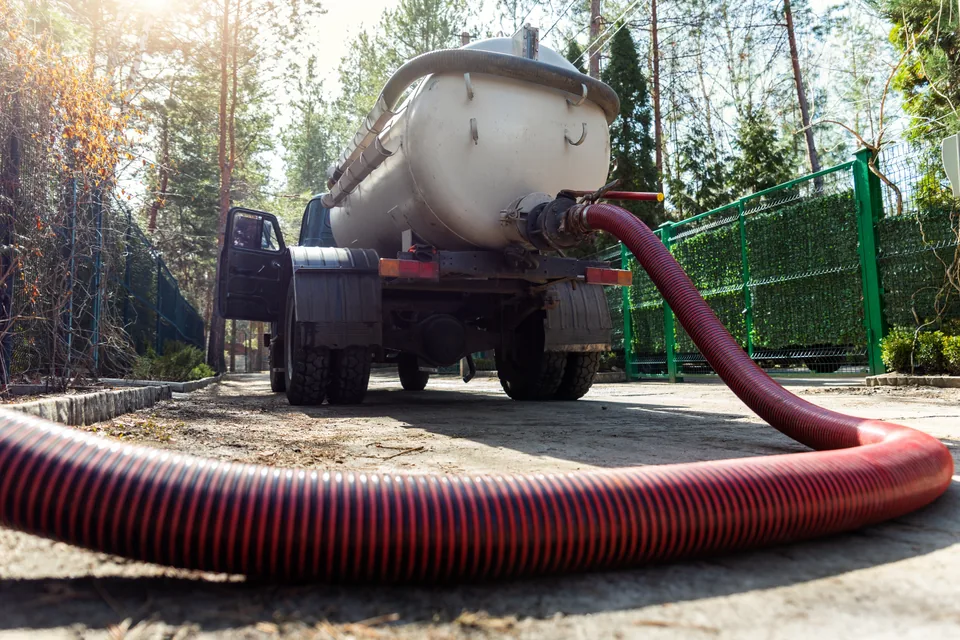
The rear of a vacuum tank truck with its red suction hose coiled on the drive — septic contractor insurance in Arkansas

Arkansas requires a state license to install a septic system, and the license is issued by the state. The duty attaches to the person doing the work rather than to the ground it is done in: Ark. Code Ann. § 14-236-115(a) provides that “Each installer who operates within the State of Arkansas, regardless of the location of his home office, must become registered by the Division of Environmental Health Protection of the Department of Health.” The chapter backs that with a general prohibition at § 14-236-110 — “No person shall construct, alter, repair, or extend or cause to be constructed, altered, repaired, or extended any individual sewage disposal system contrary to the provisions of this chapter and other applicable rules.” — and with an enforcement limb at § 14-236-115(f), which subjects an installer who has not registered to the chapter’s penalties. Arkansas states the duty as a command on the person plus a penalty rather than as a tidy prohibition on unlicensed work, and the three provisions together are what make it one. The credential is also examined, which is the fact a reader can go and check: rule § 14.1 provides that “The registration will be issued by the Department or its Authorized Agent upon successful completion of an examination and compliance with the provisions of the Rules.” One note on vocabulary, because the words differ and the credential does not — the statute calls it a registration and the rule calls it both a registration and a license.

What the installer holds is not what the system needs, and telling the two apart is the difference between sending a contractor on the right errand and the wrong one. The license attaches to the installer who operates within the state, wherever the home office may be. The permit attaches to the lot, and it is the property owner’s to obtain: rule § 4.5 makes it unlawful to begin work “until the owner first obtains a valid Permit for Construction issued by the Department or its Authorized Agent”, and Ark. Code Ann. § 14-236-112(a) is the statutory side of the same instrument. So a job can have a registered installer standing on it and still be unlawful to begin, because the Permit for Construction runs to the owner. Reading only for the permit and stopping there gets Arkansas wrong in the other direction as well: both instruments exist here, and the one that binds the contractor is the statutory registration with a penalty attached to it.

Where a contractor is actually served is a county office, and the officer behind that counter works for the state. The rule’s term of art for that officer is the Authorized Agent, defined at rule § 2.3 as “The Environmental Health Specialist assigned to the County, or Business Unit by the Department.” — a department employee stationed locally rather than a county employee. Rule § 4.8 completes it: “For those cities or counties with Authorized Agents, the Authorized Agent shall be the Authorized Agent of the Department.” No county in Arkansas issues this credential and none can, so a reader sent to the county for it has been sent to a body that does not issue it — and a reader sent to a desk in the capital has been sent past the county office where the Department’s own officer will stamp the work. And rule § 4.7 requires the installer to notify that Authorized Agent, the Department’s officer assigned to the county, before the work starts.

The duty has bounds, and they are the chapter’s own rather than anything read into it. Ark. Code Ann. § 14-236-104 is captioned “Certain individual systems excepted from chapter.”, and subsection (c) reads “The requirements of this chapter shall not apply to any individual sewage disposal system or alternate and experimental system which is situated on a tract of land ten (10) acres or larger, in which the field line or sewage disposal line is no closer than two hundred feet (200′) to the property line.” The registration duty sits inside that chapter. Two things have to be said beside that, and this page says both rather than picking the tidier one. Whether a particular tract clears the two-hundred-foot set-back limb of § 14-236-104(c) is a fact about the site, and no page may resolve it. The second bound is in the chapter’s own statement of purpose at § 14-236-102(b)(2), which is to “Require registration of all installers of individual sewage disposal systems by the Division of Sanitarian Services of the Department of Health, with the individual homeowner retaining all rights to install and repair his system in accordance with the provisions of this chapter”. A homeowner on his own system is a different question from a contractor on someone else’s. A contractor installing for hire on an ordinary lot sits in neither of the two classes of work the chapter’s own words place outside the duty — a qualifying ten-acre tract and a homeowner on his own system — and neither is a reason to state the duty more loosely than the chapter does.

Arkansas does not stop at the installer. One department runs a small family of practitioner licenses around the installer, each cut by function rather than graded by system complexity, and the one a reader will hunt for under the wrong word is the design-and-evaluation credential. The rule never uses the noun inspector. The person it certifies for that work is the Designated Representative, defined at rule § 2.9 as “A person certified by the Department to make percolation tests, system designs, and inspections subject to the Authorized Agent’s final approval.” That credential is unavoidable on a permitted job, because rule § 4.10.1 provides that “Part I of the Permit Application form shall be completed by a Designated Representative and approved by the Department or its Authorized Agent prior to initiating construction.”, and rule § 4.10.2.2 adds that “The inspection may be made by the Authorized Agent, or may be made by the Designated Representative at the approval of the Authorized Agent.” Rule § 13.1 puts a registration duty on every Designated Representative operating in the state. What that does to a schedule is plain: the paperwork sequence, not the soil, is what delays the job, because the installer cannot start before someone else’s credential has done its part.

A third credential in the family runs after the job closes rather than before it starts. Rule § 12 provides that “Owners of holding tanks, or alternative wastewater systems are required to maintain a Monitoring Contract with a Monitoring Person registered by the Department for the life of the system.” and adds that “No homeowner shall be allowed to monitor their own system.”, while rule § 12.6 provides that “Monitoring personnel shall be registered by the Department.” Complexity is what decides whether a job engages that class at all — rule § 9.2 contemplates special training before an installer may put in certain alternate systems, and rule § 9.3 lets the Department require a Designated Representative to oversee construction of unusual or rarely used designs — but none of that creates a junior and a senior installer license, and no tier should be built out of the label a license-lookup screen happens to print. One warning about names, because all three are the agency’s own: the statute calls the maintenance class a certified maintenance person, the rule calls it Certified Monitoring Personnel and the individual a Monitoring Person, and the department’s own notices call the credential an onsite maintenance provider license. That is one credential under three names, not three licenses. A firm that installs and then monitors is carrying an exposure that ends and an exposure that does not, on one account.

Pumping is licensed too, and not as a tier of anything above it. The septage credential comes from the same department under a different act and a different rule, and the onsite rule’s own enumeration of its licensees at § 2.27 — installers, Designated Representatives, certified monitoring personnel and septic tank manufacturers — does not include the cleaner. The rule that does create it states its own prohibition in one sentence, at § VII: “No person, firm, corporation, partnership, or association shall engage in the business of septic tank cleaning or the transportation of septage, sewage or sludge for compensation without a valid … license as provided herein.” It is a business credential rather than a vehicle permit — the licensee is “The licensed owner or operator of a business, firm, or corporation engaged in the business of cleaning septic tanks, marine sanitation devices, portable toilets, and or the transporting of septage or sewage.” — and it reaches hauling for compensation as much as it reaches cleaning. The operating conditions that come with it matter more to an insurance reader than the license does: § IV(A) provides that “The disposal of sewage or septage by any method that violates any state or federal law or rule is strictly prohibited.”, and § IV(B) makes land application at a site that has not been inspected, approved and put on file with the department a violation in itself. A business that installs and pumps therefore holds two licenses from the same department under two separate rules, and treating the cleaner license as a tier of the installer license misses one of them.

The onsite wastewater license carries no insurance condition and no bond condition of its own — checked by reading the rule and the department’s combined statute-and-rule volume end to end, neither of which uses the words insurance, bond or surety anywhere. The condition exists, but it sits one tier up in a regime that is blind to this trade, and it is a workers compensation condition rather than a general liability one. Arkansas licenses contractors separately through the Arkansas Contractors Licensing Board on a test cut by the cost of the job rather than by the trade — the same test would meet a roofing contractor in the same words — and that board’s statute at Ark. Code Ann. § 17-25-316(a) provides that “A contractor required to be licensed or registered by the Contractors Licensing Board shall obtain and maintain workers’ compensation coverage as required under the Workers’ Compensation Law, § 11-9-101 et seq.” Subsection (b) is the enforcement half of it: “The board shall require proof of current workers’ compensation coverage before issuing or renewing a license or registration to a contractor required to have workers’ compensation coverage under the Workers’ Compensation Law § 11-9-101 et seq.” The residential side carries its own version at § 17-25-514, with a carve-out for smaller home improvement work. One thing this page will not do is tell a reader whether holding the health department’s installer license is itself enough to engage the residential exemption at § 17-25-513(5) for a person licensed by another Arkansas agency and working within that license. The text retrieved does not decide it, and a page that tells a reader that holding the installer license exempts them, or that it does not, is guessing.

The coverage duty itself is where the numbers a septic business needs are not the numbers it will hear repeated. The general rule is a headcount, and the Commission states it that way. But the Commission’s own application for a certificate of non-coverage sets the thresholds out together, and building work is not on the general one: coverage is required for employment “in which three (3) or more employees are employed by the same employer”, “in which two (2) or more employees are engaged in building or building repair work”, “in which one (1) or more employee is employed by a contractor who subcontracts any part of his contract”, and “in which one (1) or more employee is employed by a subcontractor”. The counting rule is not the one a reader assumes either — in arriving at those numbers, employee “is defined to include, but is not limited to, an owner, a sole proprietor, a partner or partners who devote full-time to the partnership, a full-time employee, a part-time employee, and a volunteer.” A two-person crew doing installation work is inside the building limb on the face of that document, and a one-person operation working under somebody else’s contract is inside the last limb. The Commission says as much about its own general rule: “There are exceptions to the three-or-more requirement, so employers with fewer than three should check with authorities before assuming they do not fall under the Workers’ Compensation laws.”

Arkansas also runs election in both directions, and a contractor who has heard about one half has heard half the regime. An owner can elect out: the Commission publishes an affidavit in which a sole proprietor, a partner or a member of a limited liability company states that the applicant “has elected to be excluded as an employee and from the mandatory insurance requirement of the Arkansas workers’ compensation laws”, and the same document records that this is not the route for corporate officers, whose exclusion is “handled directly by the agent/carrier.” An employer the act does not reach can elect in: Commission Rule 099.06 provides that “When an employer not embraced by the Act elects to be governed by it as provided by A.C.A. 11-9-102 and 11-9-403, the election shall continue until notice to the contrary is filed with the Commission.” As for how the coverage is obtained, the Commission names two lawful routes and no state fund sits in either of them: “The coverage is provided through a Workers’ Compensation insurance policy or by the employer receiving state approval to be self-insured for such purposes.”

Two of those duties are worth holding apart when the renewal paperwork lands: the installer license imposes no insurance condition and no bond condition of its own, and the workers compensation condition sits on the contractor license under § 17-25-316. The sections below set out each axis beside the authority it rests on, with a link to the document the words come from.

What Arkansas requires of a septic business

Installing

Arkansas licenses the person who installs a septic system, and the license comes from the state health department rather than from any county. The statute attaches to the installer, the rule attaches an examination to the license, and the state runs a small family of separate practitioner licenses around the installer — a designer-and-inspector class, a maintenance-and-monitoring class, and a tank-manufacturer class — each named for what it does rather than graded by how complex the system is.

Authority Ark. Code Ann. §§ 14-236-101, 14-236-103(6), 14-236-103(13), 14-236-103(14), 14-236-106(c), 14-236-107(a), 14-236-110, 14-236-111(b) and (c), 14-236-112(a) and (b), 14-236-114, 14-236-115(a), (b), (c), (d), (e) and (f), 14-236-116(b); Arkansas State Board of Health Rules Pertaining to Onsite Wastewater Systems §§ 2.3, 2.9, 2.24, 2.27, 2.28, 4.5, 4.7, 4.8, 4.10.1, 9.2, 9.3, 11.3.2, 13.1, 14.1, 14.2, 14.3, 16.1.1.1.2. Companion trade-blind regime: Ark. Code Ann. §§ 17-25-101(a)(1), 17-25-316(a) and (b), 17-25-505(a), (b) and (c), 17-25-513(3)(A) and (5), 17-25-514(a), (b) and (c). — read the source

Pumping and hauling

Arkansas licenses the pumper separately from the installer, under a different act, through the same department. The instrument is a Septic Tank Cleaner license, the rule that creates it states its own prohibition in one sentence, and the license reaches the business of cleaning tanks AND the business of transporting septage for compensation.

Authority Arkansas State Board of Health Rules Pertaining to Septic Tank Cleaners §§ I(D), I(G), I(H), IV(A), IV(B), IV(C), VII; statutory authority as the rule itself states it — Act 71 of 1973 as amended and Act 96 of 1913. — read the source

Inspecting and evaluating

Arkansas credentials the person who evaluates and inspects a system at the state level, but it does not call that person an inspector. The credential is the Designated Representative, the department certifies it after an examination, and the permit application cannot be completed without one. A second state credential, the monitoring class, covers the recurring assessment of systems the monitoring program reaches.

Authority Arkansas State Board of Health Rules Pertaining to Onsite Wastewater Systems §§ 2.9, 2.28, 4.10.1, 4.10.2.1, 4.10.2.2, 4.10.3, 12, 12.3, 12.5, 12.6, 12.7, 13.1, 13.2, 16.1.1.1.1; Ark. Code Ann. §§ 14-236-103(14), 14-236-103(17), 14-236-111(a)(1), 14-236-111(b) and (c), 14-236-116(d) and (e). — read the source

Workers compensation

Arkansas requires workers compensation coverage of most employers once a headcount threshold is met, and the Commission states the general rule in its own words: “Most employers in Arkansas with three or more employees are required by law to have Workers’ Compensation insurance coverage for their employees.”

Authority Ark. Code Ann. §§ 11-9-101 et seq., 11-9-102, 11-9-102(9)(D), 11-9-401 et seq., 11-9-402, 11-9-403; Arkansas Workers’ Compensation Commission Rule 099.06. — read the source

What Arkansas requires of a septic business — installing, hauling, inspecting and workers’ comp from private insurers — and what each requirement leaves to the insurance program.

A panel for Arkansas in rows. Each row sets one thing the state requires beside the exposure that requirement leaves open and the coverage line that answers it. Installing: The state health department licenses the installer, not a county. It leaves open a failed install or drainfield, damage to the customer’s property, which General Liability and Pollution Liability answer. Pumping and hauling: A septage hauling permit is required. It leaves open a spill or release in transit, the truck at fault, which Commercial Auto and Pollution Liability answer. Inspecting and evaluating: A state inspector or evaluator certification is required. It leaves open a missed defect in an inspection or design, which Professional Liability answers. Workers compensation: Compulsory for covered employers; private insurers write it. It leaves open an injured employee in the trench or on the truck, which Workers Compensation answers. Notes: A license, permit or bond is not a policy — a bond secures the public body that requires it, not the customer. The conclusion reads: The credential is not the coverage — the program is. No figures are shown.

Where we write in Arkansas

Bentonville · Benton County

Subdivision work repeats one design across many lots, so a single design or workmanship error becomes a multi-claim event rather than a single loss — which is a completed-operations and aggregate question before it is a repair-cost question.

Fayetteville · Washington County

An engineered design drags a third party into the job, which splits the argument after a failure between installation workmanship and design — and the design side is professional exposure that a general liability form is not written to answer.

Conway · Faulkner County

Where a contractor’s schedule depends on another licensed professional’s filing, the loss that shows up first is contractual and consequential rather than physical — and that is exactly the kind of claim a reader assumes their policy answers.

Cabot · Lonoke County

A system sized against a water table that moves seasonally can perform for a year and surface in a wet spring, so the claim arrives long after the job closed — a completed-operations tail question rather than a during-work one.

Hot Springs · Garland County

Work close to water turns a defective installation into a pollution argument rather than a property-damage one, and pollution is the coverage a general liability form is least likely to answer without a deliberate grant.

Mountain Home · Baxter County

A firm that installs and then monitors carries two different exposures on one account — an installation exposure that ends and a recurring service obligation that does not — and the service side looks more like professional exposure than like contracting.

Jonesboro · Craighead County

Added subsurface work means more excavation on a site that is already wet, which raises both the open-excavation exposure during the job and the argument about what caused a later failure.

Harrison · Boone County

A discharging system is a permitted discharge with a disinfection step attached, so a maintenance lapse is a regulatory event as well as a service failure — and regulatory defense is not a coverage a contractor assumes they have.

Arkansas questions we get asked

Does Arkansas license septic installers?

Yes, and it examines them. The duty is on the person rather than on the lot: Ark. Code Ann. § 14-236-115(a) provides that “Each installer who operates within the State of Arkansas, regardless of the location of his home office, must become registered by the Division of Environmental Health Protection of the Department of Health.” The examination is in the rule, at § 14.1 — “The registration will be issued by the Department or its Authorized Agent upon successful completion of an examination and compliance with the provisions of the Rules.” One note on vocabulary, because it trips people up: the statute calls this credential a registration and the rule calls it both a registration and a license. That is one credential under two words, not two credentials.

Who has to hold an Arkansas installer license, and who does not?

The chapter writes its own bounds and this page carries them exactly as far as they go. Ark. Code Ann. § 14-236-104 is captioned “Certain individual systems excepted from chapter.”, and subsection (c) reads “The requirements of this chapter shall not apply to any individual sewage disposal system or alternate and experimental system which is situated on a tract of land ten (10) acres or larger, in which the field line or sewage disposal line is no closer than two hundred feet (200′) to the property line.” The registration duty sits in that chapter. Whether a particular tract clears the two-hundred-foot set-back limb of § 14-236-104(c) is a fact about the site, and no page may resolve it. The second bound is in the chapter’s statement of purpose at § 14-236-102(b)(2), which is to “Require registration of all installers of individual sewage disposal systems by the Division of Sanitarian Services of the Department of Health, with the individual homeowner retaining all rights to install and repair his system in accordance with the provisions of this chapter”. A homeowner on his own system is a different question from a contractor on someone else’s. A contractor installing for hire on an ordinary lot sits in neither of the two classes of work the chapter’s own words place outside the duty.

Who gets the permit for the system — me or my customer?

Your customer. Arkansas runs two instruments in the same chapter and they attach to different people. The license travels with the installer; the permit attaches to the lot and is the owner’s to obtain. Rule § 4.5 makes it unlawful to begin work “until the owner first obtains a valid Permit for Construction issued by the Department or its Authorized Agent”, and Ark. Code Ann. § 14-236-112(a) is the statutory side of the same instrument. A job can have a registered installer standing on it and still be unlawful to begin, because the Permit for Construction runs to the owner. There is a step before that one as well: rule § 4.10.1 provides that “Part I of the Permit Application form shall be completed by a Designated Representative and approved by the Department or its Authorized Agent prior to initiating construction.”

Does Arkansas credential the person who inspects a system?

At state level, yes — but not under the word you would search for. The rule does not use the noun inspector at all. The person it certifies for that work is the Designated Representative, defined at rule § 2.9 as “A person certified by the Department to make percolation tests, system designs, and inspections subject to the Authorized Agent’s final approval.” Rule § 13.1 puts a registration duty on every one of them operating in the state, and rule § 4.10.2.2 provides that “The inspection may be made by the Authorized Agent, or may be made by the Designated Representative at the approval of the Authorized Agent.” Two limits are worth stating with it: Arkansas’s onsite wastewater rule and the chapter that authorizes it impose no inspection requirement on the sale or transfer of a property — that is what the documents say, and it is not a survey of municipal ordinances or of what a lender asks for. And nothing retrieved stops an uncredentialed person from looking at an existing system for a private buyer outside the permit process; the credential governs the statutory evaluation work, not every look at a septic tank.

Do I need a separate license to pump tanks?

Yes, and it is not a tier of the installer license — it comes from the same department under a different act and a different rule. The onsite rule’s own list of its licensees at § 2.27 names installers, Designated Representatives, certified monitoring personnel and septic tank manufacturers, and the cleaner is not among them. The rule for septic tank cleaning states its own prohibition in one sentence, at § VII: “No person, firm, corporation, partnership, or association shall engage in the business of septic tank cleaning or the transportation of septage, sewage or sludge for compensation without a valid … license as provided herein.” It reaches hauling for compensation as well as cleaning, and the conditions attached to it are where the exposure sits: § IV(A) provides that “The disposal of sewage or septage by any method that violates any state or federal law or rule is strictly prohibited.”, and § IV(B) makes land application at a site that has not been inspected, approved and put on file with the department a violation in itself.

Does Arkansas tell me what insurance to carry?

Not through the septic license. The onsite wastewater credential carries no insurance condition and no bond condition of its own, and that was checked by reading the rule and the department’s combined statute-and-rule volume end to end rather than by assuming it. The condition sits one tier up and it is a workers compensation condition, not a general liability one. Arkansas licenses contractors separately through the Arkansas Contractors Licensing Board on a test cut by the cost of the job rather than by the trade, and Ark. Code Ann. § 17-25-316(a) provides that “A contractor required to be licensed or registered by the Contractors Licensing Board shall obtain and maintain workers’ compensation coverage as required under the Workers’ Compensation Law, § 11-9-101 et seq.” Subsection (b) is the enforcement half: “The board shall require proof of current workers’ compensation coverage before issuing or renewing a license or registration to a contractor required to have workers’ compensation coverage under the Workers’ Compensation Law § 11-9-101 et seq.” The residential side carries its own version at § 17-25-514. What this page will not tell you is whether holding the health department’s installer license is itself enough to engage the residential licensing exemption at § 17-25-513(5) for someone licensed by another Arkansas agency. Nothing retrieved decides it, either way.

This page reports Arkansas law as our own state research file records it. It is general information rather than legal advice, and it is not an opinion on what any policy covers — the wording you hold controls that, and carriers do not all write it the same way.

Talk it through with someone who reads the forms

Tell us what you install, what you pump and who is on the crew, and we will read the forms against the work.

Get a quote