Skip to content

Alabama

Septic Contractor Insurance in Alabama

Alabama licenses septic installers — and the board that issues the license is not the county health department that issues the permit for the job.

Get a quote Call 317-942-0549

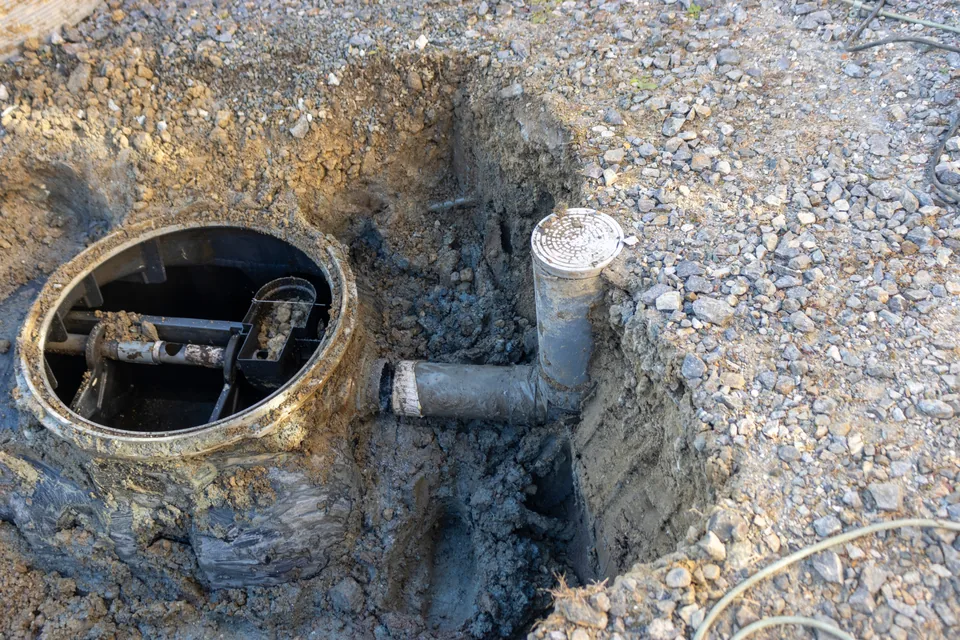
An uncovered septic tank opening beside its outlet pipe and cleanout riser — septic contractor insurance in Alabama

Alabama licenses septic installers, and the body that issues the license is not the health department. The credential is issued by the state — by the Alabama Onsite Wastewater Board, a standalone occupational board created under Ala. Code § 34-21A-3(a) and charged by Ala. Code § 34-21A-7(1) to “issue such licenses to those individuals who qualify for licensure”. It issues six classes: three installer levels (basic, advanced level I and advanced level II) plus manufacturer, pumper and portable toilet. The prohibition it enforces is Ala. Code § 34-21A-12(e): “No individual, business, partnership, or corporation shall engage in the manufacture, installation, servicing, cleaning, or maintenance of an onsite sewage system installed in the State of Alabama unless the individual, or the person in responsible charge for the business, partnership, or corporation, has received the required specific license from the board.” And the license is not the whole permission. The permit for a particular job is a separate instrument from a separate office: under Ala. Admin. Code r. 420-3-1-.06(1), “No person shall begin the installation or repair of an OSS/EDS, or component thereof, until the responsible person has been issued a valid Permit to Install” — issued by the county health department, which Ala. Code § 34-21A-2(11) defines as “The county health department in the county or counties in which a licensee performs work”.

That duty does not reach everyone doing this kind of work, because the licensing chapter’s own exemption section, Ala. Code § 34-21A-10, takes four classes outside the prohibition. The first is the homeowner, and narrowly: subsection (a) exempts “owners of property for the purpose of installing, cleaning, servicing, or maintaining an onsite sewage system on their own property with a one-family or two-family residence used as their primary residence”, and then closes the gap — the exemption holds only “so long as the owners of the property with an onsite sewage system complete all installation, cleaning, servicing, or maintenance themselves, without help, at their primary residence”. An owner who hires help is outside it, and so is a property that is not the primary residence. The second, at § 34-21A-10(b)(1), is an entity that merely distributes tanks or systems. The third, at § 34-21A-10(b)(2), is “An owner of multiple wastewater systems, or a system that is part of a group of wastewater systems under common ownership” where one or more of those systems reaches the design flow that subdivision states. And the fourth is the one a contractor has to read to the end: § 34-21A-10(b)(3) exempts “A general contractor licensed by the State Licensing Board for General Contractors, with a municipal and utility endorsement, while installing or maintaining wastewater systems as described in subdivision (2).” That exemption is bounded by the work and not by the badge. It runs only while that general contractor is installing or maintaining the large common-ownership systems of subdivision (2), so a general contractor putting in an ordinary residential system is not inside it. What the four carve-outs have in common is that none of them describes the operator who takes the contract and sends a crew.

The financial condition attached to the license is a surety bond, not insurance, and a bond does not protect the contractor. Ala. Code § 34-21A-16 requires that “all licensees, without exception, are required to be bonded for any work performed under the license”, makes it a continuing condition rather than a filing — each licensee “shall maintain a current bond for each license he or she holds” — and provides that “The executive director shall immediately suspend any active license without a current bond on file.” The section fixes statutory minimums the Board may not set below, at a higher level for the advanced licenses than for the basic, pumper, portable toilet and manufacturer classes. Its stated purpose is “to assure financial stability and professional competence and performance of licensees”, which is to say it answers to the state and to a party the licensee injures, not to the licensee. No provision in this record conditions the Alabama license on liability insurance at all. There is a second surface behind the first, and small firms meet it early: Ala. Code § 34-21A-12(g) forbids the official who issues ordinary business licenses to issue one for this kind of work “unless there is presented for inspection a license certificate as provided herein issued by the board”.

Alabama runs the local question in the opposite direction from most states, and there is one place where it has not fully closed. Ala. Code § 34-21A-12(c) makes the Board’s license the whole of the qualification: it “shall be recognized as evidence of qualification and knowledge of the licensee by the Alabama Department of Public Health and county or local health authorities, and no other additional level of qualification or certification or other requirement shall be required by the Alabama Department of Public Health or any county or local health authorities for those persons engaged in the manufacture, installation, or servicing of onsite sewage systems”. So the permit counter may not ask a licensee to qualify again. Against that, Jefferson County runs an independent county health department whose own on-site sewage regulations carry a chapter on certificates of competency, whose rule 8.1.1 reads “No person shall engage in the business of installing, repairing, cleaning, or maintaining on-site sewage disposal systems without having applied for and obtained a Certificate of Competency from the Health Department.”, and whose live program page still describes itself in the present tense as “Providing a Certificate of Competency to individuals who install, maintain, and repair onsite systems”. Those regulations are older than the statewide licensing chapter, and on their face the two do not sit together. This page does not resolve that, and no one should read it as resolved: the statute is statewide, only one county in this research advertises a credential of its own, no sweep of every Alabama county was attempted, and the practical instruction is the safe one — confirm the county health department’s own requirements before you bid there.

Pumping and hauling is two instruments on two counters, and a firm that holds one of them is half permitted. Under Ala. Admin. Code r. 420-3-6-.02(41) the sewage tank pumper is defined by both instruments at once: the person must be “appropriately licensed by the AOWB”, and must also be “permitted by the LHD”. The license is the Board’s; the permit is the county health department’s, and r. 420-3-6-.23(1) anchors it to the yard rather than to the job — “A person proposing to be a sewage tank pumper shall obtain a permit issued by the LHD in the county where said sewage tank pumper operates a sewage tank pumper facility”. The permit then travels, which is the fact most often got backwards: “An LHD shall honor a permit issued by another LHD.”, and “The person shall only pay fees, as applicable, in the county in which the sewage tank pumper facility is located.” An operator whose facility sits outside Alabama has to nominate a county of record inside it before the permit can exist at all. The permit also carries operating conditions an underwriter can act on: consent to inspection of equipment, vehicles, containers and sites, firm name and address lettered on both sides of the cab or carrier tank, a current county decal displayed, a sewage carrier tank permanently labeled “FOR SEWAGE ONLY” at the valves and barred from other use, a leak-proof and fly-proof tank operated to prevent spillage, and a minimum holding capacity the rule sets for septage. And the county may not issue the permit at all without an approved disposal point, which turns the agreement with the disposal point into a license-critical asset.

Alabama issues no septic inspector certification and no evaluator certification, and that is not the same thing as nothing being required — four statewide obligations bear on looking at an existing system, and each is set out with its authority in the finding below. What matters commercially is which of them a licensee can sell. A contractor asked to inspect a system before a sale is not performing a regulated inspection and cannot issue one: the rule names that case, in the sentence on home inspectors and AOWB licensees set out in the finding below, and such a service does not “imply that the system complies with these rules.” The regulated look belongs to the county health department, it happens only on the request the finding below quotes rather than on a schedule, and it depends on documented evidence that a licensed pumper emptied the tank within the last three years. So the licensee’s work in that transaction is the pump-out the evaluation depends on and the repair the evaluation may trigger. There is one further turn in it: the department may decline to evaluate where an existing system appears to have been installed without a permit, and require a professional site evaluation and a fresh permit application instead — which converts a routine pre-sale look into installation work running against a closing date.

Almost none of that is a liability insurance requirement. The license condition is a bond, and no Alabama provision in this record conditions the license on liability insurance. The workers compensation duty turns on headcount, with a carve-out written around a kind of work rather than an industry. The sections below take each of those in turn, with the authority it rests on, so you can check it rather than take our word for it.

What Alabama requires of a septic business

Installing

Alabama LICENSES the septic installer, and the licensing body is not the health department. The Alabama Onsite Wastewater Board -- a standalone nine-member occupational board created by Ala. Code 34-21A-3 -- issues six classes of license: basic level installer, advanced level I installer, advanced level II installer, manufacturer, pumper and portable toilet. The license is issued ONLY to a natural person; Ala. Code 34-21A-12(h) says "No license shall be issued except to an individual. A firm, partnership, association, or corporation shall not be licensed.", so a company works under a designated licensed individual in responsible charge. Every licensee must be bonded. The per-site permit is a separate instrument issued by the county health department under the Department of Public Health’s rules, and the licensing statute forbids that department and those county offices to require any further qualification of the licensee.

Authority Ala. Code §§ 34-21A-1; 34-21A-2(8); 34-21A-2(11); 34-21A-3(a); 34-21A-7(1); 34-21A-7(5); 34-21A-10(a); 34-21A-10(b); 34-21A-12(a); 34-21A-12(c); 34-21A-12(e); 34-21A-12(f); 34-21A-12(g); 34-21A-12(h); 34-21A-16; 34-21A-25(a). Ala. Admin. Code r. 628-X-1-.01; 628-X-3-.01; 628-X-3-.04. Ala. Admin. Code r. 420-3-1-.05(7); 420-3-1-.06(1). — read the source

Pumping and hauling

Alabama’s septage answer is TWO instruments stacked on two different counters, and the rule that defines the pumper says so in one sentence. Ala. Admin. Code r. 420-3-6-.02(41) defines a Sewage Tank Pumper as "a person engaged in the business, operation, or practice of removing and disposing of sludge, grease, septage, or solid or liquid waste from sewage tanks and who is appropriately licensed by the AOWB and permitted by the LHD". The PERSON is licensed by the statewide board; the FACILITY, the vehicles and the disposal point are permitted by the county health department. A page that names one instrument has named half of the requirement.

Authority Ala. Admin. Code r. 420-3-6-.02(41); 420-3-6-.07(1)(a); 420-3-6-.07(1)(b)1.; 420-3-6-.09; 420-3-6-.23(1); 420-3-6-.23(1)(c); 420-3-6-.23(1)(d); 420-3-6-.23(2). Ala. Code §§ 34-21A-12(a); 34-21A-12(e); 34-21A-16. Ala. Admin. Code r. 628-X-1-.01(19); 628-X-3-.01. — read the source

Inspecting and evaluating

Alabama issues NO septic inspector certification and NO septic evaluator certification, at the state level or at any level this research could find -- and the reason is not that nobody looks at existing systems. Alabama assigns that work to the county health department itself and to the licensed installer, and it does it by name: the evaluation of an existing system is performed by the health department, the certification that an installation is complete is made by the installer who built it, and the rules then warn in terms that a similar inspection by anyone else carries no authority under them.

Four statewide obligations in Alabama reach the job of looking at an existing system, and none of them is an inspector credential. First, the evaluation belongs to the county health department. Ala. Admin. Code r. 420-3-1-.33(1) makes it available on request — "When requested by a responsible person or a lending institution representing the seller or buyer" — and assigns it to the county health department, adding that the evaluation implies no guarantee that the system will function satisfactorily. Second, a pump-out by a licensed pumper is the price of entry to that evaluation: under r. 420-3-1-.33(3), before completing the evaluation, "the responsible person or the lending institution shall provide evidence that the septic tank of an existing OSS/EDS has been pumped within the last 3 years by an AOWB licensed pumper". Third, the installer certifies the installation. Under r. 420-3-1-.34(5), "Prior to issuance of the Approval for Use, the installer shall certify the installation" within three business days, and for an engineered system the designing engineer certifies it — so the certifying party is the trade credential, not a third-party inspector. Fourth, the rule fences every other look at the system. r. 420-3-1-.33(4): "Similar inspection services, such as those provided by a home inspector or an AOWB licensee, shall not imply that the service was provided under authority of these rules, nor shall they imply that the system complies with these rules."

read the source

Workers compensation

Alabama workers compensation is compulsory for an employer that regularly employs five or more employees in any one business, and the under-five exemption does not reach the business of constructing or assisting on-site in the construction of new single-family, detached residential dwellings.

Authority Ala. Code §§ 25-5-1(4); 25-5-1(5); 25-5-8(a); 25-5-8(b); 25-5-8(e); 25-5-8(f)(1); 25-5-8(f)(2); 25-5-9(a); 25-5-50(a); 25-5-50(b); and, for the regulator’s name, §§ 25-2-1 and 25-2-1.2. — read the source

What Alabama requires of a septic business — installing, hauling, inspecting and workers’ comp from private insurers — and what each requirement leaves to the insurance program.

A panel for Alabama in rows. Each row sets one thing the state requires beside the exposure that requirement leaves open and the coverage line that answers it. Installing: Licensed installer; the licensing body is not the health department. It leaves open a failed install or drainfield, damage to the customer’s property, which General Liability and Pollution Liability answer. Pumping and hauling: A septage hauling permit is required. It leaves open a spill or release in transit, the truck at fault, which Commercial Auto and Pollution Liability answer. Inspecting and evaluating: No statewide inspector or evaluator certification. It leaves open a missed defect in an inspection or design, which Professional Liability answers. Workers compensation: Compulsory for covered employers; private insurers write it. It leaves open an injured employee in the trench or on the truck, which Workers Compensation answers. Notes: A license, permit or bond is not a policy — a bond secures the public body that requires it, not the customer. The conclusion reads: The credential is not the coverage — the program is. No figures are shown.

Where we write in Alabama

Birmingham · Jefferson County

A contractor working this county may be carrying a second bond and a second annual renewal on top of the statewide one, and the county’s certificate is not transferable on a sale or change of ownership of the firm.

Shelby County

Sale-triggered work is work under a closing date, and the pump-out that unlocks the evaluation has to be done by a licensee -- so the contractor is inside the transaction’s timetable and has created the record the lender relies on.

Huntsville · Madison County

Engineered and cluster work is a different exposure from residential conventional work -- a designing engineer is in the chain, a second state agency may hold the discharge permit, and the installer’s own license class is the thing that makes the job lawful for that firm.

Montgomery · Montgomery County

A firm building a bench -- a second licensed person so the 45-day re-designation window of Ala. Code § 34-21A-12(h) is never the binding constraint -- is sending people here, on the Board’s own posted examination dates, with a minimum passing grade and a limited number of retests.

Mobile · Mobile County

A hauler whose yard sits across a state line is not merely working out of state -- it has to nominate an Alabama county of record before it can hold the permit at all, and the county of record is where the fee and the equipment inspection land.

Baldwin County

Coastal seasonal construction concentrates installation work into short windows against a county counter that must inspect before the Approval for Use, and the same rule chapter governs the repair work that follows a storm season.

Tuscaloosa · Tuscaloosa County

One permit covers the route, so the operational risk is not permit administration but the disposal end -- r. 420-3-6-.23(1)(c) bars the county from issuing at all "unless an approved disposal point and method of sewage disposal are provided", which makes the contract with the disposal point a license-critical asset.

Dothan · Houston County

A single truck may be carrying two waste streams under two disposal regimes, and r. 420-3-6-.23(2)(a) and (b) require the carrier tank to be labeled for one of them -- a sewage tank permanently labeled for sewage only, or a grease-only tank labeled for fats, oils and grease.

Alabama questions we get asked

Does Alabama license septic installers?

Yes, and the word is license rather than certification. The Alabama Onsite Wastewater Board — a standalone occupational board, not the health department — issues six classes: three installer levels (basic, advanced level I and advanced level II) plus manufacturer, pumper and portable toilet. The statute states its own effect: “No individual, business, partnership, or corporation shall engage in the manufacture, installation, servicing, cleaning, or maintenance of an onsite sewage system installed in the State of Alabama unless the individual, or the person in responsible charge for the business, partnership, or corporation, has received the required specific license from the board.” Under Ala. Code § 34-21A-25(a) a person who undertakes the business without a current valid license “shall be guilty of a Class A misdemeanor, as defined by the state criminal code”, and the Board may separately order that the person “immediately cease and desist”.

Who does the Alabama license requirement not reach?

Four classes, and the licensing chapter names them rather than leaving it to inference. Ala. Code § 34-21A-10(a) exempts “owners of property for the purpose of installing, cleaning, servicing, or maintaining an onsite sewage system on their own property with a one-family or two-family residence used as their primary residence”, and only “so long as the owners of the property with an onsite sewage system complete all installation, cleaning, servicing, or maintenance themselves, without help, at their primary residence”. Section 34-21A-10(b) adds three more: a distributor of tanks or systems, an owner of multiple wastewater systems or of a system in a group under common ownership above the design flow that subdivision sets, and a general contractor holding a municipal and utility endorsement while doing that same large common-ownership work. None of the four reaches a contractor hired to install an ordinary residential system.

Can my company hold the Alabama license?

No. Ala. Code § 34-21A-12(h), quoted in the finding below, bars issuing the license to anyone “except to an individual”, and says in terms that a firm “shall not be licensed”. The company operates through a designated licensed individual in responsible charge, who under Ala. Code § 34-21A-2(14) has to be a full-time employee, owner, partner or corporate officer directing the work. If that person leaves, “The partnership or corporation shall then have 45 days to re-designate a licensed individual responsible for work performed by the business entity.” Inside that window the section permits no work without the knowledge and approval of local health officials, and work done in it has to be inspected and approved before it counts as complete. A firm with one licensed person has a continuity exposure, not just a staffing one.

Does the state license cover pumping and hauling?

Only half of it. The rule that defines the trade requires a sewage tank pumper to be “appropriately licensed by the AOWB”, and also to be “permitted by the LHD”. The Board licenses the person; the county health department permits the facility, the vehicles and the disposal arrangements. The permit does not multiply by county — “An LHD shall honor a permit issued by another LHD.” — and fees are paid only in the county where the facility sits. The enforcement that bites is at the far end: a permitted land application facility may not accept “Septage from persons who have not been issued a current Sewage Tank Pumper Permit by the LHD”, so an unpermitted truck has nowhere lawful to empty.

Does Alabama require liability insurance to get the license?

No — the statewide condition is a surety bond, and the two are not the same thing. Ala. Code § 34-21A-16 provides that “all licensees, without exception, are required to be bonded for any work performed under the license”, evidence of it has to reach the Board before any license will be issued, each active licensee “shall maintain a current bond for each license he or she holds”, and “The executive director shall immediately suspend any active license without a current bond on file.” The same section sets statutory floors the Board may not go below, with the advanced level licenses carrying the higher one. But read what the bond is for: the section says it exists “to assure financial stability and professional competence and performance of licensees”. It answers to the state and to an injured party, not to the contractor. Nothing in this record conditions the Alabama license on liability insurance, and the surety bond you must buy does not protect the contractor or the business.

Do I need workers compensation in Alabama?

Alabama workers compensation is compulsory at five or more employees, and the under-five exemption carries a carve-out. Ala. Code § 25-5-50(a) exempts an employer who “regularly employs less than five employees” in any one business, but the exemption does not apply to a business that builds, or assists on site in building, new single-family detached homes. Every word of that carve-out is load-bearing — new, single-family, detached, residential, and on-site assistance is inside it — so a small crew setting the system for a new detached house is in a different position from the same crew repairing a system at an existing house or pumping tanks. This record does not resolve how the Department of Workforce applies that language to a mixed book of work, and nothing retrieved construes it for a trade contractor. When you do secure it, Ala. Code § 25-5-8 gives exactly two routes — insure the liability, or qualify as a self-insurer on proof of financial ability — with pooled self-insurance under Ala. Code § 25-5-9 as a form of the second. There is no state fund.

This page reports Alabama law as our own state research file records it. It is general information rather than legal advice, and it is not an opinion on what any policy covers — the wording you hold controls that, and carriers do not all write it the same way.

Talk it through with someone who reads the forms

Tell us what you install, what you pump and who is on the crew, and we will read the forms against the work.

Get a quote