Skip to content

Maine

Septic Contractor Insurance in Maine

Maine does run a state septic installer certification — and it binds nobody, which is a different sentence from saying the credential does not exist.

Get a quote Call 317-942-0549

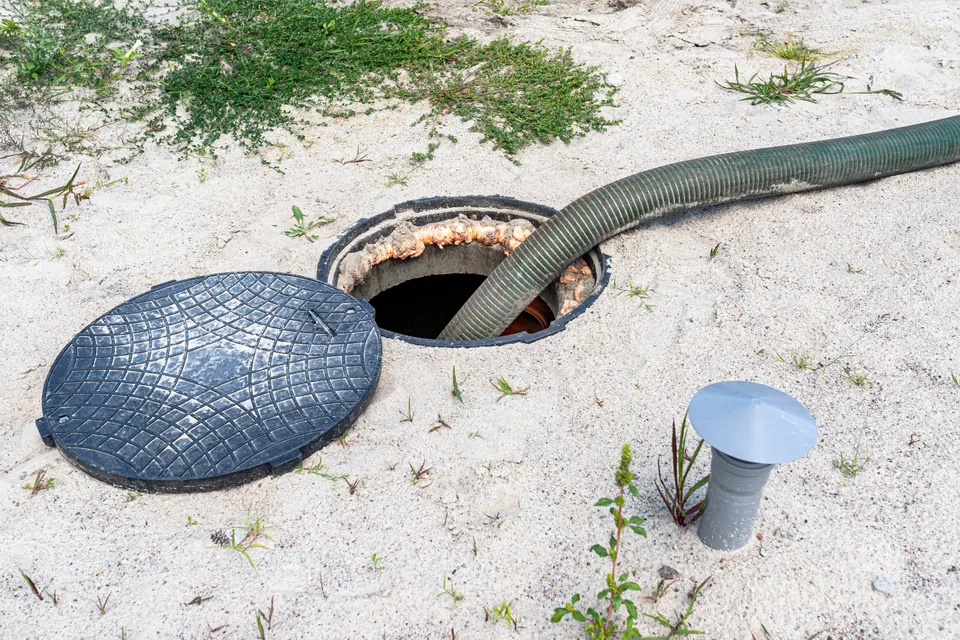
An open septic tank riser with its lid set aside and a suction hose inside — septic contractor insurance in Maine

Maine does not require a license to install a septic system, and the state offers a voluntary installer certification instead. That is not the same as saying no credential exists here. It does exist, it is issued by the state, it names this trade and nobody else can hold it — the health department describes its own program as “a non-regulatory incentive driven program to broaden the use of proper septic system installation techniques, for individuals who install onsite wastewater disposal systems.” Nothing in Maine law forbids doing the work without it.

A voluntary credential with nothing behind it would not be worth a paragraph, and this one is. The department states the authority it confers: “Maine certified installers may perform the bottom-of-the-bed inspection for a system they installed, upon written agreement with the Local Plumbing Inspector (LPI) of that town.” The rule is otherwise unforgiving — “No part of a system may be backfilled until it has been inspected and approved.” — so what the certification buys is schedule control on a job whose calendar is otherwise somebody else’s.

Two things in Maine are compulsory, and leaving either out of the sentence above would mislead. The first is the permit for the individual system, obtained before work starts. A permit is required for “The installation of a subsurface waste water disposal system or components”, and it authorizes work on one lot rather than attaching to the person who holds it; the penalty limb reaches whoever installs without it, owner or contractor alike. It comes from the local plumbing inspector — in a town, the officer the municipal officers appoint; in Maine’s unorganized areas, where there is no local form of government, “the department shall appoint plumbing inspectors or act in the capacity of a plumbing inspector until a person is appointed.”

The second is the designer’s license, and it is the one credential in this trade a person is required to hold. The department states it plainly: “Maine requires the licensure of individuals who design wastewater disposal systems.” Its own rule closes the loop on the job — “Non-engineered systems must be designed by a Maine-licensed site evaluator.” So on every non-engineered job a third party owns the design, and after a failure the argument runs between design and installation before anyone reaches the repair cost.

Stand back and Maine runs this trade through four credentials, not one of which is an installer license — a state license for the designer, a state certification for the inspector that is required only for a shoreland property transfer, a state certification for the municipal officer who inspects new work, and a state license for the truck that hauls the septage. The installer stands in the middle of that holding nothing the law requires. What none of that settles is the coverage question, and a contractor who reads a voluntary credential as a light-touch state is reading the wrong signal: the state that asks least of the installer is not the state that exposes him least. The sections below set out each credential with the authority it rests on, and the coverage it does not carry.

What Maine requires of a septic business

Installing

Maine attaches a credential to the person who installs a subsurface wastewater disposal system, and that credential is VOLUNTARY. The state runs an Onsite Wastewater Disposal System Installers certification through the Maine Center for Disease Control and Prevention; the agency describes it in its own words as “a non-regulatory incentive driven program” and nothing in Maine law forbids installing without it. What IS compulsory is a permit for the individual system, issued by the local plumbing inspector, and a state license for the person who DESIGNS the system.

Authority 30-A M.R.S. §§ 4201(3), 4201(5), 4211(1), 4211(2), 4211(3), 4215(1), 4215(3), 4215(4), 4221(1), 4221(3); 22 M.R.S. §§ 42(3), 42(3-A), 42(3-B); 32 M.R.S. § 3302(1); 10-144 C.M.R. ch. 241 §§ 2(B)(1), 3(H), 3(I)(1), 4(G), 12(I); 10 M.R.S. § 1487 (the trade-blind companion, and it is a negative). — read the source

Pumping and hauling

Maine credentials septage hauling through the environment department, not the health department, and the license attaches to the VEHICLE rather than to the person. The instrument is a non-hazardous waste transporter license in the septage category, issued by the Maine Department of Environmental Protection; a separate license is needed to land apply septage, and a third to store it.

Authority 38 M.R.S. §§ 1303-C, 1304(1-A)(A), 1304(1-A)(B), 1304(1-A)(C), 1304(1-A)(D), 1306(2); 06-096 C.M.R. ch. 411 §§ 1(B), 1(D), 1(G), 2(A), 2(B), 2(C), 2(D); 06-096 C.M.R. ch. 420 § 2(A). — read the source

Inspecting and evaluating

Maine certifies inspectors of existing systems at state level, and the certification is voluntary everywhere except one place, where it is compulsory: a property transfer in the shoreland zone. The department publishes it as the independent third party inspector certification. Separately, and under a different authority, the person who inspects NEW work is a municipal officer — the local plumbing inspector — who holds a state code-enforcement certification, not this one.

Authority 30-A M.R.S. §§ 4216(1), 4216(2)(A), 4216(2)(B), 4216(2)(C), 4221(1), 4221(2), 4221(3)(A), 4221(3)(B), 4221(3)(C), 4222, 4451(1); 22 M.R.S. §§ 42(3-B); 10-144 C.M.R. ch. 241 §§ 4(G)(2), 12(I), 15(A), 15(B), 15(C), 16(A), 16(B), 16(C), 16(E), 16(I), 16(J), 16(K), 17. — read the source

Workers compensation

Maine requires workers compensation coverage of every private employer with employees, with no employee-count threshold at all, and the statute says so in one sentence: “Every private employer, including an independent contractor who hires and pays employees, is subject to this Act”. An employer complies by buying a policy or by qualifying as a self-insurer.

Authority 39-A M.R.S. §§ 102(11)(A), 102(11)(A)(4), 102(11)(A)(5), 102(11)(A)(7), 102(11)(A)(8), 102(11)(B), 401(1), 401(1)(A), 401(1)(B), 401(1)(C), 401(2), 401(3), 403(1), 403(3). — read the source

What Maine requires of a septic business — installing, hauling, inspecting and workers’ comp from private insurers — and what each requirement leaves to the insurance program.

A panel for Maine in rows. Each row sets one thing the state requires beside the exposure that requirement leaves open and the coverage line that answers it. Installing: A credential attaches to the installer, and it is voluntary. It leaves open a failed install or drainfield, damage to the customer’s property, which General Liability and Pollution Liability answer. Pumping and hauling: A septage hauling permit is required. It leaves open a spill or release in transit, the truck at fault, which Commercial Auto and Pollution Liability answer. Inspecting and evaluating: A state inspector or evaluator certification is required. It leaves open a missed defect in an inspection or design, which Professional Liability answers. Workers compensation: Compulsory for covered employers; private insurers write it. It leaves open an injured employee in the trench or on the truck, which Workers Compensation answers. Notes: A license, permit or bond is not a policy — a bond secures the public body that requires it, not the customer. The conclusion reads: The credential is not the coverage — the program is. No figures are shown.

Where we write in Maine

Windham

A transfer inspection is an opinion delivered to a buyer who is about to spend money on the strength of it, and the repair obligation it can trigger is time-limited. That is professional-liability exposure sitting inside a contracting business, and it does not look like a workmanship claim.

York

Where a town’s standard is higher than the state’s, the contract standard of care rises with it and the state rule stops being a safe harbor. A defense built on compliance with the state minimum can fail in a town that adopted more.

Rangeley

A conversion job is a retrofit on ground and a system that were sized for intermittent use, so the loss is a capacity failure on a system that worked before the work — an argument about design assumptions rather than about workmanship.

Greenville

A contractor whose work crosses that line is inspected by a different office on either side of it, with different scheduling and different travel. Delay between installation and the required pre-backfill inspection is an exposure of its own, because nothing may be covered until it is approved.

Ellsworth

A third party owns the design on every job, which splits the argument after a failure between the design and the installation. Contractual-liability and additional-insured questions arrive with that split, before anyone reaches the repair cost.

Skowhegan

The penalty limb names the installer as well as the owner, so permit failure is the contractor’s problem and not only the client’s. An uninsurable regulatory exposure sits beside an insurable property one on the same job.

Presque Isle

Every mile between the tank and the disposal point is auto exposure carrying a pollutant, and the license itself is written on the vehicle. A fleet change is a licensing event, not only a scheduling one.

Belfast

Whether a job is even lawful can turn on a local legislative act rather than on ground conditions, so a bid priced on the state rule can be void in the next town. A quoted job that cannot be permitted is a contract exposure before it is anything else.

Maine questions we get asked

Does Maine license septic installers?

No. Maine does not require a license to install a septic system, and nothing in Maine law forbids installing without one. What the state runs instead is a voluntary installer certification, issued by the state through its health department in association with the environment department. The credential exists; the duty does not, and those are two different findings.

If the certification is voluntary, what is it actually worth?

A certified installer may perform the bottom-of-the-bed inspection on a system the installer built, by written agreement with the local plumbing inspector. That matters because the rule is otherwise absolute: “No part of a system may be backfilled until it has been inspected and approved.” The certification buys schedule control on the step that can stop a job.

Do I still need a permit before the work starts?

Yes, and it is not a credential. The permit is required for “The installation of a subsurface waste water disposal system or components”, and it authorizes work on one lot rather than sitting in anyone’s pocket. The penalty limb reaches the person who installs without it, not only the owner. Reading the permit as a license merges two different instruments.

Does Maine license the person who designs the system?

Yes, and that is the compulsory credential in this trade. The department states it plainly: “Maine requires the licensure of individuals who design wastewater disposal systems.” Its rule closes the loop on the job itself — “Non-engineered systems must be designed by a Maine-licensed site evaluator.” An engineered system takes a Maine-licensed professional engineer, with the evaluator still doing the ground.

Do I need workers compensation for a small crew in Maine?

Maine sets no headcount threshold at all. The duty is stated of every private employer, and the statute puts it in one sentence, set out in full on this page — so a neighboring state’s «fewer than N employees» sentence is false here. An owner’s own cover turns on the business form: a limited liability company member is covered only by electing in and buying it, while a corporate officer is in by default.

What about the pump truck?

Maine’s septage credential sits in the environment department and it is written on the vehicle rather than the person: “Unless exempt, all vehicles and/or containers transporting non-hazardous waste within the state must have a license.” Insurance is part of that application — the department’s checklist asks for “a certificate of insurance with DEP as a certificate holder”. So each vehicle added to the fleet needs its own license.

This page reports Maine law as our own state research file records it. It is general information rather than legal advice, and it is not an opinion on what any policy covers — the wording you hold controls that, and carriers do not all write it the same way.

Talk it through with someone who reads the forms

Tell us what you install, what you pump and who is on the crew, and we will read the forms against the work.

Get a quote
