Skip to content

Maryland

Septic Contractor Insurance in Maryland

Maryland licenses the person rather than the business — and until the Department finishes the licensing regulations, most Maryland septic contractors are working on a registration.

Get a quote Call 317-942-0549

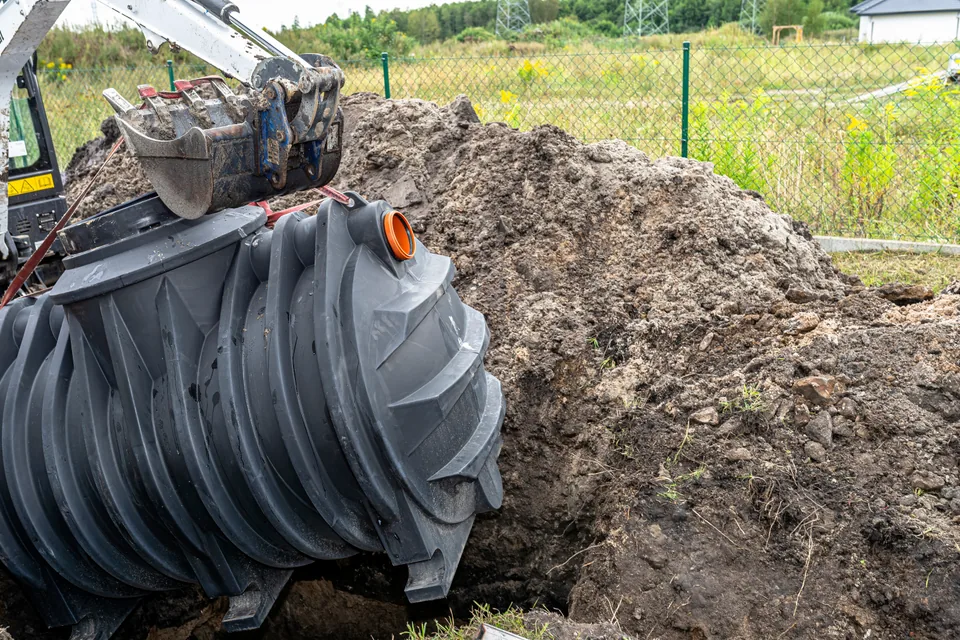
An excavator lowering a ribbed plastic septic tank into a fresh excavation — septic contractor insurance in Maryland

Maryland licenses the individual who works on a septic system, and the license is a state one — the State Board of On-Site Wastewater Professionals, which the statute places inside the state environment department. The subtitle states its own effect rather than leaving it to be inferred from the existence of a credential. The prohibition at Md. Code, Environment Article, § 9-11A-20(a) is set out in the Installing section below, and it forbids the work to an individual the Board has not licensed. The duty is written affirmatively as well, at § 9-11A-15(a)(1): “an individual shall be licensed by the Board in accordance with this subtitle before the individual may provide on-site wastewater services in the State”. Read the prohibition twice: offering is prohibited as well as doing, so it reaches an advertisement and a quotation, not only a dug trench. The credential attaches to a person throughout — “A license may not be borrowed, rented, or transferred to another individual.” — and nothing in the subtitle licenses a business entity, which is the opposite of the firm-plus-individual shape some states use.

One credential reaches four trades here, which is unusual. § 9-11A-01(d)(1), quoted in the Installing section below, defines the reached activity, and the categories the Board is directed to build are trade categories in master and journey grades — designer, installer, pumper, property transfer inspector, and operation and maintenance provider. So the installer, the pumper, the designer and the transfer inspector are not four credentials in Maryland. They are one credential with grades that the regulation writer has not finished building.

That unfinished rollout is the half of Maryland most often dropped, and it is the operative law for most contractors in the state today. The same subtitle carries a transition clause, § 9-11A-15(a)(2)(i), set out in the Installing section below: an individual already providing these services may carry on until the Department’s licensing regulations exist, if that individual “Complies with all applicable State and local laws and regulations”, paid the Department’s fee by the date the subsection names, and pays a renewal fee “Every 2 years thereafter until the Department sets fees in accordance with § 9-11A-10 of this subtitle”. The Department describes the same arrangement on its own Board page: “Until the Board implements its new licensing requirements and procedures”, the section “requires any individual who provides on-site wastewater services in Maryland to register with the Board”, and “Registration is valid for a 2-year period.” Asked whether that registration requires proof of insurance, the Department’s published answer is “No, this is solely for registration, not a license.” The Act that created the Board set a date by which every provider was to hold the Board’s license, and required implementing regulations before it; that date has passed, and the bills introduced to move both dates did not become law. None of that makes a working Maryland contractor unlawful — the transition clause is conditioned on the regulations existing, not on a calendar date — and none of it makes the trade unlicensed either. Both halves have to be read together: the license alone overstates what a reader holds today, and the registration alone understates what the statute requires.

The duty does not reach everyone who works on a septic system in Maryland, and the subtitle scopes itself twice in its own words — once by a class of person, once by a class of system. The class of person is the public employee: § 9-11A-02(a) provides that “This subtitle does not apply to an individual employed by a local, State, or federal agency while performing the duties of that employment.” The class of system is a discharge and a daily volume rather than a trade: § 9-11A-01(e)(3) writes out of the defined on-site wastewater system any wastewater treatment system that “Requires a discharge permit from the Department” or “Treats 5,000 or more gallons per day”, so the largest jobs fall outside the Board’s license while remaining inside the construction rules. What neither carve-out does is soften anything for the contractor who holds the work. An individual doing the installation, pumping, repair or property transfer inspection of an ordinary on-site wastewater system for a private business stays inside the duty. So this page never claims the Board’s license reaches every person who works on a septic system: § 9-11A-02(a) denies it in terms.

The state credential also does not discharge a county one, and this is the fact that pulls in the opposite direction from a carve-out: it widens what a contractor must hold rather than narrowing it. § 9-11A-02(b) provides that “Nothing in this subtitle prevents or prohibits a local government from imposing requirements, standards, or fees that are more stringent than the requirements, standards, or fees established in this subtitle.” The Department answers the same question for contractors on its own page — asked about a county that charges “a septic license fee and a septage hauler license fee annually”, it says “Yes, the State law and regulations do not override any county or local requirements.” One county publishes its own version in its own words: the Talbot County Health Department states on its environmental-health page that “Septic Systems must be installed by a septic contractor that holds a valid Sanitary Construction license issued by the Talbot County Health Department.” and that “Licenses for Septic Contractors are issued on an annual basis.” That is one county’s published rule and it is not Maryland’s rule; what generalizes is the direction. State and county are cumulative here, not alternative, and the county roll is a second counter rather than a copy of the first.

The instrument most likely to be mistaken for the credential is the permit for one lot. COMAR 26.04.02.03E: “A person may not construct or attempt to construct an on-site sewage disposal system without first receiving a permit from the Approving Authority.” That permit authorizes work on a single lot and is time-limited, and the Approving Authority is a defined function — “the Secretary of the Department of the Environment or the Secretary’s designee” — rather than a statutory name for the county health department a contractor actually meets. The construction rules name this trade while assigning the compliance duty: “Building and floating home contractors, septic contractors, plumbers, licensed well drillers, drivers, and diggers, along with any person for whom the work is being performed, are responsible for compliance with these regulations and COMAR 26.04.04.” A permit in hand is not a credential, and a credential in hand is not a permit for the lot you are standing on.

Pumping and hauling septage is not a separate state permit here; it is the same credential with vehicle duties stacked on top of it. Pumping sits inside the defined service, so the operator instrument is the Board’s license, and the Board grades the category. What the construction rules add is imposed rather than issued: the owner of each vehicle used to transport septage must “maintain the vehicle in a clean and sanitary condition”, and “Each vehicle is subject to inspection by the Department or the Department’s designee.” The identification rules are specific — “The name of the septage hauler is legibly lettered on both sides of each vehicle used for transporting septage, and the lettering is at least 3 inches in height”, with “Sewage Only” lettered on the rear at a height the same rule states. The hauler license a Maryland contractor actually applies for is usually a county one, which the state rules presuppose rather than issue. And one phrase is worth checking before anyone uses it in a bid: the state’s sewage sludge utilization permit is about the residue a sewage treatment plant extracts, not about septage, while at least one county licenses septage haulers under that very name — Montgomery County’s Department of Permitting Services publishes that “A Sewage Sludge Utilization License must be obtained by any person or company engaged in the business of cleaning and emptying septic tanks, holding tanks, privies or other sewage disposal facilities.” Same words, two different instruments, two different counters.

On the inspection side the picture is narrower: the property transfer inspector is the one on-site wastewater category already written into regulation, and COMAR 26.31.01.03A carries the prohibition itself, set out in full in the Inspecting and evaluating section below. The statute narrows it further — the defined service “does not include any type of on-site wastewater system inspection other than a property transfer inspection” — so it is not a general septic inspection license and it does not reach a maintenance visit. It carries a long records duty that is a professional-liability fact before it is a filing chore: the licensee must “retain all records of property transfer inspections for a period of 5 years and provide copies of these records to the Department upon request”. One warning about its history, because the wrong version is still everywhere: the license moved to the Board’s own chapter when its old statute and regulation chapter were repealed, and it kept its name.

Two further statewide requirements attach to a person standing on the job rather than to the business that sent them, and both are Department certifications under the construction rules rather than Board licenses. For a nitrogen-removal unit, COMAR 26.04.02.07H provides that “A person who has completed a course of study approved by the Department for the installation of BAT, and has a certification of qualification for installing BAT systems from the manufacturer, is required to be present on the property while a BAT unit is installed.” The maintenance side is a different certification again: a certified service provider is “an individual who is certified by the Department to perform operation and maintenance on BAT systems”. A service provider is not an inspector, neither certification is the Board’s license, and a crew list that merges the three will mis-describe all three when someone asks who was on the property that day.

Workers compensation runs on a different axis and has no small-employer floor. Maryland requires every employer to secure compensation for its covered employees, and the exclusions are by class of worker rather than by count: § 9-205, in its entirety, reads “A casual employee is not a covered employee.”, and § 9-227(a) provides that “Unless an election is made in accordance with this section, a sole proprietor is not a covered employee.” The burden sits with the employer — “To overcome the presumption of covered employment, an employer shall establish that the individual performing services is an independent contractor in accordance with the common law or is specifically exempted from covered employment under this subtitle” — so calling a crew member a subcontractor does not settle the question in Maryland. The lawful routes are private ones: the statute lists “maintaining insurance with an authorized insurer” first, and the fund that had long been the state’s insurer of last resort was converted by statute into “a private, nonprofit, nonstock corporation organized under State law”. There is no state fund in a Maryland septic contractor’s path.

Almost none of that is an insurance requirement, and the one place where Maryland’s licensing law does condition a credential on coverage sits outside this trade’s own subtitle: the state’s trade-blind contractor license for residential work. Business Regulation § 8-302.1(b) provides that “A licensed contractor shall maintain general liability insurance in the amount of at least $500,000.” Whether that license reaches a given septic job is a question this page does not answer in either direction, because the same title disapplies the license requirement to a person who “is required by State or local law to meet standards of competency or experience before engaging in an occupation or profession”, “currently is licensed in that occupation or profession under State or local law”, and is “acting only within the scope of that occupation or profession” — and how the Commission applies that to on-site wastewater work is not something we could show you from a published source. Read the limit as what it is: a condition of a different license, not a figure anyone should buy to. The sections below set out each credential with the authority it rests on, so you can check it rather than take our word for it.

What Maryland requires of a septic business

Installing

Maryland licenses the PERSON who installs a septic system, statewide, and it is one of the youngest credentials of its kind. Md. Code, Environment Article, § 9-11A-20(a) forbids the work without it: "an individual may not provide, attempt to provide, or offer to provide on-site wastewater services unless the individual is licensed by the Board", and § 9-11A-01(d)(1) defines the reached activity as "any activity associated with the design, installation, operation and maintenance, pumping, repair, or property transfer inspection of an on-site wastewater system". AND THE TRANSITION CLAUSE IS THE OPERATIVE LAW FOR MOST MARYLAND CONTRACTORS TODAY: § 9-11A-15(a)(2)(i) lets an individual already providing those services "continue to provide on-site wastewater services until the licensing requirements are established by the Department by regulation" on conditions the same subsection sets out. The system permit for one lot is a different instrument at a different counter.

Authority Md. Code, Environment Article, §§ 9-11A-01(d) and (e); 9-11A-02(a) and (b); 9-11A-05(a), (b) and (c); 9-11A-06(a)(3); 9-11A-09(1); 9-11A-10(a); 9-11A-15(a), (b), (c), (d) and (e); 9-11A-20(a) and (b); 9-11A-21(a) and (b); Chapter 419, Acts of 2022, Sections 4 and 7; COMAR 26.04.02.01B(1), .02G, .03E, .03I, .07G and .07H; Md. Code, Business Regulation Article, §§ 8-101(g), 8-301(a) and (c)(4), 8-302(f)(2), 8-302.1(a) and (b), 8-303(a)(2), 8-404(a) — read the source

Pumping and hauling

Maryland does NOT run a septage-specific state hauler permit. The statewide instrument that reaches the person who pumps and hauls is the SAME on-site wastewater license that reaches the installer — § 9-11A-01(d)(1) puts "pumping" inside the defined service and § 9-11A-09(1)(i)4 grades the category as "Master pumper and journey pumper" — and on top of it sit two other things: waste-handling and vehicle duties in the construction rules at COMAR 26.04.02.09, which impose obligations without issuing anything, and a county hauler license that the State rule presupposes and the Department says the State does not override.

Authority Md. Code, Environment Article, §§ 9-11A-01(d)(1), 9-11A-09(1)(i)4, 9-11A-15(a), 9-11A-20(a); COMAR 26.04.02.01B(24), .01B(38), .02M, .08E(2), .09A, .09B; Md. Code, Environment Article, §§ 9-201(l), 9-231(a), 9-232(b) — read the source

Inspecting and evaluating

Maryland licenses the property transfer inspector, statewide, and this is the ONE category of the on-site wastewater license that the Department has actually written into regulation. COMAR 26.31.01.03A: "An individual may not engage in the inspection of an on-site sewage disposal system for property transfer inspections after June 30, 2025, without either: (1) Obtaining an on-site wastewater property transfer inspection license issued by the Board; or (2) Holding a valid property transfer inspection license issued by the Department." THE CREDENTIAL MOVED HOUSE IN LATE 2025 AND THE OLD ADDRESS IS STILL ALL OVER THE INTERNET: the statute and the regulation chapter that used to carry it have been repealed, and the license is now issued under the Board’s own chapter. It was not abolished — it exists, under new law, with the same name.

Authority COMAR 26.31.01.01B(6), .02A, .02B, .03A, .03B, .03C, .03E, .07A, .07B; Md. Code, Environment Article, §§ 9-11A-01(d)(2), 9-11A-15(a), 9-11A-20(a), 9-11A-22, 9-11A-23; Chapter 419, Acts of 2022, Sections 3 and 8; COMAR 26.04.12 (repealed) — read the source

Workers compensation

Maryland requires every employer to secure compensation for all of its covered employees and sets no employee-count threshold for the duty: Labor and Employment § 9-402(a) says that "each employer shall secure compensation for all covered employees of the employer by" one of the routes it lists, the first of which is "maintaining insurance with an authorized insurer", and § 9-202(a) presumes an individual to be a covered employee "while in the service of an employer under an express or implied contract of apprenticeship or hire" — so a Maryland septic contractor with one crew member is inside the duty from that hire, while the owner working alone is not, because a sole proprietor is outside coverage unless the proprietor elects in.

Authority Md. Code, Labor and Employment Article, §§ 9-101(d), 9-202(a) and (c), 9-205, 9-206, 9-209, 9-222, 9-227, 9-301, 9-402, 9-402.1, 9-403(a), 9-407, 9-1108; Md. Code, Insurance Article, §§ 24-302, 24-303, 24-304(a) — read the source

What Maryland requires of a septic business — installing, hauling, inspecting and workers’ comp from private insurers — and what each requirement leaves to the insurance program.

A panel for Maryland in rows. Each row sets one thing the state requires beside the exposure that requirement leaves open and the coverage line that answers it. Installing: The installer is licensed statewide, under one of the youngest credentials of its kind. It leaves open a failed install or drainfield, damage to the customer’s property, which General Liability and Pollution Liability answer. Pumping and hauling: A septage hauling permit is required. It leaves open a spill or release in transit, the truck at fault, which Commercial Auto and Pollution Liability answer. Inspecting and evaluating: A state inspector or evaluator certification is required. It leaves open a missed defect in an inspection or design, which Professional Liability answers. Workers compensation: Compulsory for covered employers; private insurers write it. It leaves open an injured employee in the trench or on the truck, which Workers Compensation answers. Notes: A license, permit or bond is not a policy — a bond secures the public body that requires it, not the customer. The conclusion reads: The credential is not the coverage — the program is. No figures are shown.

Where we write in Maryland

Easton · Talbot County

A job designed to a county groundwater plan rather than to the default treatment zone is a job whose defense, if the system is later blamed for a well, turns on which document governed the design — which is a completed-operations and professional-exposure question before it is a workmanship one.

Salisbury · Wicomico County

Crossing county lines multiplies the licenses a contractor must hold and the records a claim will test; a lapse in one county is not cured by good standing in the next.

Berlin · Worcester County

A BAT job puts a manufacturer’s certification, a Department course and a presence requirement into the middle of the installation, so a defect claim there is about who was standing on the site as much as about the workmanship.

Annapolis · Anne Arundel County

A maintenance contract that runs for the life of a system is a long-tail service relationship, and a service provider’s yearly reporting duty under 26.04.02.07G(4) creates a written record a claim can be tested against years later.

Frederick · Frederick County

Piedmont and karst-adjacent ground pushes work toward sand mound and at-grade designs, which are defined separately in the same regulation and fail in different ways from a trench system — a difference that shows up in the repair claim, not the install.

Waldorf · Charles County

A failing system on an occupied property is emergency work under a rule that forecloses the easy answer, which is where a contractor’s exposure to a homeowner and to the Approving Authority overlap.

Cumberland · Allegany County

The same design can be compliant in one western county and short in the next, so the contractor’s pre-job check is a local-code check; a bid built on the State baseline is a bid that can be wrong before the first cut.

Maryland questions we get asked

Does Maryland license septic installers?

Yes, and it licenses the individual rather than the business. The credential is issued by the state, through the State Board of On-Site Wastewater Professionals. The prohibition quoted in the Installing section above forbids providing, attempting or even offering the service without the Board’s license. One credential reaches four trades, because the defined service quoted in the Installing section above takes in design, installation, pumping and property transfer inspection alike.

I have been doing this work for years. Do I hold that license today?

Probably not, and the statute is why. The same subtitle carries a transition clause, set out in the Installing section above, under which an individual already providing these services may carry on until the Department’s licensing regulations exist, on conditions the subsection sets out. The Department describes the same arrangement on its own Board page: “Until the Board implements its new licensing requirements and procedures”, the section “requires any individual who provides on-site wastewater services in Maryland to register with the Board”. So what most Maryland septic contractors hold right now is a registration rather than a graded license — and neither half is the whole story on its own.

Is anyone outside the license requirement?

Yes: the subtitle is scoped twice in its own words, once by a class of person and once by a class of system. By class of person: “This subtitle does not apply to an individual employed by a local, State, or federal agency while performing the duties of that employment.” By class of system: the defined on-site wastewater system excludes a wastewater treatment system that “Requires a discharge permit from the Department” or “Treats 5,000 or more gallons per day”, so the largest jobs sit outside the Board’s license while staying inside the construction rules. Neither carve-out reaches a private contractor’s ordinary work: what falls outside the Board’s license is the public employee and the excluded system, not the business that holds the job.

Does the state credential replace my county license?

No — in Maryland they are cumulative, and the statute says so: “Nothing in this subtitle prevents or prohibits a local government from imposing requirements, standards, or fees that are more stringent than the requirements, standards, or fees established in this subtitle.” The Department answers the same question for contractors on its own page. Asked about a county charging “a septic license fee and a septage hauler license fee annually”, it says “Yes, the State law and regulations do not override any county or local requirements.” A lapse at one counter is not cured by good standing at the other.

Do I need a separate state permit to pump and haul septage?

There is no septage-specific state hauler permit in Maryland. Pumping sits inside the same defined service as installing, so the operator credential is the Board’s. On top of it the construction rules place duties that are imposed rather than issued — the owner of each vehicle used to transport septage must “maintain the vehicle in a clean and sanitary condition”, and “Each vehicle is subject to inspection by the Department or the Department’s designee.” The hauler license you actually apply for is usually a county one. Watch the name: the state’s sewage sludge utilization permit is about treatment plant residue, not septage, and at least one county licenses septage haulers under that same phrase.

Did Maryland’s property transfer inspection license go away?

No. It moved: its old statute and regulation chapter were repealed, and the Board now issues it under its own chapter. It is the one on-site wastewater category the Department has actually written into regulation, and its prohibition at COMAR 26.31.01.03A is set out in the Inspecting and evaluating section above. It is narrow by statute as well — the defined service “does not include any type of on-site wastewater system inspection other than a property transfer inspection” — and it carries a records duty: “retain all records of property transfer inspections for a period of 5 years and provide copies of these records to the Department upon request”.

This page reports Maryland law as our own state research file records it. It is general information rather than legal advice, and it is not an opinion on what any policy covers — the wording you hold controls that, and carriers do not all write it the same way.

Talk it through with someone who reads the forms

Tell us what you install, what you pump and who is on the crew, and we will read the forms against the work.

Get a quote